<?xml version="1.0" encoding="UTF-8"?>
<feed xmlns="http://www.w3.org/2005/Atom">
  <title type="text">East Texas History</title>
  <updated>2026-06-09T18:37:56+00:00</updated>
  <generator uri="http://framework.zend.com" version="1.12.20">Zend_Feed_Writer</generator>
  <link rel="alternate" type="text/html" href="https://easttexashistory.org/"/>
  <link rel="self" type="application/atom+xml" href="https://easttexashistory.org/items/browse?output=rss2"/>
  <id>https://easttexashistory.org/</id>
  <author>
    <name>East Texas History</name>
    <uri>https://easttexashistory.org</uri>
  </author>
  <link rel="hub" href="https://pubsubhubbub.appspot.com/"/>
  <entry>
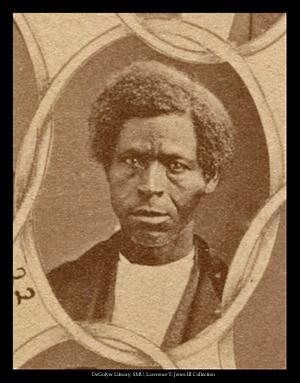
    <title type="html"><![CDATA[Richard Williams]]></title>
    <summary type="html"><![CDATA[<p><strong><em>An account of Richard Williams, a Black legislator elected in Huntsville, Texas, to the 12th and 13th legislatures.</em></strong></p><img src="https://easttexashistory.org/files/fullsize/6de2c9e3e4d845832bda99a198f0b292.jpg" alt="Photograph of Richard Williams" /><br/><p>Born in Colleton, South Carolina, in 1822, Richard Williams came to Texas in 1856 as an enslaved man. Trained as a blacksmith, he also served as a minister to the local African American community in Huntsville. After emancipation on June 19, 1865, Williams remained in Huntsville, where he worked as a mechanic and politician, serving in the 12th and 13th Texas legislatures from 1870 to 1874. Williams represented one of 42 black Reconstruction-era legislators, and one of six black men who served in the 13th legislature. [1]</p><p>The Texas Almanac of 1870 includes a list of the current Texas legislature (the 12th at the time) and lists Williams as a radical representative for the 15th district, which would have comprised Walker, Madison, and Grimes Counties. Legislators on this list were divided into democratic, conservative, and radical political parties, with the latter two opposing factions that comprised the Republican party. In a directory of the House of Representatives of the 13th legislature, Williams is listed as a colored ("col.") member of the Republican party. On this list, members are sorted by party only, with no distinction between conservative, moderate, or radical republicans. This may be an indication of the coming overrule of the radical republicans by the conservatives who wanted to have a better chance against the democrats. [2]</p><p>Richard Williams was not only a Radical Republican but was also a part of the Radical Republican Association. Radical republicans supported passing the 14th and 15th amendments in the wake of Black Codes, which arranged matters so that black people were kept in a state of virtual slavery, despite the 13th Amendment to the U.S. Constitution. The Radical Republican Association was composed of both black and white Republican legislators who wanted to help the current administration (namely, Republican Governor Edmund J. Davis) successfully carry out party measures. The members took an oath of secrecy regarding what the association discussed, though they often voted in accordance with the policies advocated by Governor Davis. Williams, alongside the rest of the 12th legislature, successfully ratified the 14th and 15th amendments in Texas, as well as establishing public schools and homestead laws [3].</p><p>The fall of the Radical Republicans and the end of Reconstruction in Texas came in 1873, when a Democratic candidate defeated Governor Davis. The Constitutional Convention of 1875 resulted in a drop in the number of black legislators in Texas, due to both an increase in voter intimidation and a decrease in the black population in Texas. At the same time, a white conservative faction of the republican party was strengthening itself. To successfully compete with the democrats, African Americans were cast out in order to grow the party's white base. Richard Williams was among those who were not elected again after the 13th legislature ended in 1874. By 1897, the last remaining black legislator from the Reconstruction era had left office. [4]</p><p><em><strong><a href="https://easttexashistory.org/items/show/477">For more (including 5 images) view the original article</a></strong></em></p>]]></summary>
    <published>2026-03-10T00:40:46+00:00</published>
    <updated>2026-05-02T04:27:18+00:00</updated>
    <link rel="alternate" type="text/html" href="https://easttexashistory.org/items/show/477"/>
    <id>https://easttexashistory.org/items/show/477</id>
    <author>
      <name>Kelly Hampton</name>
    </author>
  </entry>
  <entry>
    <title type="html"><![CDATA[Harry F. Estill]]></title>
    <summary type="html"><![CDATA[<img src="https://easttexashistory.org/files/fullsize/bd5e50c79112b98625b9e039733ec212.jpg" alt="A portrait of Harry F. Estill from the Houstonian newspaper" /><br/><p>Dr. Harry Fishburne Estill, the fifth and longest-serving president of Sam Houston State Teachers’ College (SHSTC), greatly influenced both the institution’s development and its culture. This essay will examine how Estill’s leadership contributed to the college’s scholarly growth, the expansion of its facilities and curriculum, and the establishment of a lasting legacy respected by his family, colleagues, students, and alums. [1]</p><p>Harry F. Estill was born on August 12, 1861, in Lexington, Virginia, to Charles Patrick and Katherine Fishburne Estill. After serving as a captain in the Civil War, Charles became a teacher at Odd Fellows University in Bryan, Texas, where the family reunited. Harry graduated as valedictorian of the first class at Sam Houston Normal Institute (SHNI) in 1880. In 1881, Charles became a Latin professor at SHNI but passed away the next year. Harry took over his father’s position and was named vice-president of the college in 1898. While teaching, Harry met Loulie Sharpe Sexton, whom he married in 1907 after SHNI president Henry Pritchett became ill. Harry Estill took on the president’s duties and officially became president in 1908. As president, Estill was known for his discipline, humility, and devotion to excellence. He cared deeply for his students, as shown by his strictness and his personal welcome to the first-year class of 1934-1935 in the Houstonian, ending with, “Sincerely, your friend.” Estill focused on both students' academic and spiritual growth. He required daily chapel assemblies and often guest speakers to talk to students about their future as teachers across Texas. [2]</p><p>Estill cared deeply about his students’ well-being and the future of education in Texas. As president of the Texas State Teachers’ Association and vice president of the college teachers' section of the National Education Association, he was an influential leader among educators. Estill’s leadership extended beyond administrative roles, directly shaping educational policy and practice in the state. For example, in 1934, the Texas City Sun reported that Sam Houston State Teachers College, the Texas State Teachers Association, and neighboring institutions such as the Agricultural and Mechanical College of Texas and East Texas State Teachers College collaborated to oppose Senate Joint Resolution No. 13, which proposed amending the Texas Constitution to limit the total amount of state revenue that could be collected from taxes, licenses, permits, and fees every two years. Estill recognized the potentially detrimental effects this change would have on school funding, especially for disadvantaged rural communities. According to an analysis of school funding in rural counties in 1890, relying more on local property taxes and basing taxes on population rather than wealth would have reduced per-student funding, particularly in areas with greater inequality, because counties with more unequal farm sizes had significantly less revenue available for schools. Although Estill was no longer president of the association, he demonstrated his continued devotion to educational equity and institutional advancement by publicly opposing the amendment in written correspondence. The Houstonian covered SJR #13, and Estill urged citizens, students, and teachers to oppose it, showing his role as an advocate for both his institution and public education more broadly. According to a report from Sam Houston State University, Estill’s presidency was distinguished by considerable institutional growth and progress. When he started, SHNI had about 500 students and 18 faculty members. Through his deliberate leadership, Estill directed the construction of new facilities, expanded the curriculum, and recruited more faculty, thereby enhancing both the learning environment and the college’s reputation. In 1918, he oversaw SHNI’s transformation from a two-year normal institute to a four-year teacher’s college, which culminated in its renaming as Sam Houston State Teacher’s College in 1923. He was named president emeritus in 1937 and continued teaching history. By the time he retired, SHSTC had about 1,800 students and 75 faculty members, and was widely recognized in Texas for preparing teachers with strong moral character. [3]</p><p>Furthermore, SHSTC students respected Estill, and their admiration lasted long after they graduated. Alums made special efforts to honor him and keep his memory alive. In 1927, Estill was given a Studebaker President Sedan to celebrate his 35 years of service at SHSTC. According to the Sam Houston State University website, William Z. Hayes, a member of the Board of Regents, collaborated with alums to secure funding for a car. Although discussions in 1942 considered creating a bronze bust of Estill, the onset of World War II led to the postponement of the project. According to Sam Houston State University, the Estill Library was dedicated in 1930 and features a bronze plaque at the entrance honoring President Harry Fishburne Estill for his efforts in securing the funds needed to build the library for Sam Houston State Teachers College. [4]</p><p>Estill died in 1942 and was interred alongside his wife in Oakwood Cemetery, Huntsville, Texas. He wrought a profound and permanent impact on SHSU. According to the City of Huntsville, Oakwood Cemetery is located in central Huntsville along 9th Street between Sam Houston Memorial Drive and Ryan's Ferry Road. Estill was laid to rest there with his wife in 1942, leaving a legacy at Sam Houston State Teachers’ College that reflected his lifelong devotion to service.” [5]</p><p><em><strong><a href="https://easttexashistory.org/items/show/476">For more (including 5 images) view the original article</a></strong></em></p>]]></summary>
    <published>2026-03-09T00:51:22+00:00</published>
    <updated>2026-05-07T07:37:34+00:00</updated>
    <link rel="alternate" type="text/html" href="https://easttexashistory.org/items/show/476"/>
    <id>https://easttexashistory.org/items/show/476</id>
    <author>
      <name>Hannah Rother</name>
    </author>
  </entry>
  <entry>
    <title type="html"><![CDATA[Henry C. Pritchett]]></title>
    <summary type="html"><![CDATA[<img src="https://easttexashistory.org/files/fullsize/feb924896b2586d6b2e067291f4c1205.jpg" alt="Picture of the Fourth President of Sam Houston State University, Henry  Carr Pritchett" /><br/><p>Dr. Harry Fishburne Estill was the 5th president of the Sam Houston State Teacher’s College (SHSTC) and was the longest serving president in the school’s history. As president, his contributions made a lasting impact on the growth of SHSTC, As an individual, he earned a well-respected place in the hearts of family, colleagues, students, and alumni. [1]</p><p>Harry F. Estill was born to Charles Patrick and Katherine Fishburne Estill in Lexington, Virginia, on August 12th, 1861. Charles P. Estill served as a captain in the Confederate Army during the Civil War. At the end of the conflict, he found employment as a teacher at Odd Fellows University in Bryan, Texas. In 1880, he graduated valedictorian of the first class of Sam Houston Normal Institute (SHNI). A year later, the elder Estill became a professor of Latin at SHNI. Sadly, this position was not long-lived as he died in 1882. Harry F. Estill inherited his father’s position and, seventeen years later, in 1898, became vice-president of the college. It was during his time as a professor that Estill met Loulie Sharpe Sexton, whom he married in 1892. Estill and Sexton had five children together. [2]</p><p>In 1907, since SHNI president Henry Pritchett grew ill, Harry Estill was often tasked with performing his duties before officially succeeding to the position in 1908. As president of SHNI, Estill was strict, modest, and held others to their highest ability. His austerity came from a place of love and care for his student body. When addressing students in the Houstonian, Estill signed off his welcome message to the freshman class of 1934-1935 with “Sincerely, your friend.” He was very concerned with the growth of his students, both academically and spiritually. Daily chapel assemblies were mandatory for students, and during them Estill would often have guest speakers address various subjects related to the students and their eventual roles as teachers throughout the state. [3]</p><p>Estill was as concerned with the well-being of his students as he was with the overarching political landscape revolving Texas education. As president of the Texas State Teacher’s Association and vice president of the college teachers' section of the National Education Association, Estill held considerable power and influence among his fellow educators and administrative personnel. In 1934, a fierce battle arose that rallied together not only what was then Sam Houston Teachers’ College, but also the Texas State Teachers Association and nearby colleges such as Agricultural and Mechanical College of Texas and East Texas State Teachers’ College. The Senate Joint Resolution #13 of 1934 proposed an “amendment of Section 3 of Article VIII of the State Constitution providing for the levying and collection of taxes and fixing the maximum amount thereof which can be collected and expended each biennium.” More specifically, it would “base taxation upon the number of inhabitants instead of upon the amount of wealth” and lower state taxes which would in turn increase local taxes. These changes would be disastrous to state schools since as a result, it would “reduce the per capita apportionment for public schools…from… $16.50 to $10 or less.” At the time, Estill was no longer president of the Texas State Teachers’ Association, but in various correspondence, he wrote passionately about the hope for the defeat of this amendment. News about SJR #13 was also featured in the Houstonian newspaper, where Estill wrote frequent editorials encouraging local citizens, students, and educators to vote against the amendment. On November 6th, 1934, the efforts of Estill, his colleagues, and the state of Texas came to fruition. Out of a total of 335,120 votes, an overwhelming 80% of voters opposed the bill, and it was successfully defeated. [4]</p><p>Estill’s magnitude of accomplishments as president were vast. In his early years as president, SHNI had an average student body of 500 and around 18 faculty members. Estill had new buildings constructed, expanded the curriculum, and hired more professors. These efforts culminated in 1918 when Estill oversaw the change of SHNI from a two-year institution into a 4-year teacher’s college that was renamed Sam Houston State Teacher’s College in 1923. Estill was awarded the position of president emeritus in 1937 and chose to remain at SHSTC as a history professor. The SHSTC that Estill bequeathed to the next president had grown to host a student body of approximately 1,800 and 75 faculty members, and it was famed for producing quality teachers with strong moral characters in the state of Texas. [5]</p><p>Estill was very well loved by the SHSTC student body, and this love lasted long after their graduation. Two particular instances illustrate the efforts of alumni to give thanks to Estill and preserve his legacy. In 1927, Estill was presented with a Studebaker President Sudan in celebration of his 35 years at SHSTC. William Z. Hayes, a member of the Board of Regents at SHSTC, contacted alumni who together pooled enough funds to purchase the automobile. In 1942, plans to erect a bronze bust of Estill were made. Although delayed by the Second World War, supporters of Estill revived the project in 1947, and the Harry Fishburne Estill Memorial Committee set to work on contacting as many alumni as possible to complete the project. Finally, on November 11th, 1950, university leaders erected the bronze bust of Estill sculpted by Pompeo Coppini at Old Main in honor of Estill’s many contributions to SHSTC. [6]</p><p>Estill died in 1942 and was buried with his wife in the Oakwood Cemetery in Huntsville, Texas. He had a lasting impact on the students and staff of SHSTC and on the institution's growth, truly embodying the words: “the measure of a life is its service.” [7]</p><p><em><strong><a href="https://easttexashistory.org/items/show/475">For more (including 7 images) view the original article</a></strong></em></p>]]></summary>
    <published>2026-03-08T05:10:30+00:00</published>
    <updated>2026-04-17T19:32:54+00:00</updated>
    <link rel="alternate" type="text/html" href="https://easttexashistory.org/items/show/475"/>
    <id>https://easttexashistory.org/items/show/475</id>
    <author>
      <name>Jackeline Casas</name>
    </author>
  </entry>
  <entry>
    <title type="html"><![CDATA[Bishop Ward Normal and Collegiate Institute]]></title>
    <summary type="html"><![CDATA[<img src="https://easttexashistory.org/files/fullsize/1c5f1188055447afdea262bc710f636a.jpg" alt="Bishop Ward Normal and Collegiate Institute" /><br/><p>From 1862-1877, the United States underwent the Civil War, the Emancipation Proclamation, and Reconstruction. During this period, both Black and white Texans experienced significant changes in politics and society. The end of slavery and the freedom of African Americans represented two of the greatest challenges [1].</p><p>The federal government set up the Freedmen's Bureau in 1865 to "bring about social change for African Americans." A significant portion of its responsibilities involved broadening educational opportunities, viewed to ensure "long-term protection for freedmen." But many white Texas lawmakers were against these efforts because racism was still a formidable problem in Texas politics. After the Civil War, African Americans in Texas fought back against oppression by working to make schools more accessible and expand educational opportunities. Historically Black colleges and universities (HBCUs) also began appearing in Texas around 1878, despite some resistance from white officials. [2]</p><p>The African Methodist Episcopal Church built on these early efforts by starting a city-wide campaign to teach African Americans in Huntsville, Texas. Church leaders bought 54 acres from the S.R. Smith family to build one of the state's first HBCUs. Episcopal Church leaders Richard Cain, Thomas Ward, and Charles Porter oversaw the project. Joshua Houston, whom Texas Governor Sam Houston had once enslaved, also played a major role in founding the school. On September 13, 1883, the Bishop Ward Normal and Collegiate Institute opened on Smith Hill in Huntsville. It was the fifth HBCU in Texas. Professor Charles W. Luckie was responsible for the school. The curriculum focused on the classical liberal arts, with a particular emphasis on "teaching Latin, Greek, Mathematics, and Grammar." It also trained students to become teachers, thereby improving education for African Americans across the state. The school offered classes in home arts and manual labor to meet the needs of students with different interests. [3]</p><p>The Bishop Ward Normal and Collegiate Institute closed after seven years due to insufficient funding. This closure paralleled the financial problems that many Black schools faced during the Reconstruction Era. [4]</p><p>The school's closure brought attention to the ongoing funding problems in African American education, but its inability to secure ongoing funding limited its lifespan. The school was open for only a short time, but it had a significant impact on higher education for African Americans in Walker County, Texas, and across the country. In 1907, Samuel Walker Houston, Joshua Houston's son, continued his father's work by opening the Sam Houston Industrial and Training School, a primary school. The Texas Historical Commission erected a historical marker in 2018 to highlight the institute's importance. The Bishop Ward Normal and Collegiate Institute proved crucial in providing local African Americans with more opportunities to obtain an education. It also helped inspire more HBCUs across the country. [5]</p><p><em><strong><a href="https://easttexashistory.org/items/show/474">For more (including 5 images) view the original article</a></strong></em></p>]]></summary>
    <published>2026-03-08T03:27:54+00:00</published>
    <updated>2026-04-17T19:32:54+00:00</updated>
    <link rel="alternate" type="text/html" href="https://easttexashistory.org/items/show/474"/>
    <id>https://easttexashistory.org/items/show/474</id>
    <author>
      <name>Martin Rojas</name>
    </author>
  </entry>
  <entry>
    <title type="html"><![CDATA[Hood’s Texas Brigade: Walker County’s Men in the Fourth Infantry]]></title>
    <summary type="html"><![CDATA[<img src="https://easttexashistory.org/files/fullsize/081a64f031f5fe9cc60d0b6e678ac411.jpg" alt="Hood&#039;s Texas Brigade Flag" /><br/><p>The Battle of Gettysburg constituted the most important engagement of the American Civil War, resulting in over 40,000 casualties. Hood’s Texas Brigade proved to be a critically important unit in the battle. Established in Richmond, Virginia, in 1861, Hood’s Brigade consisted of the First, Fourth, and Fifth Texas infantry regiments. The Fourth Texas Infantry Regiment consisted of men from multiple counties across Texas, including Walker County. The Walker County men were from Company H of the Porter Guards. [1]</p><p>Confederate officials assigned John Bell Hood to command the Fourth Infantry Regiment as a colonel, with John F. Marshall appointed lieutenant colonel. Previously, the Fourth had been assigned to General Louis T. Wigfall after Hood assumed command of the brigade. General Wigfall resigned command of the brigade on February 20, 1862, after which Hood was promoted to Brigadier General; hence the name: Hood’s Texas Brigade [2]</p><p>The Fourth Infantry Regiment first saw combat on the Virginia Peninsula on May 7, 1862, at Elthem’s Landing. However, Hood’s Texas Brigade and the Fourth Infantry were able to establish their reputation at the Battle of Gaines’ Mill in 1862. Hood’s Texas Brigade broke the Union line on Turkey Hill, an attempt the Confederates had made before with no success. The Fourth Infantry continued to fight in multiple battles throughout the Civil War, including the Battle of Second Manassas (otherwise known as the Second Battle of Bull Run) on August 30th, the Battle of South Mountain, and the Battle of Antietam. Eventually, the Fourth Infantry was engaged in the Battle of Gettysburg on July 2, 1863. It participated in the attack against the Union left flank in the fight for Little Round Top, which resulted in the deaths of 140 men, including a lieutenant colonel. [3]</p><p>The infantry remained a major part of the Confederate army, with engagements at Chickamauga, Wauhatchie, and the Wilderness. At the Battle of the Wilderness, the Fourth Infantry Regiment was part of the famous interaction with General Robert E. Lee, in which Texans did not allow General Robert E. Lee to lead the Confederate Army from the front. The Texans shouted, “Lee to the rear!” This engagement ended in 124 casualties. The Fourth Infantry was also involved in the fighting at Spotsylvania and fought against the Union attack at Cold Harbor on June 3, 1864. </p><p>Once General Robert E. Lee had surrendered the Army of Northern Virginia at Appomattox Courthouse on April 9, 1865, the Fourth Texas Infantry had 1,343 men, with 909 casualties by the end of the war, but had a reputation as one of the most reliable and hard-fighting units in the Confederate Army [4].</p><p>Historian Susannah J. Ural wrote on the history of the Texas Brigade and the soldiers’ social lives. She includes details about minstrel shows, in which white actors performed in blackface for the soldiers in the brigade camp. Blackfacing was a process in which white actors would paint their faces black and give performances that invoked Black stereotypes. As Ural further reveals, the brigade also had close connections to their home communities back in East Texas, as Ural wrote about a fundraising effort organized by their families. The families of soldiers in East Texas sent frontline soldiers hundreds of letters, socks, shoes, and other consumer goods [5]</p><p>Hood’s Texas Brigade consisted of men from middle-class households from East Texas, including blacksmiths, farmers, urban professionals, skilled laborers, and even a few lawyers, with the majority of the brigade’s officers coming from slave-owning households. The issue of slavery’s survival united the Brigade; The potential abolition of slavery was seen as a threat to their social status and economic prospects, both of members of Hood’s Brigade and many white Texans in general. The soldiers were very much behind their cause, with a strong ideological identification with the Confederacy and white supremacy [6]. </p><p><em><strong><a href="https://easttexashistory.org/items/show/473">For more (including 5 images) view the original article</a></strong></em></p>]]></summary>
    <published>2026-03-08T02:45:53+00:00</published>
    <updated>2026-04-17T19:32:54+00:00</updated>
    <link rel="alternate" type="text/html" href="https://easttexashistory.org/items/show/473"/>
    <id>https://easttexashistory.org/items/show/473</id>
    <author>
      <name>Danielle Garbarino</name>
    </author>
  </entry>
  <entry>
    <title type="html"><![CDATA[Huntsville During the Civil War and Reconstruction (1860-1877)]]></title>
    <summary type="html"><![CDATA[<img src="https://easttexashistory.org/files/fullsize/ec839bd3ed001c4c66d054ba983370e3.jpg" alt="Old Walker County Courthouse in Huntsville, TX" /><br/><p>Huntsville, Texas, underwent many changes between 1860 and 1877. Like many other towns in the South, Huntsville endured the political and social chaos of the Civil War and the difficult transition to Reconstruction. The war had a big effect on Huntsville's economy, institutions, and daily life, even though there were no major battles there. The end of slavery and the start of Reconstruction policies changed the community in ways that would last for a long time. [1] </p><p>Huntsville was a small but well-known town in East Texas when the Civil War started. Agriculture, including cotton farming, represented a big part of the local economy, and enslaved people did much of that work. When Texas joined the Confederacy in 1861, large numbers of men across Walker County signed up to fight for the South. When they left, many of the main farm and family workers were gone, which made things harder for the local economy and everyday life in the community. Even though Huntsville was far from the front lines, residents were still affected by shortages of goods and rising prices as the war dragged on. [2]</p><p>Even though Huntsville wasn't close to any major battlefields, the war still had a significant impact on people's lives. Families worried about their loved ones in the Confederate army, and many families had trouble getting by on limited resources. Local government and community leaders also supported the Confederate war effort by gathering supplies and encouraging people to enlist. These actions showed the depth of loyalty many white southerners felt towards the Confederacy during the war. [3]</p><p>Huntsville underwent a major change after the Civil War ended in 1865. The end of slavery changed the way local economies and societies operated in significant ways. Freed people began building their own lives and those of their families. Many freed people built new churches, schools, and communities in and around Huntsville. During the Reconstruction period, these places became important places for learning, faith, and community leadership. [4]</p><p>The Freedmen's Bureau also helped people transition from slavery to freedom. Bureau officials helped ensure that freed people and former slaveholders complied with the terms of their labor agreements. They also worked to give newly freed African Americans more opportunities to attend school. Freedmen's Bureau schools helped blacks in Huntsville and other East Texas towns learn to read and write. Even though these changes opened new doors, it was often hard to rebuild society after the war, and some southerners didn't want to. [5] </p><p>Reconstruction also changed the politics in Huntsville. When Texas returned to the United States, new laws and changes to the Constitution altered how local government operated and how people could participate in politics. During this time, African American men could vote and take part in politics for a brief time. These changes upset the old power structures and caused problems in many Southern communities, including Huntsville. The goal of Reconstruction policies was to make society more equal, but the change was hard and often fought over. [6] </p><p>The Huntsville economy after the war also faced many problems. Plantation owners and farmers had to change how they hired workers when they couldn't use enslaved people. Sharecropping and wage labor arrangements became popular among landowners. These arrangements let formerly enslaved people and poor white farmers work the land in exchange for a share of the crop. This system helped get farming back on its feet, but it often kept workers stuck in cycles of debt and poverty. Even so, Huntsville's economy slowly improved as people grew accustomed to these new conditions. [7]</p><p>During Reconstruction, religion and education became increasingly important. Churches were still important places for both white and African American people to spend time together. During this time, schools also grew, helping Huntsville become known as a center of education in Texas. After the war, these places helped restore a sense of community stability. [8]</p><p>Huntsville had changed a lot by the end of Reconstruction in 1877. The town had gone from being part of a Confederate society that enslaved people to a community that was getting used to freedom, new political systems, and changes in the economy. There were still many problems to solve, but the Civil War and Reconstruction changed Huntsville's social and political landscape forever. Looking back on this time helps us see how events in the country affected local communities and how towns like Huntsville changed during one of the hardest times in American history.</p><p><em><strong><a href="https://easttexashistory.org/items/show/472">For more (including 5 images) view the original article</a></strong></em></p>]]></summary>
    <published>2026-03-08T02:05:18+00:00</published>
    <updated>2026-04-17T19:32:54+00:00</updated>
    <link rel="alternate" type="text/html" href="https://easttexashistory.org/items/show/472"/>
    <id>https://easttexashistory.org/items/show/472</id>
    <author>
      <name>Marwa Hemri</name>
    </author>
  </entry>
  <entry>
    <title type="html"><![CDATA[Walker County Prison System Post- Civil War]]></title>
    <summary type="html"><![CDATA[<img src="https://easttexashistory.org/files/fullsize/8b14f5b1f5b4990197c4b7846f11353e.jpg" alt="Yellow Fever Epidemic devastates Huntsville, TX" /><br/><p>With the end of the Civil War on April 9, 1865, millions of enslaved African Americans were now free. However, legal emancipation did not end the deep-seated social, economic, and political problems that African Americans faced throughout Texas. Discrimination continued to affect the social and economic lives of Blacks living in Walker County during Reconstruction. To make matters worse, a yellow fever outbreak swept the South in 1867, killing about 10% of the local population. By 1870, the local black and white population had dropped sharply, and racial tensions had grown. [1]</p><p>Huntsville and Walker County, in general, have represented the center of the Texas prison system since the 1840s. The state's first penitentiary was also located there. After the Civil War, southern lawmakers passed "Black Codes" that turned minor offenses, like failing to provide proof of employment or breaking curfew, into crimes, leading to many more arrests, particularly of African American men. In Texas, the Convict Lease System, which became common in Walker County, let private people or businesses rent out prisoners, usually Black men, for exorbitant fees. [2]</p><p>At first, prisoners built railroads, such as the Houston & Great Northern Railroad, built by the Phelps Dodge Company, which ran through Walker County. Convict laborers did more than lay track; they also constructed Dodge Station in 1872. The project proved so successful that the leaders of the community that sprang up around the station named their town Dodge, in honor of the corporation that had brought so much business to their area. Although Dodge lacked large prison units, it featured farms operated through convict leasing. Popular throughout the post-Civil War South, convict leasing allowed local governments and even private businesses to use prisoners as laborers. By keeping large segments of Walker County’s African American population behind bars, local officials denied them the freedom promised by the 13th, 14th, and 15th Amendments to the Constitution. [3]</p><p>The Convict Lease System reveals how the change from slavery to freedom in the mid-1800s merely created new ways to exploit and control Black workers by often turning normal behavior into crimes. In 1874, the U.S. Army moved several prisoners from Huntsville to a military prison in Kansas. The inmates reported to federal officials that Texas prison personnel frequently deprived them of proper food and clothing and threatened them with guns, whipping, and torture. In fact, one prisoner had been shot while “trying to escape.” In a subsequent investigation of Huntsville’s prison system, state inspector J.K.P. Campbell noted that the Huntsville Prison’s dispensary lacked any medicine and demanded that prison officials explain how 49 sick prisoners could be treated with no supplies. Campbell’s investigation also revealed outbreaks of scurvy and severe physical abuse of prisoners that had resulted in permanent, untreated injuries. Such findings proved that the convict lease system continued to use slavery-like work practices, which maintained an ongoing system of racial and social inequality. [4]</p><p>The number of convicts in Texas rose from 146 to 264 between the end of the Civil War and the fall of 1866. However, in 1876, the Texas legislature passed a law that ended Huntsville Penitentiary's contract with private companies and returned control of convict leasing to the state. In 1879, Governor Richard B. Hubbard established a board of directors, a supervisor, and guards to monitor conditions at the prison. He also contracted with a new firm, Cunningham and Ellis, to make minor improvements to repair penitentiary buildings and remodel the prison hospital. But the company later bribed local officials to cover up the underlying harshness and abusiveness of the convict lease system. As such, the racial exploitation surrounding convict leasing continued to persist not only following Reconstruction but well into the Civil Rights era as well. [5]</p><p><em><strong><a href="https://easttexashistory.org/items/show/471">For more (including 6 images) view the original article</a></strong></em></p>]]></summary>
    <published>2026-03-08T01:05:36+00:00</published>
    <updated>2026-04-17T19:32:54+00:00</updated>
    <link rel="alternate" type="text/html" href="https://easttexashistory.org/items/show/471"/>
    <id>https://easttexashistory.org/items/show/471</id>
    <author>
      <name>Mikaela Baires</name>
    </author>
  </entry>
  <entry>
    <title type="html"><![CDATA[Elmina, Texas]]></title>
    <summary type="html"><![CDATA[<img src="https://easttexashistory.org/files/fullsize/c88cbac9ac5465ad14059aa06dd89b2b.jpg" alt="Map of Walker County Lumber&#039;s Tram Rail Line." /><br/><p>Elmina, believed to be named after the El Mina Masonic Temple in Galveston, was a settlement about a mile north of New Waverly and 13 miles south of Huntsville. Today, little remains of this town, aside from a few ruins on a country road, providing evidence of its existence. In 1870, lumberman Kit Oliphant built a sawmill on the site where Elmina would later stand. By the early 1900's, Oliphant sold the mill to the Walker County Lumber Company, who brought in lumbermen, greatly accelerating the growth of the small town. The Walker County Lumber Company wanted to use Elmina as a major sawmill and to process pine timber from the nearby forests in San Jacinto and Walker counties. They used the surrounding railroads to transport their materials, operated by the Elmina & Eastern Transportation Company. The town's population began to rise quickly, ranking second in Walker County behind Huntsville. [1]</p><p>Letters from Elmira’s former residents reveal information about the work schedule. Interestingly, breakfast was served three times - once at 5:15 A.M. for the woods crew, again at 6:15 A.M. for the mill and planer crew, and one final time at 7:15 A.M. for the people who worked in the office. Supper was served at 6:45 P.M. to the townspeople and to the woods crew when they returned. From the same letters, we know that there was a movie theater in the town in 1906, which burned down only a few years later. [2]</p><p>A map of the area sketched by Howard Oliphant shows that the Walker County Lumber Company planned to build 75 company-owned houses, a kiln, a schoolhouse, a church, and other basic amenities. Aside from the company-owned housing, many people lived in camps surrounding the area. Accounting for the employees working at the mill and their families, Elmina had a total population of about 700 people. The quickly growing town bustled with life, though it struggled to keep up with the sudden surge in population. [3]</p><p>By 1929, the once lively town of Elmina began slowly fading away when the Walker County Lumber Company shut down the sawmill. With the Great Depression on the horizon and the fact that nearby timber had been mostly harvested, workers had to work harder than ever to move the wood over increasingly greater distances. It didn't help that a fire at the mill began soon after, destroying it. With the economy already struggling and since the mill was hardly profitable, the company decided to shut it down instead of rebuilding it. With the closure, the community that once existed there slowly faded away. [4]</p><p>The story of Elmina is rather tragic. Its settlers were mostly Polish immigrants seeking to make a living in a prospective town. They endured World War I and pushed themselves through difficult working conditions. Despite that, they managed to cultivate a successful town, only ruined by unfortunate circumstances. The workers there lived arduous lives, and although the town of Elmina no longer exists, its legacy remains prominent. Descendants of Elmina still live in the surrounding area. The school that once resided in Elmina merged with the New Waverly Independent School District, combining operations. Most of the railroads Elmina used for the transportation of lumber still exist there today. And finally, a cemetery located just north of New Waverly was renamed in honor of the town and the workers who once lay there. [5]</p><p><em><strong><a href="https://easttexashistory.org/items/show/469">For more (including 6 images) view the original article</a></strong></em></p>]]></summary>
    <published>2026-03-08T00:13:41+00:00</published>
    <updated>2026-04-17T19:32:54+00:00</updated>
    <link rel="alternate" type="text/html" href="https://easttexashistory.org/items/show/469"/>
    <id>https://easttexashistory.org/items/show/469</id>
    <author>
      <name>Yannis Lagrosa</name>
    </author>
  </entry>
  <entry>
    <title type="html"><![CDATA[Reshaping Huntsville’s Economy: The Lumber Boom]]></title>
    <summary type="html"><![CDATA[<img src="https://easttexashistory.org/files/fullsize/876dc34c92eba0dacb89a905c773c8ae.jpg" alt="East Texas Piney Woods" /><br/><p>During the Civil War, Huntsville, Texas, sat within one of the richest natural resource environments in East Texas. However, it was not gold or abundant cotton fields that would reshape the local economy. Instead, the towering pine forests that stretched through Walker County, Texas, became one of the region’s most valuable assets. The vast piney woods surrounding the town provided an abundant timber supply that could be harvested and processed for construction and trade. Over time, Huntsville transformed from a small agricultural town into an important player in East Texas’s lumber industry. [1]</p><p>In the years before the Civil War, timber in the Huntsville area served primarily local needs, including the construction of homes, barns, fences, and other essential buildings. Across East Texas, small sawmills operated, producing lumber mainly for nearby communities. By 1860, approximately 200 sawmills in Texas generated about $1.75 million worth of lumber each year, highlighting the growing economic potential of the state’s forest resources. Although this level of production remained smaller than in major Northern lumber-producing states, it demonstrated that timber’s valuable as an industry in Texas. The Civil War disrupted multiple aspects of the Southern economy, especially the cotton trade that had previously dominated the region. As markets became unstable and supplies scarcer, communities such as Huntsville relied on local resources to maintain economic stability. For many Walker County residents, lumber harvesting became a vital source of income, supplying timber for construction, repairs, and transportation infrastructure. Though Texas was spared the battlefield destruction of Virginia or Tennessee, the war still created economic troubles that highlighted the importance of regional resources such as timber.  [2]</p><p>Following the war, demand for lumber increased as communities across the South rebuilt during the Reconstruction Era. Homes, public buildings, railroads, and bridges all required large quantities of lumber. At the same time, technological advancements increased sawmill efficiency. Smaller mills were replaced by larger, steam-powered operations capable of processing greater amounts of timber in shorter periods. By 1879, lumber production in Texas had expanded significantly, reaching about 300 million board feet. Logging crews harvested trees from forests surrounding Huntsville and transported the logs to local sawmills, often using wagons pulled by mules. These mills helped stabilize the city’s economy and provided new employment opportunities for laborers. During a period when agricultural production remained uncertain, the lumber industry provided steady and dependable work for many families in the region. [3]</p><p>Improved transportation also fueled the expansion of the East Texas lumber trade. As railroad networks expanded throughout the state in the late nineteenth century, lumber producers gained the ability to ship large quantities of timber to markets beyond their immediate communities. Producers in Huntsville could now transport lumber to growing cities across Texas, where demand for building materials continued to rise. With greater access to these expanding markets, timber quickly emerged as one of the region’s most valuable natural resources. Increased demand encouraged further investment in sawmills, logging equipment, and timber operations throughout the surrounding forests. This growth also strengthened Huntsville’s local economy. Businesses that supported the lumber industry, including supply stores, blacksmith shops, equipment repair services, and transportation companies, began to appear and serve the growing number of workers connected to the lumber trade. [4]</p><p>By the late nineteenth century, lumber had become one of the most significant industries in East Texas. Its development played a lasting role in shaping Huntsville's economic foundation. While the lumber trade did not replace agriculture, it helped diversify the local economy and reduced the community’s dependence on cotton production alone. The industry also connected Huntsville to broader networks across the state. By contributing both labor and natural resources, Huntsville helped transform the regional economy of the East Texas Piney Woods, helping establish lumber as a defining part of the region’s economic history.</p><p><em><strong><a href="https://easttexashistory.org/items/show/468">For more (including 5 images) view the original article</a></strong></em></p>]]></summary>
    <published>2026-03-07T23:48:05+00:00</published>
    <updated>2026-04-17T19:32:54+00:00</updated>
    <link rel="alternate" type="text/html" href="https://easttexashistory.org/items/show/468"/>
    <id>https://easttexashistory.org/items/show/468</id>
    <author>
      <name>Blessing Milburn</name>
    </author>
  </entry>
  <entry>
    <title type="html"><![CDATA[The Walker County Rebellion]]></title>
    <summary type="html"><![CDATA[<img src="https://easttexashistory.org/files/fullsize/08c6848cea0ea282fcb4ce428dadc994.jpg" alt="Walker County Map." /><br/><p>In 1870, both political leaders and ordinary people in Walker County, Texas, faced difficult times. On June 19, 1865, U.S. Major General Gordon Granger declared that enslaved people were now free. However, many Anglo Americans had still not accepted African Americans as equals, and racial prejudices remained high. [1]</p><p>During this reconstruction period, the State Police and the military had a strong presence across most of Texas, and anarchy prevailed throughout the state. Political power shifted between the Republican and Democratic parties, but the Radical Republicans dominated Walker County for most of the decade. [2]</p><p>Sam Jenkins, an African American man living in Walker County, was a freedman. In 1870, Jenkins testified in an assault case against several white citizens. Unfortunately, he paid the price for his bravery with his own life, and his body was found only a few days later, just outside of Huntsville. State Police Captain Leander H. McNelly initiated an investigation, and arrests were made. [3]</p><p>Four individuals, all white males, were arrested and charged with murder; however, only three were convicted. Nathaniel Outlaw, Joseph Wright, Fred Parks, and John McParrish were all taken into custody, but Judge J.R. Burnett acquitted Parks. During their court appearance, an uprising occurred. Many of the local townspeople still held racial feelings and thoughts toward local African Americans and set out to help those who were accused of the murder of Sam Jenkins. [4]</p><p>Before Judge J.W. McCulloch could pass a sentence on Wright, McParrish, and Outlaw for murder, the courtroom erupted with violence. Armed by sympathetic townspeople, the defendants began a shooting spree, wounding two police officers before fleeing and hiding with the help of local sympathizers. Although Joseph Wright and John McParrish managed to escape custody, state troopers captured Outlaw. Seven townspeople aiding in the jailbreak were arrested and tried but received pardons by mid-spring 1871. After being pardoned, Nathaniel Outlaw sued Governor Davis and Adjutant General Davidson, winning a very handsome judgment; however, it was later overturned in 1872. [5]</p><p>After the murder of Sam Jenkins, Texas Governor Edmund J. Davis made a risky decision by declaring martial law in Walker County. During this time, political power across the nation remained unstable, shifting back and forth between the various political parties. But Governor Davis knew he needed to restore order in Texas, even though this decision angered the public. [6]</p><p>On February 15th, Governor Davis ordered Adjutant General James Davidson to Walker County, specifically Huntsville, with the order to declare martial law upon arrival. This law went into effect and lasted only 90 days. However, the move only fueled accusations against Governor Davis and his actions, as well as those of the Republican Party, as they seemed to only escalate the problems. [7]</p><p>Despite all the issues, some things were certain. The hatred towards African Americans still ran high. African American voters had to navigate bitter political battles between Republicans and Democrats, despite their status as freed people. Many ordinary people were suspicious of those with political power. But the most important fact still stands in this matter: Sam Jenkins was dead, simply for being an African American. [8]</p><p><em><strong><a href="https://easttexashistory.org/items/show/467">For more (including 5 images) view the original article</a></strong></em></p>]]></summary>
    <published>2026-03-07T23:15:13+00:00</published>
    <updated>2026-04-17T19:32:54+00:00</updated>
    <link rel="alternate" type="text/html" href="https://easttexashistory.org/items/show/467"/>
    <id>https://easttexashistory.org/items/show/467</id>
    <author>
      <name>Jacquiline Wahleithner</name>
    </author>
  </entry>
  <entry>
    <title type="html"><![CDATA[The Impact of the Huntsville Penitentiary During the Civil War ]]></title>
    <summary type="html"><![CDATA[<img src="https://easttexashistory.org/files/fullsize/c5e89a3bd679ab97d6f90bfc120f4621.jpg" alt="Texas State Penitentiary at Huntsville" /><br/><p>Located in Huntsville, Texas, the Huntsville Unit, or the “Walls Unit,” represented the first state prison in Texas. It opened in 1849 and became important in both East Texas and U.S. history, especially during the Civil War. By 1861, the prison was already shaping many lives and influencing Texas’s labor and politics. What happened there during the Civil War reveals how punishment, forced labor, and social control operated in Texas at the time. [1]</p><p>During the Civil War, the Huntsville prison helped the Confederate war effort by forcing prisoners to perform arduous labor, including brickmaking, construction of state buildings, and farm work. The prison held different kinds of people: some were guilty of crimes, while others were jailed for political reasons, such as opposing secession or supporting the Union. Sometimes, northern prisoners of war were also housed at the Walls Unit. Conditions were very harsh. Hard work, overcrowding, and poor air led to disease. Food was limited because most supplies went to Confederate soldiers, so prisoners had little to eat. [2]</p><p>The prison also affected the Huntsville community in many ways. When local men left to join the Confederate army, prisoners filled the resulting labor shortage by taking on jobs in construction, agriculture, and maintenance, which allowed essential projects and local businesses to continue operating despite the war. Many families visited or even moved to Huntsville to be near relatives in prison, which increased demand for goods and services and boosted commerce in the area, benefiting businesses associated with the prison. Beyond its direct economic impact, the prison emerged as an enduring symbol of order by maintaining public discipline and serving as a visible reminder of the state's enforcement capacity. The public nature of prisoners’ labor reinforced the message that dissent and disobedience would be harshly punished, thereby discouraging resistance to the Confederate cause and shaping the town’s attitudes toward authority and social conformity during the Civil War. [3]</p><p>There are a few records left from the Civil War period in Huntsville, but later historians helped preserve this history. Marcellus Elliott Foster, who founded the Houston Chronicle, played a key role in recording the stories of Texas institutions. Through his journalism and research, he kept track of Texas communities and places like the Huntsville prison. Even though Foster was born after the Civil War, his work helps us understand how these institutions grew and shaped Texas society. [4]</p><p>Foster studied Texas history and was one of the few journalists who carefully recorded how places like the Huntsville prison affected the state’s society, politics, and economy. He collected records, news articles, and personal stories that later historians used to learn about life in these institutions. His work is valuable because it connects later generations to Civil War events and serves as a link between the 1800s and the early 1900s, when historians and journalists began documenting Texas history more fully. The penitentiary itself became a significant landmark; its tall brick walls made it one of the town’s best-known features, earning it the nickname "Walls Unit." Its location near main roads aided its operation and maintained its visibility as a symbol of state power. The building continues to serve as a strong representation of Texas’s early prison system. [5]</p><p>In summary, the Huntsville Penitentiary played a key role in East Texas during the Civil War. It provided needed labor when workers were few, influenced Huntsville’s economy and society, and reflected the political struggles of the time. Because of historians and journalists like Marcellus Elliott Foster, we can now better understand how places like the Huntsville prison shaped life in Texas during this challenging period in American history. [6]</p><p><em><strong><a href="https://easttexashistory.org/items/show/466">For more (including 5 images) view the original article</a></strong></em></p>]]></summary>
    <published>2026-03-07T22:28:28+00:00</published>
    <updated>2026-06-09T18:00:14+00:00</updated>
    <link rel="alternate" type="text/html" href="https://easttexashistory.org/items/show/466"/>
    <id>https://easttexashistory.org/items/show/466</id>
    <author>
      <name>Michelle Cardenas</name>
    </author>
  </entry>
  <entry>
    <title type="html"><![CDATA[Thomas J Goree]]></title>
    <summary type="html"><![CDATA[<img src="https://easttexashistory.org/files/fullsize/d9d23f08ae9a61c088f72b7d8729b19a.jpg" alt="Thomas J Goree" /><br/><p>On March 13, 1848, the Texas Legislature created the Walls Unit in Huntsville, Texas. The reasons for choosing Huntsville remain uncertain, though the fact that Sam Houston and other prominent early Texans lived there may have influenced the decision. Early on, the prison used convict leasing to help balance the state budget, but reformers like Thomas J. Goree later questioned the practice. Goree introduced ethical and rehabilitative changes, such as night classes and a library, which have had a profound influence on the prison system. [1]</p><p>While reforms by people like Goree were important, it is also necessary to look at why these changes were needed. The evolution of the Texas prison system cannot be understood without considering its historical background formed by the Civil War, Reconstruction, and the end of slavery in the United States. For example, during the Civil War, Texas used inmate labor to reduce incarceration costs. By November 1884, Texas had contracted out over a thousand prisoners to work on farms across East and South Texas as part of the state's reliance on inmate labor following the end of slavery. The 1871 case Ruffin v. Commonwealth noted that prisoners in Texas were treated as enslaved people until 1846. The introduction of the convict lease system then changed prison economics by leasing prisoners to private companies for railroad and plantation work. These changing policies led to harsh conditions, with many prisoners suffering from hunger, poor medical care, and long work hours in bad weather, no matter their health. Prisoners were harshly punished for any sign of not working hard enough or not finishing their tasks. [2] </p><p>These abuses were not overlooked. Evidence of harsh prison conditions is found in investigations that uncovered many unmarked graves near prison camps, indicating the deaths of numerous inmates from beatings. Lee Simmons led early reforms in the Texas prison system, which focused on improving prison conditions and increasing staff accountability to reduce escapes. [3]</p><p>Continuing the trend toward reform, as superintendent of the Texas State Penitentiary at Huntsville, Thomas J. Goree made important changes. After learning about past abuses, he led investigations into mistreatment at convict lease camps. Although the convict lease system generated revenue, its decline in Texas began in 1908 after investigative articles exposed the prison system’s conditions. In 1889, Texas opened a youth facility in Gatesville, the first in the South. These changes have created a lasting mark on the Huntsville community. [4]</p><p>Today, Thomas Goree’s reform work can still be seen in the community. His efforts established the stage for later reforms by administrators like George Beto, who expanded education and rehabilitation programs for prisoners. Goree’s legacy is honored in the prison system, with the Goree Unit named in his honor to recognize his early reforms. These examples show that prisons can move from harsh treatment to a focus on rehabilitation while keeping the public safe. His steady devotion to ethical oversight and reform has produced a lasting impact on the Texas prison system. [5]</p><p><em><strong><a href="https://easttexashistory.org/items/show/465">For more (including 5 images) view the original article</a></strong></em></p>]]></summary>
    <published>2026-03-07T21:41:22+00:00</published>
    <updated>2026-04-17T19:32:54+00:00</updated>
    <link rel="alternate" type="text/html" href="https://easttexashistory.org/items/show/465"/>
    <id>https://easttexashistory.org/items/show/465</id>
    <author>
      <name>Ashley Atkinson</name>
    </author>
  </entry>
  <entry>
    <title type="html"><![CDATA[The Houston and Great Northern Railroad Company]]></title>
    <summary type="html"><![CDATA[<img src="https://easttexashistory.org/files/fullsize/df1a92b33d03f847dda109ed29e142f1.jpg" alt="International and Great Northern Railroad Car" /><br/><p>Before the development of railways, transportation proved a problem for many early settlers in Texas. Steamboat navigation and ox carts represented the primary means of transportation in the late 1850s, but both had disadvantages. Rivers in Texas were often too shallow for annual boat traffic, and roads were often impassable. A change was needed, and the invention of the railroads brought the development Texas was looking for. Specifically, the Houston and Great Northern Railroad played a key role in Texas’s development and helped shape Walker County's economic and social growth. [1]</p><p>In December 1870, the Houston and Great Northern Railroad Company began construction of a major new railroad. This route connected Houston, Texas, with northern markets. The railroad was part of a broader effort to rebuild and expand transportation access in Texas after the American Civil War. As the Houston and Great Northern Railroad expanded north from Houston, it passed through several developing communities in Harris and Montgomery counties before entering Walker County. [2]</p><p>As the railroad construction continued northward, the main line did not pass directly through Huntsville, Texas. Local leaders at the time had the opportunity to pay a “bonus” to the railroad company to ensure the railroad passed through Huntsville but initially declined to do so. Because of this decision, the railroad instead ran seven miles east of Huntsville through smaller communities, such as the small town of Phelps. This decision soon proved a mistake, as it became evident that towns located directly on the railroad began to grow faster than those farther away. Since Huntsville had been bypassed, residents soon realized that the town needed railroad access to remain economically competitive. Thus, in 1871, local citizens organized the Huntsville Branch Railroad, a line that connected Huntsville to the main Houston and Great Northern Railroad in Phelps. Overall, it cost the city of Huntsville $100,000 more to build a connecting line than to have the Houston and Great Northern Railroad run through the town. Once connected, Huntsville gained access to the broader railroad network and began shipping goods to a wider range of markets. [3]</p><p>The creation of the Houston and Great Northern Railroad brought massive economic change to Walker County. The railroad enabled farmers to ship agricultural products much more cheaply and efficiently, including cotton, corn, and livestock. Before the railroad, goods had to travel by wagon over rough roads, which was much less cost-efficient due to the expense of purchasing and feeding draft animals. Additionally, because Walker County lay in the East Texas Piney Woods, it had abundant forest resources. This meant the railroad enabled the transport of large quantities of lumber, thereby helping expand the regional lumber industry. Due to the economic boom in Walker County, the population grew. The railroads encouraged migration and settlement, meaning that when railroad stations were built, businesses opened near depots, stores and hotels served travelers, and farmers moved nearby to take advantage of the low cost of shipping crops. As a result of the railroad, Walker County’s population and economic activity increased during the 1870s and 1880s. Eventually, in 1873, the Houston and Great Northern Railroad merged into the International and Great Northern Railroad. Even after this change, the railroad continued to shape Walker County by providing transportation, influencing town settlements, and supporting the agriculture and timber industries. [4]</p><p><em><strong><a href="https://easttexashistory.org/items/show/464">For more (including 5 images) view the original article</a></strong></em></p>]]></summary>
    <published>2026-03-07T20:57:30+00:00</published>
    <updated>2026-06-09T18:06:13+00:00</updated>
    <link rel="alternate" type="text/html" href="https://easttexashistory.org/items/show/464"/>
    <id>https://easttexashistory.org/items/show/464</id>
    <author>
      <name>Regan Reese</name>
    </author>
  </entry>
  <entry>
    <title type="html"><![CDATA[The Death and Legacy of General Sam Houston ]]></title>
    <summary type="html"><![CDATA[<img src="https://easttexashistory.org/files/fullsize/cd8673ecdcdc8fc7dd3baf673b0dfed1.jpg" alt="General Sam Houston At The Battle" /><br/><p>Sam Houston was one of the most important leaders in Texas history. As the commander of the Texan army during the Texas Revolution, President of the Republic of Texas, U.S. Senator, and Texas Governor, Houston played a major role in shaping the region's early development. His death in 1863 marked the passing of a central figure in Texas politics and military history. Although Houston had once been one of the most powerful men in Texas, his final days were spent quietly at his home in Huntsville.</p><p>In the years leading up to his death, Houston had stepped away from public office after a major political conflict. In 1861, Texas voted to leave the United States and join the Confederacy. Houston, who was governor at the time, strongly opposed secession because he believed it would harm the state and the nation. When he refused to swear loyalty to the Confederate government, he was removed from office. After leaving politics, Houston returned to Huntsville and lived with his family in the house known as the Steamboat House, an elongated, two-story house superficially resembling a steamboat, where he would spend the last years of his life (Texas State Library and Archives Commission).</p><p>During summer 1863, Houston became seriously ill. According to historical accounts, his health had been declining for several weeks before his death. He suffered from a severe illness that eventually developed into pneumonia, a disease that was often fatal in the nineteenth century due to the lack of effective medical treatments. Houston’s condition gradually worsened while he remained at home with his family in Huntsville.</p><p>On July 26, 1863, Sam Houston died at the age of seventy. Newspapers quickly reported the news across Texas. One obituary published shortly after his death expressed deep sadness. It recognized Houston’s importance to the state, stating that his death brought “deep and heartfelt sorrow” to the people of Texas (TexasBob). The obituary also emphasized his long career as a soldier and statesman, reminding readers that Houston had served the public for many years.</p><p>Houston’s family was present during his final moments. Contemporary accounts describe a quiet, emotional scene at the Steamboat House. According to historical accounts, his wife Margaret was at his bedside as he passed away. Some stories claim that Houston’s final words were spoken to his wife and referred to Texas, showing how deeply connected he felt to the state (Texas State Library and Archives Commission).</p><p>Following his death, mourners buried Houston in Huntsville’s Oakwood Cemetery. Because the Civil War was still ongoing, the funeral was smaller than might be expected for such a famous leader. However, the significance of his life and contributions was widely recognized across the state. Many Texans viewed his death as the loss of a leader who had guided Texas through some of its most important early moments.</p><p>The legacy of Sam Houston did not end with his death. His leadership during the Texas Revolution, particularly at the Battle of San Jacinto, secured Texas's independence from Mexico. Later, as president of the Republic of Texas and as governor of the state, Houston helped shape Texas's political future. Today, his memory is preserved through historical sites, monuments, and institutions such as Sam Houston State University in Huntsville.</p><p>Although Sam Houston died quietly in his home, his influence on Texas history remains significant. The reports of his death and the tributes written afterward show how deeply Texans respected him and how important his leadership had been to the state’s development.</p><p><em><strong><a href="https://easttexashistory.org/items/show/463">For more (including 6 images) view the original article</a></strong></em></p>]]></summary>
    <published>2026-03-07T19:14:01+00:00</published>
    <updated>2026-04-17T19:32:54+00:00</updated>
    <link rel="alternate" type="text/html" href="https://easttexashistory.org/items/show/463"/>
    <id>https://easttexashistory.org/items/show/463</id>
    <author>
      <name>Mary Lusk</name>
    </author>
  </entry>
  <entry>
    <title type="html"><![CDATA[The Texas State Penitentiary and Cotton Production in Huntsville, 1860–1929]]></title>
    <summary type="html"><![CDATA[<img src="https://easttexashistory.org/files/fullsize/8d5f4827d4c0a28fb8f1ff9342eaec95.jpg" alt="Convict Laborers Working Cotton Fields on a Texas Prison Farm" /><br/><p>In the decades surrounding the Civil War, the city of Huntsville was well recognized as the home of the Texas State Penitentiary. Founded in 1849, this powerful institution would substantially shape Walker County's social and economic growth. The prison originally operated as a correctional facility, intending to impose discipline on inmates. However, the chaos of the Civil War, Emancipation, and Reconstruction caused local white officials to rely heavily on incarcerated, predominantly African American, labor to maintain prewar levels of agricultural production. Labor shortages caused by military enlistment, combined with the abolition of slavery,  threatened to harm cotton output, the crop that defined Texas agriculture. As the new South unfolded, the Texas State Penitentiary transformed into a system referred to as “penology for profit,” converting imprisonment into a profit-making mechanism. Through prison farms and convict leasing, the Texas State Penitentiary became essential to the production of cotton as well as Walker County's overall economic stability. [1]</p><p>The outbreak of the Civil War in 1861 created widespread challenges to ordinary Texans, particularly in the agricultural economy that relied chiefly on cotton production. With thousands of men enlisting in Confederate forces, farms and plantations suffered from labor shortages. The Texas State Penitentiary became the solution to this pressing concern and became a crucial source of replacement labor. To support the Confederate war effort, prison officials required prisoners to perform agricultural and industrial labor. The growing reliance on prison labor anticipated the system that would fully emerge after emancipation, when convict labor would become vital to maintaining cotton production in the New South. [2]</p><p>As the Civil War ended in spring 1865, southern political leaders sought to rebuild agricultural production without the labor of enslaved African Americans. One solution that state officials sought was the expansion of convict labor. Under this new system, incarcerated individuals, overwhelmingly African American, were privately leased to businesses and agricultural operations where they would carry out demanding labor for little to no compensation. Despite emancipation and the social changes that came with it, convicts were consistently assigned to work in cotton fields for the survival of the state’s economy during Reconstruction. [Historian's note in Penology for Profit, the reinforcement of racial and social hierarchies that are generated by this system and the Texas State Penitentiary that became deeply integrated in the new labor arrangement.] [3]</p><p>As the state stepped into the New South era, convict labor evolved from private leasing arrangements to large prison farms controlled by the state. (5) Inside these agricultural units, incarcerated individuals would work directly under strict prison supervision as cotton production gradually became the primary focus. Inmates cultivated, harvested, and processed cotton that was marketed nationally, making notable income for the state. (5) The expansion of these prison farms reflected the state's broader economic objectives, as officials aimed to preserve agricultural productivity at minimal cost. The Texas State Penitentiary and the city of Huntsville, TX, were rooted in a prison-based economic system that significantly influenced Walker County's development. [4]</p><p>The expansion of prison labor at the Texas State Penitentiary had lasting repercussions for the state, as well as sustaining racial and social hierarchies. (6) Through discriminatory laws and police practices, the prison also functioned as a mechanism of social control and was central to the identity of Huntsville. State officials justified the conditions imposed on inmates as necessary for the discipline and rehabilitation of prisoners, although the system very obviously prioritized economic productivity over reform. By the early twentieth century, the Texas State Penitentiary was recognizably one of the most influential establishments shaping the history of Walker County. [5]</p><p>Between 1860 and 1929, the Texas State Penitentiary was responsible for the economic survival of Huntsville during the Civil War, Reconstruction, and New South era. State officials found new ways to sustain agricultural production when slavery was abolished, leading to the development of convict labor. What was once a correctional institution evolved into an economically driven system that supported the county financially for years. This system generated state revenue and sustained the local agricultural production, making the city of Huntsville inseparable from the prison system and the economic influence it had. [6]</p><p><em><strong><a href="https://easttexashistory.org/items/show/462">For more (including 6 images) view the original article</a></strong></em></p>]]></summary>
    <published>2026-03-07T18:40:25+00:00</published>
    <updated>2026-04-17T19:32:54+00:00</updated>
    <link rel="alternate" type="text/html" href="https://easttexashistory.org/items/show/462"/>
    <id>https://easttexashistory.org/items/show/462</id>
    <author>
      <name>Katie Zanek</name>
    </author>
  </entry>
  <entry>
    <title type="html"><![CDATA[The Founding of the Sam Houston Normal Institute]]></title>
    <summary type="html"><![CDATA[<img src="https://easttexashistory.org/files/fullsize/b4b461299a850b3940bffcafdefcdd4b.jpg" alt="View of the Sam Houston State Teachers College (formerly known as Sam Houston Normal Institute)  campus from the northeast in 1927 " /><br/><p>Sam Houston Normal Institute, established in Huntsville in 1879, represented the first state-supported teacher-training school in Texas. The institution was created during the Reconstruction and New South period, when state leaders sought to rebuild and modernize public education following the Civil War. The school’s first president, Hildreth H. Smith, played a key role in organizing the new institution and guiding its earliest years. Although his presidency lasted only from 1879 to 1881, Smith helped establish the foundation of what would eventually become known as Sam Houston State University.</p><p>The creation of Sam Houston Normal Institute reflected broader educational reforms occurring throughout the United States in the late nineteenth century. “Normal schools,” a term derived from the French phrase “école normale,” were institutions designed to train teachers according to standardized instructional methods. Before the development of these schools, many teachers in Texas had little formal training. State officials recognized that improving public education required the creation of institutions dedicated to preparing professional educators. In 1879, the Texas legislature authorized the establishment of a normal school in Huntsville, selecting the Walker County town because of its central location and strong local support for education. [1]</p><p>Hildreth H. Smith was chosen as the first president of the new school. As the institution's inaugural leader, Smith faced the challenge of building a functioning college from the ground up. His responsibilities included recruiting faculty, developing a curriculum, and attracting students to a newly established school that had yet to establish its reputation. These early tasks were critical to the institution's survival. Without successful organization and enrollment in its first years, the school could have struggled to maintain state support. [2]</p><p>Under Smith’s leadership, Sam Houston Normal Institute focused primarily on teacher preparation. Early courses emphasized subjects considered essential for teaching in public schools, including grammar, mathematics, history, and pedagogy. The institution's goal was not simply to educate students but to prepare them to return to their communities as trained teachers capable of improving local schools across the Lone Star State. This mission reflected the broader educational priorities of the Reconstruction and New South eras, when state leaders increasingly viewed public education as essential for economic growth and civic development. [3]</p><p>The establishment of the school also had a significant influence on Huntsville. Hosting a state educational institution brought new economic and cultural opportunities to Walker County. Students, faculty members, and visitors contributed to the local economy, while the presence of a teacher-training school strengthened Huntsville’s reputation as a center of learning in East Texas. The early campus became an important part of the community’s identity, and the relationship between the town and the school would continue to grow in the decades that followed. [4]</p><p>Smith’s presidency occurred during a period of transition in Texas. The state was still recovering from the disruptions of the Civil War and Reconstruction, and many communities were attempting to rebuild institutions weakened by years of conflict and political instability. Education reform became an important part of these efforts. By establishing a normal institute in Huntsville, state leaders hoped to strengthen the public school system and provide better educational opportunities for future generations. [5]</p><p>Although Smith served only two years as president, his leadership helped ensure the institution's successful launch. Early administrative decisions, faculty appointments, and curriculum development established patterns that influenced the school’s future growth. In later decades, Sam Houston Normal Institute expanded its academic programs and eventually evolved into Sam Houston State Teachers College and, later, Sam Houston State University. The institution became one of the most significant centers of higher education in East Texas. [6]</p><p>Today, the campus of Sam Houston State University occupies the same geographic location in Huntsville where the original normal institute began its work in 1879. Buildings such as Old Main became symbols of the institution’s early history and the state’s commitment to teacher education. The university's continued growth reflects the success of the educational vision first implemented during the school’s founding years.</p><p>Hildreth H. Smith’s presidency represents an important moment in the history of education in Texas. As the first leader of Sam Houston Normal Institute, he helped establish a school dedicated to preparing professional teachers and strengthening public education across the state. His work in Huntsville during the institution’s earliest years contributed to the development of a university that continues to serve thousands of students today. </p><p><em><strong><a href="https://easttexashistory.org/items/show/461">For more (including 6 images) view the original article</a></strong></em></p>]]></summary>
    <published>2026-03-07T17:33:59+00:00</published>
    <updated>2026-04-17T19:32:54+00:00</updated>
    <link rel="alternate" type="text/html" href="https://easttexashistory.org/items/show/461"/>
    <id>https://easttexashistory.org/items/show/461</id>
    <author>
      <name>Crystal Ebo</name>
    </author>
  </entry>
  <entry>
    <title type="html"><![CDATA[Hildreth H. Smith and the Early Leadership of Sam Houston Normal Institute (1879–1881)]]></title>
    <summary type="html"><![CDATA[<img src="https://easttexashistory.org/files/fullsize/db89a92652c91a0168d72d50bbd3c324.jpg" alt="Old main " /><br/><p>Sam Houston Normal Institute, established in Huntsville in 1879, represented the first state-supported teacher-training school in Texas. The institution was created during the Reconstruction and New South period, when state leaders sought to rebuild and modernize public education following the Civil War. The school’s first president, Hildreth H. Smith, played a key role in organizing the new institution and guiding its earliest years. Although his presidency lasted only from 1879 to 1881, Smith helped establish the foundation of what would eventually become known as Sam Houston State University.</p><p>The creation of Sam Houston Normal Institute reflected broader educational reforms occurring throughout the United States in the late nineteenth century. “Normal schools,” a term derived from the French phrase “école normale,” were institutions designed to train teachers according to standardized instructional methods. Before the development of these schools, many teachers in Texas had little formal training. State officials recognized that improving public education required the creation of institutions dedicated to preparing professional educators. In 1879, the Texas legislature authorized the establishment of a normal school in Huntsville, selecting the Walker County town because of its central location and strong local support for education. [1]</p><p>Hildreth H. Smith was chosen as the first president of the new school. As the institution's inaugural leader, Smith faced the challenge of building a functioning college from the ground up. His responsibilities included recruiting faculty, developing a curriculum, and attracting students to a newly established school that had yet to establish its reputation. These early tasks were critical to the institution's survival. Without successful organization and enrollment in its first years, the school could have struggled to maintain state support. [2]</p><p>Under Smith’s leadership, Sam Houston Normal Institute focused primarily on teacher preparation. Early courses emphasized subjects considered essential for teaching in public schools, including grammar, mathematics, history, and pedagogy. The institution's goal was not simply to educate students but to prepare them to return to their communities as trained teachers capable of improving local schools across the Lone Star State. This mission reflected the broader educational priorities of the Reconstruction and New South eras, when state leaders increasingly viewed public education as essential for economic growth and civic development. [3]</p><p>The establishment of the school also had a significant influence on Huntsville. Hosting a state educational institution brought new economic and cultural opportunities to Walker County. Students, faculty members, and visitors contributed to the local economy, while the presence of a teacher-training school strengthened Huntsville’s reputation as a center of learning in East Texas. The early campus became an important part of the community’s identity, and the relationship between the town and the school would continue to grow in the decades that followed. [4]</p><p>Smith’s presidency occurred during a period of transition in Texas. The state was still recovering from the disruptions of the Civil War and Reconstruction, and many communities were attempting to rebuild institutions weakened by years of conflict and political instability. Education reform became an important part of these efforts. By establishing a normal institute in Huntsville, state leaders hoped to strengthen the public school system and provide better educational opportunities for future generations. [5]</p><p>Although Smith served only two years as president, his leadership helped ensure the institution's successful launch. Early administrative decisions, faculty appointments, and curriculum development established patterns that influenced the school’s future growth. In later decades, Sam Houston Normal Institute expanded its academic programs and eventually evolved into Sam Houston State Teachers College and, later, Sam Houston State University. The institution became one of the most significant centers of higher education in East Texas. [6]</p><p>Today, the campus of Sam Houston State University occupies the same geographic location in Huntsville where the original normal institute began its work in 1879. Buildings such as Old Main became symbols of the institution’s early history and the state’s commitment to teacher education. The university's continued growth reflects the success of the educational vision first implemented during the school’s founding years.</p><p>Hildreth H. Smith’s presidency represents an important moment in the history of education in Texas. As the first leader of Sam Houston Normal Institute, he helped establish a school dedicated to preparing professional teachers and strengthening public education across the state. His work in Huntsville during the institution’s earliest years contributed to the development of a university that continues to serve thousands of students today. [7]</p><p><em><strong><a href="https://easttexashistory.org/items/show/460">For more (including 5 images) view the original article</a></strong></em></p>]]></summary>
    <published>2026-03-07T17:33:02+00:00</published>
    <updated>2026-04-17T19:32:54+00:00</updated>
    <link rel="alternate" type="text/html" href="https://easttexashistory.org/items/show/460"/>
    <id>https://easttexashistory.org/items/show/460</id>
    <author>
      <name>Desiree Brown</name>
    </author>
  </entry>
  <entry>
    <title type="html"><![CDATA[Henry M. Elmore]]></title>
    <summary type="html"><![CDATA[<img src="https://easttexashistory.org/files/fullsize/d431cd83ac6749bb44bab6448aecd911.jpg" alt="Henry Marshall Elmore" /><br/><p>The Elmore family can be traced to the first generation of Anglo-American settlers in Texas. Born on February 28, 1816, to John Archer Elmore and Nancy Ann Elmore, Henry M. Elmore grew up on his family’s plantation in Laurens County, South Carolina. His father was a notable General in the Continental Army during the American Revolution. In 1819, Henry moved with his parents and siblings to Elmore, Alabama, where his father purchased a large plantation and served in the Alabama State Legislature. [1]</p><p>In the 1830s, Elmore received his education at the University of Alabama, an institution catering to the sons of upper-class Southern families. Following graduation, he married Elizabeth Harris on June 26, 1838. Elmore and his growing family settled in Autauga, Alabama, where they became planters. Like his father, Elmore was elected to the Alabama legislature in 1855 and served as a probate judge in Macon County, a tradition influenced by his father's military service and political involvement. [2]</p><p>In 1856, Elmore relocated his family to Texas, where he helped found Waverly (today known as Old Waverly). By 1860, Elmore had become a successful cotton planter and a Democratic representative for House District 38 in the Texas Legislature from 1861 to 1862. During this time, he chaired the Penitentiary Committee and served on the Finance Committee. Around the same time, Elmore organized the 20th Texas Infantry Regiment at Galveston as part of the Confederate Trans-Mississippi Department. The regiment consisted mostly of middle-aged prominent citizens who were assigned coastal guard duty from Galveston to the Sabine River. Elmore's duties primarily involved overseeing heavy artillery operations. His unit participated in the Confederate victories at Sabine Pass and Galveston, which included the recapture of Galveston in January 1863. The field offices supporting Elmore included Lieutenant Colonel Leonard A. Abercrombie and Major Robert E. Bell. For unknown reasons, Confederate military officials court-martialed Elmore in May 1864. Reassigned to Tyler, Texas, he resumed command in Galveston in February 1865. [3]</p><p>Following the surrender of Confederate forces in spring 1865, Elmore returned to his home in Waverly, Texas, and continued his civilian life during the tumultuous period of Reconstruction. Elmore demonstrated his leadership in the community by serving as secretary at the Waverly Emigration Society convention on September 19, 1866. Founded by local planters, the society sought to recruit European workers for plantations rather than rely on African American labor. Elmore also donated land for the construction of churches and schools. By 1870, he served as president of the board of trustees for the Waverly Male and Female Institute, supporting regional education as social institutions were being rebuilt. He sustained involvement in Waverly’s civic activities up to his death, reflecting a focus on communal recovery rather than renewed political or military pursuits. After a long political, military, business, and social career, Henry M Elmore died on February 21, 1879, at 62. He was buried in the Old Waverly Cemetery in San Jacinto County, Texas, near his wife, who had passed away several years before. His legacy lives on through the town he helped establish and the role he played in Texas history. Through his service as a judge, community leader, and Confederate officer, Elmore left a lasting impact on the people and institutions of Waverly and the surrounding area. [4]</p><p><em><strong><a href="https://easttexashistory.org/items/show/459">For more (including 5 images) view the original article</a></strong></em></p>]]></summary>
    <published>2026-03-07T05:53:19+00:00</published>
    <updated>2026-04-17T19:32:54+00:00</updated>
    <link rel="alternate" type="text/html" href="https://easttexashistory.org/items/show/459"/>
    <id>https://easttexashistory.org/items/show/459</id>
    <author>
      <name>Paola Vicenty</name>
    </author>
  </entry>
  <entry>
    <title type="html"><![CDATA[Early Huntsville Boarding Houses]]></title>
    <summary type="html"><![CDATA[<img src="https://easttexashistory.org/files/fullsize/170fccd3e649ca2b96060834b84c35b5.jpg" alt="The Averyt House" /><br/><p>By the turn of the century, the founding of the Sam Houston Normal Institute established Huntsville’s reputation as an educational center. However, before the construction of campus residence halls, students, often female, lived primarily in local boarding houses while they pursued teacher training. Not only were these houses integral to the social fabric of early Huntsville, but they also played an important role in the economy. For young women traveling from rural East Texas, living in a home that offered food, lodging, and a supervised social environment made the transition much easier. [1]</p><p>In 1879, the opening of the Sam Houston Normal Institute attracted hundreds of students to a town lacking the means and infrastructure of a typical college town. Old Main and Austin Hall, the Institute’s first campus buildings, featured classrooms and administrative offices but not student housing. Consequently, private citizens helped meet the demand for student housing near campus by opening their homes as boarding houses, providing essential accommodation for students. [2]</p><p>Some of the most well-known boarding houses include the Gibbs-Powell House, located at 1228 11th, and the Smedes Boarding School for Girls at 1836 Sam Houston Ave. The Gibbs-Powell House was built in the mid-nineteenth century and belonged to the Gibbs family before being transferred to the Powell family. Episcopal minister Alden B. Smedes built the Smedes Boarding School for Girls in the late nineteenth century. Typically, these historic Huntsville buildings functioned effectively as boarding schools because they had multiple bedrooms and dining space and were near the campus. Although Gibbs-Powell has been converted into a museum operated by the Walker County Historical Commission, it remains a significant example of the domestic environment in which early institute students may have lived while completing their studies. [3]</p><p>Boarding houses played not merely a functional role in students’ lives but also helped shape their daily lives and social expectations. Typically, boarding homeowners imposed rules regarding conduct, curfew, and mealtimes, which reassured parents that their children were living in a safe and structured environment. These homes provided a structured environment, a sense of community, and independence for young women from conservative rural families. This allowed them to form friendships, study together, and participate in cultural activities tied to the Institute. Though formal student housing did not exist until the 1930s, these private homes were considered the first dormitories for normal students. As the school expanded and received more donations, dormitories and residence halls appeared on campus, significantly reducing the need for or reliance on private homes. Nevertheless, during the late 19th and early 20th centuries, these houses became an important part of Huntsville’s educational ecosystem. [4]</p><p>Before the construction of on-campus dormitories and residential halls, boarding houses proved essential to the students of the Normal Institute. Not just a form of housing, these environments also served as social centers where young women could experience independence and community living for the first time. Even though many of these historic buildings no longer serve as student housing, their legacies remain part of Huntsville’s educational history, demonstrating how community and campus life supported each other in shaping Texas teachers. The presence of these houses also had an economic impact on early Huntsville. They generated income for local families by establishing a network of services, including grocery stores, laundromats, and cafes, that supported student life. For these reasons, boarding houses became more than just temporary lodgings; they became part of Huntsville’s identity as a community and learning center in East Texas. [5]</p><p><em><strong><a href="https://easttexashistory.org/items/show/458">For more (including 5 images) view the original article</a></strong></em></p>]]></summary>
    <published>2026-03-07T02:19:45+00:00</published>
    <updated>2026-06-09T18:18:01+00:00</updated>
    <link rel="alternate" type="text/html" href="https://easttexashistory.org/items/show/458"/>
    <id>https://easttexashistory.org/items/show/458</id>
    <author>
      <name>Sarah Ricks</name>
    </author>
  </entry>
  <entry>
    <title type="html"><![CDATA[The educational career of Joseph A. Baldwin]]></title>
    <summary type="html"><![CDATA[<img src="https://easttexashistory.org/files/fullsize/5daf039b1d1253376b9d4ca6f92a5eb0.jpg" alt="A portrait of Joseph A. Baldwin" /><br/><p>While there are numerous individuals that have had the honor of presiding over Sam Houston State University (formerly known as Sam Houston Normal Institute), one of the names frequently mentioned is Joseph A. Baldwin. Despite the fact that his roots did not begin within Huntsville, the impact he made on the campus by improving a variety of educational standards and infrastructure still resonates today. [1] </p><p>Joseph A. Baldwin was born in Newcastle, Pennsylvania on October 31st, 1827, to his mother and father, Isabel and Joseph Baldwin. Encouraged by his parents to seek an education, Joseph attended the Barlett Academy throughout his childhood. In 1848, he enrolled at Bethany College in Bethany, West Virginia, and was heavily involved in the Disciples of Christ Church, enhancing his fascination with ministry. After graduating in 1852 with a Bachelor of Arts degree, he fell in love with Ellen Sophronia Fluhart, a 24-year-old bachelorette from Ohio, whom he instantly and stayed married to for the rest of his life. Together, they proceeded to leave West Virginia and raised their first two children, Icilius Victor Baldwin and Annabelle Baldwin, in various cities within Missouri. [2,3,4] </p><p>Baldwin initiated his professional life by holding teaching occupations in Platte City and Savannah. Additionally, he helped find the Missouri State Teachers Association to advocate for and enrich the voices of educators within public school systems. Following Icilius’s premature death in 1856, the Baldwin family moved to Indiana in 1858, leading Joseph to open the Indiana Normal. Furthermore, he taught for nine years there and because of the American Civil War, enlisted in the Indiana Infantry of the Union Army and earned the rank of Captain. Following his military tenure, Baldwin returned to education and founded the North Missouri Normal School and Commercial College (now Truman State University) and served as president to oversee early affairs. However, he resigned in 1881 after making the executive decision to assume leadership of the Sam Houston Normal Institute (SHNI). From this point forward, the Baldwin family of eight would permanently settle in Texas. [2,4] </p><p>At SHNI, Baldwin reached the pinnacle of his educational career and would achieve an astounding list of accomplishments during his presidency. Under his administration, the course of study grew into three full years, and seven unique departments of study were included to foster innovative and diverse learning opportunities. These departments ranged across all professional interests to support ambitious scholars seeking further education in the physical and natural sciences, physiology, English literature, music, and art. To support these academic expansions, the number of faculty grew from four to ten members and public infrastructure was renovated to ensure that sustainability was accounted for. For example, Austin College (now known as Austin Hall) had been originally built to consist of classroom spaces and offices dedicated to practicing law, initially serving students and faculty well. However, multiple demands were made at the start of Baldwin’s presidency for expansion to accommodate for the projected increase in students alongside renovations that provided better protection against the outside elements. Responsively, Baldwin respected the wishes of his colleagues and added a third floor detailed with a mansard roof to reduce water leakage. Furthermore, his actions would later allow the school newspaper, The Houstonian, to convert the floor into a printing press and popularize their works. Moreover, Baldwin also was responsible for the construction of Old Main. Glorified for its old gothic style, stained glass windows, stone and marble carvings, and Greek statues, he invested 40,000 dollars from government funding to create a multi-faceted library on the first floor followed by lecture halls on the second floor. After the library’s first years, its access grew beyond students at the institute and promoted learning amongst the residents of Huntsville and Walker County. Additionally, Old Main contained a recital hall to support undergraduate music performances and would later facilitate the growth of future departments. While this building does not stand anymore, its powerful origins and timeline garner a sense of pride for Baldwin’s initiatives in the best interest for Sam Houston. [1, 5, 6] </p><p>In 1891, Baldwin ended his presidency at SHNI and accepted a position at the University of Texas in Austin as the chair of the Pedagogy Department. Six years later, he concluded his educational career and retired as Professor Emeritus until his death on January 13th, 1899. Nonetheless, his legacy lived on through the early 20th century through his six children and still resonates with students across the nation today. On the same note, the books he published in Texas such as the Art of School Management, Elementary Psychology and Education, and School Management and School Methods continue to enlighten scholars and establish his influence on educational leadership within Walker County. [2,4] </p><p><em><strong><a href="https://easttexashistory.org/items/show/457">For more (including 5 images) view the original article</a></strong></em></p>]]></summary>
    <published>2026-03-07T00:39:08+00:00</published>
    <updated>2026-04-17T19:32:54+00:00</updated>
    <link rel="alternate" type="text/html" href="https://easttexashistory.org/items/show/457"/>
    <id>https://easttexashistory.org/items/show/457</id>
    <author>
      <name>Nikhil Patel</name>
    </author>
  </entry>
  <entry>
    <title type="html"><![CDATA[The Lasting Legacy of John W. Thomason Jr.]]></title>
    <summary type="html"><![CDATA[<img src="https://easttexashistory.org/files/fullsize/4d417e0d514238b0cca9007ff258167a.jpg" alt=" John W. Thomason Jr. " /><br/><p>Small towns often produce notable individuals. Huntsville native John W. Thomason Jr. represented one such person. A Marine Corps officer, author, and illustrator, Thomason’s accomplishments brought him great attention both from Huntsville residents and people across the nation.</p><p>Born on February 28, 1893, to a well-known local family, John W. Thomason Jr. grew up in Walker County. His father, Dr. John W. Thomason Sr., was a physician and civic leader. Growing up in Huntsville, John Thomason developed an early interest in learning, art, and storytelling. He attended many institutions, including the Sam Houston Normal Institute (now known as Sam Houston State University), from which he earned a teaching certificate in 1911. Thomason started his professional career as a teacher and school principal before pursuing a career in journalism and writing. His passion for education and literature would later shape his contributions to American culture. [1]</p><p>Thomason’s life took a dramatic turn when the U.S. entered World War I. In 1917, he enlisted in the United States Marine Corps. His superiors immediately dispatched him to a combat role on the Western Front. Over the course of his military career, Thomason participated in major battles such as Belleau Wood and Château-Thierry. His bravery during the war earned him several prestigious honors, including the Navy Cross, the Silver Star, and the Purple Heart. These experiences had a significant impact on Thomason’s writings, which frequently portrayed the bravery of Marines in combat. [2]</p><p>Apart from his military service, Thomason also became famous as a writer and illustrator. Thomason authored eleven books and over sixty articles and short stories. His writings included overall military life and Texas history. Thomason’s most famous book, "Fix Bayonets!" (1926), was based on his experiences during World War I. His book gave readers a vivid description of the Marine Corps in World War I. His writings also included his illustrations, allowing readers to see history from his perspective. Thomason also wrote "Gone to Texas" and "Lone Star Preacher", which demonstrated his love for his home state of Texas. Thomason’s writings allowed him to share with Americans the raw history of American soldiers and Texas. [3]</p><p>While Thomason’s fame gained national attention, Huntsville continued to honor and preserve his legacy. Thomason’s childhood home still stands in the city, and it is listed in the National Register of Historic Places. Additionally, Sam Houston State University houses Thomason’s manuscripts, drawings, and other materials in its special collections library. The university has also named a campus building after him to honor his achievements. These are just a few of the honors that show how proud the city of Huntsville is of one of its finest citizens. [4]</p><p>Thomason’s fame only continued to grow after his passing in 1944. As a way of acknowledging his service and contributions, a U.S. Navy destroyer was named USS John W. Thomason, continuing to faithfully honor his legacy within the military organization he so lovingly served. Thomason’s writings remain important historical records, documenting the lives of American Marines and the Texan culture of the early twentieth century. [4]</p><p>In conclusion, John W. Thomason Jr. stands as an important figure in Huntsville’s history. Through his military heroism, artistic talent, and dedication to storytelling, he not only shaped American military literature but also brought pride and recognition to his hometown, his home state, and his home country. Today, Huntsville continues to celebrate his achievements, reminding future generations that even individuals from small communities can leave a powerful mark on national history. [5]</p><p><em><strong><a href="https://easttexashistory.org/items/show/456">For more (including 5 images) view the original article</a></strong></em></p>]]></summary>
    <published>2026-03-07T00:04:45+00:00</published>
    <updated>2026-04-17T19:32:54+00:00</updated>
    <link rel="alternate" type="text/html" href="https://easttexashistory.org/items/show/456"/>
    <id>https://easttexashistory.org/items/show/456</id>
    <author>
      <name>Jaisja Lewis</name>
    </author>
  </entry>
  <entry>
    <title type="html"><![CDATA[Jane Ward]]></title>
    <summary type="html"><![CDATA[<img src="https://easttexashistory.org/files/fullsize/8aa0ad41c254dcc87b6a32ae1ce5f259.jpg" alt="Juneteenth Celebration" /><br/><p>Born in 1850, Jane Ward, a freed slave known locally as both “Aunt Jane” and the “good Samaritan," played a crucial role in the annual organization of the Juneteenth celebration on Emancipation Day. Also known as “Juneteenth” or “Freedom Day," this federally recognized United States holiday commemorates the arrival of General Gordon Granger to Galveston on June 19, 1865, two years after President Lincoln's emancipation proclamation, with the issuance of General Order No. 3, which declared all African American slaves in Texas free. The news spread around Texas, reaching approximately 250,000 slaves. After the war, Juneteenth rallies served not merely to celebrate freedom but to remind African Americans of their voting rights. Under the Freedmen's Bureau's leadership, the first Juneteenth celebration took place in Austin in 1867. [1]</p><p>Despite such a promising beginning, the outbreak of a yellow fever epidemic in Huntsville from 1867 to 1869 delayed the planning of future Juneteenth events. However, in 1872, Huntsville’s African American community held its first Juneteenth Celebration. Within a short time, this holiday became an annual event. Jane Ward started the initiative, who was already well-known for providing care for the sick and impoverished while operating a hotel for Black visitors in Huntsville, earning the title of “Good Samaritan” for her compassion and willingness to help others. [2]</p><p>Union Church, a Methodist and Baptist institution established in Huntsville by the free African American community following emancipation in 1865, sponsored the first Juneteenth events in Walker County. When Union Church split into three separate churches in the 1910s and 1920s, Ward organized young children to carry out an annual Juneteenth celebration at "Sims Grove," a picturesque location close to the city's cemetery, followed by a march through the town. Alongside Ward, David Williams, a Black co-founder of the “Band and Park Association” in Huntsville and a music instructor, collected funds through band concerts and selling share certificates to purchase “Sims Grove” and rename it “Emancipation Park." [3]</p><p>Unlike most freedmen, who lacked formal education and remained busy with farming, Ward and Williams, as  “exceptions,” could use their advantages to engage in community activism. Jane worked alongside other former enslaved African Americans, such as Bishop Ward, C. W. Luckie, and local whites. This enhanced African Americans' access to economic and educational opportunities and helped them secure land. In 1931, the acquisition of the nine-acre Sims Grove park was successful with the assistance of Robert A. Josey, a wealthy white man who helped pay off the loan for the site. [4]</p><p>Ward passed away in 1931 and was buried in the “New Cemetery" of Walker County, formerly known as the “Negro Cemetery," a strip of land reserved for African Americans. This place was known for the unmarked graves of slaves buried by pioneer settlers. As the Huntsville Item once noted,  “many prominent Black Huntsville citizens are buried here.” Local city planners expanded the  “Negro section” in 1887 and again in 1910. Thanks to this advancement, Ward's grave was marked and given a proper burial. [5]</p><p>Two years after Ward's death, on June 21, 1933, Williams and other African American leaders dedicated Sims Grove “for the pleasure, recreation, and benefit of the colored people of the City of Huntsville.” Juneteenth celebrations continued to evolve over the years, including the “Juneteenth Freedom” buttons worn by students in Atlanta, Georgia, during the civil rights movement in the 1960s. Besides the advancements, Jane will always be remembered for her perseverance in organizing the initial yearly festivities. </p><p><em><strong><a href="https://easttexashistory.org/items/show/455">For more (including 5 images) view the original article</a></strong></em></p>]]></summary>
    <published>2026-03-06T22:40:25+00:00</published>
    <updated>2026-04-17T19:32:54+00:00</updated>
    <link rel="alternate" type="text/html" href="https://easttexashistory.org/items/show/455"/>
    <id>https://easttexashistory.org/items/show/455</id>
    <author>
      <name>Maria Landy Garcia</name>
    </author>
  </entry>
  <entry>
    <title type="html"><![CDATA[Convict Leasing in Walker County and the Huntsville Penitentiary]]></title>
    <summary type="html"><![CDATA[<img src="https://easttexashistory.org/files/fullsize/f5bdc6df98f28638f8b771d3ef75c6f7.jpg" alt="Convict Labor on Prison Farms" /><br/><p>The Texas State Penitentiary in Huntsville played a major role in the development of Texas's prison system during the late nineteenth century. Following the Civil War, the state began using a controversial labor system known as convict leasing. Under this system, prison officials leased prisoners to private businesses for labor. While convict leasing helped the state generate revenue and support the Huntsville economy, it also led to harsh working conditions, which disproportionately affected African Americans [1].</p><p>The Huntsville penitentiary, established in 1849, was the first state prison in Texas and quickly became the center of the state’s correctional system. After the Civil War ended in 1865, Texas faced serious economic challenges. To reduce costs and generate income, the state adopted convict leasing. This system allowed private contractors to lease prisoners from the state for a fee. The contractors then assumed responsibility for supervising the prisoners and managing their living and working conditions [2].</p><p>Convict leasing became widely used across Texas and other Southern states during Reconstruction and the Gilded Age. Prisoners from the Huntsville penitentiary were often sent to work in industries such as railroad construction, lumber production, and farming. These industries required large numbers of laborers, and convict leasing provided companies with an inexpensive, easily controlled workforce. However, prisoners were forced to work long hours in dangerous environments, and their health and safety were often neglected by contractors who were primarily concerned with profit [3].</p><p>One of the most significant criticisms of convict leasing was its racial impact. After Reconstruction, many African American men under local law were arrested for minor offenses such as vagrancy, loitering, or other vague charges. Once convicted, they entered the prison system for long terms and could be leased to private employers. Historians have argued that convict leasing functioned as a continuation of forced labor after the abolition of slavery. Although the 13th Amendment ended chattel slavery in 1865, convict leasing allowed many Southern states to maintain a system that closely resembled involuntary labor and economic exploitation [4].</p><p>The living and working conditions for leased prisoners were often extremely brutal. Prisoners were frequently chained together in groups known as chain gangs while working on farms, construction sites, or railroads. They received minimal food, poor shelter, and little medical care. Because contractors wielded nearly complete control over prisoners, there was little oversight to prevent abuse. Many prisoners suffered injuries, illness, and even death while performing forced labor [5].</p><p>Public criticism of convict leasing increased toward the end of the nineteenth century as reports of abuse became more widely known. Journalists, reformers, and government officials began to question the morality and effectiveness of the system. Under growing pressure, Texas prison officials eventually began transitioning away from convict leasing. Instead, they developed prison farms where prisoners worked under direct government supervision rather than private companies [6].</p><p>The history of convict leasing in Walker County and the Huntsville penitentiary illustrates an important period in the development of the Texas prison system. While the system helped support economic growth in industries such as railroads and agriculture, it also created a harsh and exploitative labor system that disproportionately targeted African Americans. Studying this history provides valuable insight into the social and economic conditions that shaped criminal justice policies in Texas after the Civil War [7].</p><p><em><strong><a href="https://easttexashistory.org/items/show/454">For more (including 6 images) view the original article</a></strong></em></p>]]></summary>
    <published>2026-03-06T21:53:55+00:00</published>
    <updated>2026-04-17T19:32:54+00:00</updated>
    <link rel="alternate" type="text/html" href="https://easttexashistory.org/items/show/454"/>
    <id>https://easttexashistory.org/items/show/454</id>
    <author>
      <name>Gabriella Nwadiuto Akaba</name>
    </author>
  </entry>
  <entry>
    <title type="html"><![CDATA[The History of The Huntsville Item]]></title>
    <summary type="html"><![CDATA[<img src="https://easttexashistory.org/files/fullsize/14dfa41e2214d090f46e551d394087ba.jpg" alt="The Huntsville Item, January 1, 1853" /><br/><p>For more than 175 years, The Huntsville Item has chronicled the events, people, and changes shaping Walker County. This work was first published by George Robinson, a Liverpool native who moved to Texas and worked as a printer for The Galveston News. By 1846, Robinson moved to Huntsville, a growing town with newly created schools, prisons, and religious institutions. On August 20, 1850, Robinson published the first edition of The Huntsville Item. [1]</p><p>During this pivotal era of Huntsville and other growing towns, local newspapers served an essential role in developing Texan communities. Papers like The Item provided residents with news about politics, land sales, business advertisements, and legal notices, as well as reporting on local social events. In frontier towns where communication networks were still developing, newspapers connected the community and the wider Walker County region and beyond. [2]</p><p>Like many nineteenth-century newspapers, The Item faced numerous hardships. These included at least five fires in 1878, 1884, 1892, 1902, and between 1903 and 1914. According to the Texas Landowners Association, fires represented “an annual summer event in the western region of the Edwards Plateau.” Throughout the Texas "Hill Country,” farmers frequently burned old grass to encourage new growth for cattle, which contributed to the prevalence of fires. [3]</p><p>There were two occasions when The Item's consistent publication temporarily ceased. In 1861, Robinson enlisted in the Confederate military during the Civil War. He still managed to issue The Item while stationed at Camp San Jacinto as a private in Company B, Infantry, 17th Brigade, writing a handful of articles on the front and back of single sheets. After six months of service, Confederate officials furloughed Robinson indefinitely so that he could resume publication of the newspaper. Furthermore, from 1867 to 1869, the Item’s office remained shuttered as Huntsville residents dealt with an outbreak of yellow fever. [4]</p><p>In 1884, Robinson passed off the publication of The Item to his youngest son, Fred Robinson. Fred relocated The Item’s printing but could not escape fire on two more occasions. He then sold the Saturday publishing paper to J.A. Palmer, who merged it with the Huntsville Post for a short period. The newspaper underwent several changes in ownership and name before returning to the title Huntsville Item under Ross Woodall in 1914. Woodall operated the paper for 29 years, until he died in 1943. The Woodall family sold the paper to Harte-Hanks Communications, Inc. in 1967. Afterward, the paper passed through several additional corporate owners. Since 1999, Community Newspaper Holdings, Inc., has operated The Item. [5]</p><p>Today, The Huntsville Item operates as a paid, two-day-a-week morning newspaper, with its office located near historic downtown Huntsville. It covers all of Walker County, with headlines ranging from high school sports to community achievements. As of March 2026, Traci Gallin serves as publisher. The Huntsville Item remains the second-oldest newspaper from Huntsville, Texas, preceded only by The Montgomery Patriot, which was first published in May 1845. [6]</p><p><em><strong><a href="https://easttexashistory.org/items/show/453">For more (including 5 images) view the original article</a></strong></em></p>]]></summary>
    <published>2026-03-06T18:37:05+00:00</published>
    <updated>2026-06-09T18:30:52+00:00</updated>
    <link rel="alternate" type="text/html" href="https://easttexashistory.org/items/show/453"/>
    <id>https://easttexashistory.org/items/show/453</id>
    <author>
      <name>Ruby Norman</name>
    </author>
  </entry>
  <entry>
    <title type="html"><![CDATA[Huntsville Prison Scandal of 1909: Rev. Jake Hodges and the Fight Against Convict Leasing]]></title>
    <summary type="html"><![CDATA[<img src="https://easttexashistory.org/files/fullsize/119e61e5ebc781a43d074d58a802cba1.jpg" alt="Fear, Force, and Leather too often has been the motto of the Texas Penitentiary System. – George Waverly Briggs, San Antonio Express reporter, 1909" /><br/><p>In the decades following the Civil War, Huntsville became the administrative heart of the Texas prison system. As the region transitioned through Reconstruction and into the New South era, the Texas State Penitentiary at Huntsville, known locally as the Walls Unit, grew into one of the most influential institutions in East Texas. Its expanding operations shaped the local economy, promoted manufacturing through the prison’s shop system, and influenced daily life in Huntsville. Yet behind the brick walls and industrial workshops, the prison system relied on one of the most exploitative labor arrangements in American history, convict leasing.</p><p>Convict leasing emerged in Texas in the late nineteenth century as a way for the state to profit from incarcerated labor. Under this system, the prisoners, mostly African American men arrested under discriminatory laws, were leased to private planters, railroad companies, and industrial contractors. These companies paid the state for the right to work prisoners in cotton fields, sugar plantations, coal mines, and railroad camps. The arrangement generated enormous revenue for Texas, but it came at a devastating cost. Mortality rates in some camps reached shocking levels, with disease, malnutrition, and violence claiming the lives of men who had little legal protection and no meaningful oversight [1].</p><p>As the headquarters of the Texas prison network, the Walls Unit in Huntsville housed the administrative offices that negotiated leasing contracts, transported prisoners, and supervised the sprawling network of labor camps across the state. The economic benefits to Walker County were undeniable; the prison provided jobs, purchased local supplies, and gave the town its identity. But the moral consequences of the system were equally significant, and by the early twentieth century, growing public concern began to challenge the legitimacy of convict leasing. [2]</p><p>Rev. Jake Hodges emerged as one of the most important voices in this emerging reform movement. A Methodist minister active in Walker County, Hodges frequently ministered to incarcerated men and witnessed firsthand the brutality of the leasing system. He encountered prisoners who had been whipped, starved, denied medical care, and forced to labor under inhumane conditions. Their stories compelled him to speak out [3].</p><p>In 1909, Hodges shared his observations with George Waverley Briggs, a San Antonio Express reporter. Briggs had been investigating rumors of abuse within the prison system, and Hodges provided him with detailed accounts of violence, neglect, and corruption. These reports described prisoners beaten into unconsciousness, forced to work while ill, and subjected to conditions that shocked readers across the state [4].</p><p>The San Antonio Express expose ignited public outrage. Texans who had never seen the inside of a prison system were confronted with vivid descriptions of suffering and corruption. The newspapers framed the issue not only as a humanitarian crisis but also as a strain on the state’s reputation. The coverage prompted the Texas Legislature to launch a formal inquiry into the prison system, calling witnesses, reviewing evidence, and examining the financial and administrative structure of convict leasing [5].</p><p>The legislative investigation confirmed many of the abuses reported by Hodges and the Express. Lawmakers found evidence of excessive whipping, inadequate medical care, overcrowding, and dangerous working conditions. They also uncovered financial irregularities and conflicts of interest among prison officials and private lessees. The scandal forced the state to confront the moral and administrative failures of the leasing system. [6]</p><p>In 1910, Texas officially abolished convict leasing. The decision marked a major turning point in the state's penal system. Although abuses continued under new arrangements such as state-run prisons, then farms, and the trusty system, the end of leasing represented a significant victory for reformers like Hodges and journalists like Briggs. [7]</p><p>For Huntsville and Walker County, the abolition of convict leasing reshaped local life. Instead of sending prisoners to private camps, the state purchased large land tracts and established prison farms such as the Wynne, Goree, and Eastham Units. These farms became central to their region’s economy and identity, continuing the long-standing connection between Walker County and the Texas prison system. The Walls Unit remained the administrative center, symbolizing both the history of exploitation and the ongoing efforts towards reform. [8]</p><p>Rev. Jake Hodges' role in this transformation is often overlooked, but his willingness to speak out against injustice exposed one of the darkest chapters in Texas history. His testimony, combined with the investigative work of the San Antonio Express, ended a system that had shaped the lives of thousands of incarcerated men and the communities that profited from their labor. Today, the physical landscape of Huntsville, its prison walls, historic chapels, and surrounding farms, bears witness to this complex legacy.</p><p><em><strong><a href="https://easttexashistory.org/items/show/452">For more (including 5 images) view the original article</a></strong></em></p>]]></summary>
    <published>2026-03-06T18:35:53+00:00</published>
    <updated>2026-04-17T19:32:54+00:00</updated>
    <link rel="alternate" type="text/html" href="https://easttexashistory.org/items/show/452"/>
    <id>https://easttexashistory.org/items/show/452</id>
    <author>
      <name>Melanie Villalobos</name>
    </author>
  </entry>
  <entry>
    <title type="html"><![CDATA[The Murder of Sam Jenkins and the Rise of Black Excellence in Reconstruction‑Era Walker County]]></title>
    <summary type="html"><![CDATA[<img src="https://easttexashistory.org/files/fullsize/703afccf3ef0c9e14e2dc010720fefd1.jpg" alt="Map of Walker County in 1889" /><br/><p>In the first years after the Civil War, Walker County sat on a fault line where emancipation met entrenched Confederate loyalties. Freed people pressed for their new civil rights in courts, churches, and schools, while many white residents resisted federal authority and the interracial democracy promised by Radical Republicans in Congress and the creation of the 13th, 14th, and 15th Amendments to the U.S. Constitution. The flashpoint came with the murder of a freedman, Sam Jenkins, in 1871, which led to a cascade of violence, courtroom chaos, and martial law that followed. Together, these events expose how fragile justice was in a county struggling to redefine citizenship in the wake of slavery [1].</p><p>Sam Jenkins had recently testified against several white men in an assault case when his body was discovered along a road outside Huntsville in December 1870. The killing fit a grim pattern across the postwar South: retaliatory violence intended to punish Black witnesses and suppress Black participation in the legal system. State Police Captain, Leander H. McNelly, investigated and arrested four white suspects: Nathaniel Outlaw, Joseph Wright, Fred Parks, and John “Mac” McKinley Parish [2]</p><p>Tension was already high when District Judge J. R. Burnett acquitted Parks and found the other three guilty on January 11, 1871. Before the men could be jailed, gunfire erupted in the courtroom, and Wright and Parish escaped with the help of local citizens, although Outlaw was recaptured. The very space meant to symbolize the rule of law became a battleground, undermining the fear faced by freed people and officials meant to enforce it [3].</p><p>Governor Edmund J. Davis, a Radical Republican committed to public order and Black civil rights, decided to declare martial law even before the courtroom confrontation. After further pleas for troops, he dispatched Adjutant General James Davidson to Huntsville with authority to impose military rule, which Davidson did on February 20, 1871, creating a court-martial two days later. In the ensuing military trials, ten citizens were charged and seven convicted for offenses ranging from aiding the escapees to ignoring a unit call. Outlaw was given a five-year sentence; Sheriff Cyrus Hess was fined for negligence. Davis’s decision made Walker County one of only three Texas counties placed under martial law during Reconstruction, a stark measure reflecting both rampant lawlessness and the limits of civil authority in the face of white supremacist resistance [4].</p><p>Although most defendants were pardoned by the end of March 1871, the case left deep scars. Local taxes were increased to the cost of the military trials, totaling $7,621.09 (about seventy-five cents per resident), fueling further resentment. Outlaw even filed a lawsuit against the governor and adjutant general, briefly securing a $20,000 judgment that the following year overturned. In public memory, the “Walker County Rebellion” became a touchstone for competing narratives: Republicans claimed that firm action protected freed people and stabilized the courts, and Democrats claimed that state power trampled local rights [5].</p><p>Jenkins’s murder and its aftermath illustrate several Reconstruction realities. First, Black participation in legal processes, such as testifying, serving as parties, and demanding accountability, provoked violent responses precisely because it threatened antebellum hierarchies. Second, local white allies often facilitated defiance of the courts; Wright and Parish did not simply slip away, but they were aided by townspeople, signaling community endorsement of impunity in racially charged cases. Third, the state’s intervention, though extraordinary, was not unexpected. The Davis administration had already confronted armed resistance elsewhere, and historians using the governor's papers and contemporary records argue that the imposition of martial law in Walker County responded to genuine insurrectionary conditions.</p><p>A key context to keep in mind is the influence of Lost Cause narratives during Reconstruction. These stories weren’t just harmless and nostalgic; they actively reshaped how people understood the war and its aftermath. White southern writers and politicians promoted an image of Reconstruction that painted federal officials, Black leaders, and northern reformers as corrupt, incompetent, or dangerous. Many Reconstruction figures, such as Thaddeus Stevens, became caricatures, deliberately exaggerated to win sympathy from white northern audiences and to stoke resentment among white southerners [6].</p><p>One of the most common tools in this rhetoric was the label “carpetbagger.” Southerners used it to discredit anyone from the North who supported racial equality or tried to rebuild Southern governments along biracial lines. Calling someone a carpetbagger wasn’t just an insult — it was a strategy to delegitimize the very idea of shared political power in communities where many white residents refused to accept Black testimony or federal authority. This messaging helped justify resistance to Reconstruction in places like Walker County, where attempts to enforce the rule of law were constantly undermined by white supremacist backlash [7].</p><p>The story of Walker County is not only one of violence; it is also one of remarkable Black self-organization. Even as Jenkins’s murder exposed the danger of asserting rights in white-dominated spaces, African Americans in and around Huntsville were building parallel infrastructures of safety, schooling, and civic life that would endure beyond Reconstruction.</p><p>East of town, George Washington Grant and his allies helped create Grant’s Colony. Beginning in 1866, a community of several hundred freed people united to establish a school guided by religious commitments to education and interracial harmony. Teachers Hannah and Edward Williams documented the colony’s steady growth in literacy and civic participation despite countywide unrest and the later defunding of public schools. Their work shows how freed people fused educational aspirations with communal autonomy to mitigate the daily risks of the era [8].</p><p>By the early 1880s, after Reconstruction ended, Huntsville’s Black leaders included Joshua Houston, formerly enslaved by Sam Houston, and educator Charles W. Luckie, who helped launch Bishop Ward Normal and Collegiate Institute under the auspices of the AME Church. The school opened on September 17, 1883, with Luckie serving as head of the faculty and offering a classical curriculum in Latin, Greek, mathematics, and grammar. Enrollment climbed rapidly, and although the school closed within a decade due to lack of funding, its presence symbolized the community’s insistence that Black rights must include access to higher education. The Texas Historical Commission’s marker today emphasizes Bishop Ward’s lasting imprint on Huntsville’s Black educational landscape [9].</p><p>Luckie’s career, later at Prairie View and on Huntsville’s school board, combined with that of Samuel Walker Houston, a former pupil who founded an influential county training school in the early twentieth century. Houston’s institution combined industrial training with music and the humanities and drew support from national philanthropic funds. By the late 1920s, the institution enrolled over 400 students and later integrated into the public system, with Houston serving as the supervising principal. Such institutional legacies testify that, even as courts and sheriffs faltered in the 1870s, Black educators and organizers were quietly laying scaffolding for the next generation’s civic participation [10]</p><p>Walker County’s Reconstruction drama complicates simple stories of “federal overreach” or “Southern redemption.” The Jenkins case, the courtroom shootout, and martial law together show a state struggling to protect freed people and uphold verdicts against determined local resistance. At the same time, grassroots Black communities built schools and neighborhoods that embodied the promise of freedom. Remembering both threads, coercive state protection on the one hand and community self-help on the other, helps explain how racial hierarchy was challenged, reasserted, and reworked in the 1870s and why the struggle for equal justice in Texas would continue long after the soldiers went home.</p><p><em><strong><a href="https://easttexashistory.org/items/show/451">For more (including 7 images) view the original article</a></strong></em></p>]]></summary>
    <published>2026-03-06T04:01:00+00:00</published>
    <updated>2026-04-17T19:32:54+00:00</updated>
    <link rel="alternate" type="text/html" href="https://easttexashistory.org/items/show/451"/>
    <id>https://easttexashistory.org/items/show/451</id>
    <author>
      <name>Miya Greene</name>
    </author>
  </entry>
  <entry>
    <title type="html"><![CDATA[Phelps: A Railroad Town]]></title>
    <summary type="html"><![CDATA[<img src="https://easttexashistory.org/files/fullsize/c21d2e9dc074670c737815029bf0f40b.jpg" alt="A Cistern That Sits In Phelps, Texas" /><br/><p>Located East of Huntsville, Texas, in Walker County, lies a little town along Farm-to-Market Road 2296, south of Highway 190, called Phelps. While passing through, travelers often notice that this part of the Piney Woods seems quiet and bare. However, Phelps has a history of major changes that have influenced Texas. The close-knit community was a result of railroad construction, travel, and migration.</p><p>The story of Phelps can be traced back to the 1860s, when engineers for the Houston and Great Northern Railroad Company (HGNR) began surveying a railroad route through Walker County. They planned to build a railroad that stretched from Houston to the Red River and eventually to the Canadian border. The first organizers of the railroad consisted of Ebenezar B. Nichols, William Marsh Rice, W. J. Hutchins, H.D. Taylor, B. A. Shepherd, and Moses Taylor. Work crews completed a 55-mile track from Houston to New Waverly in 1871. The following year, the HGNR built another track from New Waverly to Crockett, Texas, that stretched 56 miles long. The railroad’s entrance into Walker County began to influence the region's political, economic, and social life. [1]</p><p>The Houston and Great Northern Railroad companies spurred the creation of Phelps. In 1870, the company established the Waverly station about 10 miles west of Old Waverly. Residents of Old Waverly loudly opposed granting the company a right-of-way for the railroad. Leaders of Waverly also believed that the railroad would bring along “tramps and ignorance to the town and kill cattle.” Years prior, a yellow fever outbreak had knocked out a portion of the population. The sickness also took out family members of those who had already been residing in the area and were on their way to the region, but never made it. The disfavor of Old Waverly residents led to the establishment of the Waverly station. The station was followed by the foundation and establishment of New Waverly that same year, which attracted a large population and left Old Waverly to decline in population quietly over the succeeding decades. [2]</p><p>In 1871, Phelps-Dodge Construction Company established a depot and telegraph station in a region that would soon become known as Phelps. The town was named after the company. The station's founding sparked a community to bloom in the area. In 1874, residents established a post office, a hotel, a church, a general store, and a school. Huntsville civic leaders had come to understand the railway's benefits and regretted their previous opposition. This is especially true because Old Waverly had given Walker County a preview of what rejecting the railway could lead to. The spur at Phelps connected Huntsville to the main railway line. This connection, in turn, contributed to the growth of the Phelps community. [3]</p><p>As the Phelps area began to swell, sawmills started operating, and they quickly became a staple in the region. Over 100 families worked in the sawmills, with many of them residing in Phelps. [3] In 1890, the community’s population report listed about 25 residents. By 1914, a similar report indicated that Phelps had more than 300 residents. As Walker County evolved and experienced significant changes, Phelps’s population declined. In the late 1930s, sawmill popularity declined, and many ceased operating. [4]</p><p><em><strong><a href="https://easttexashistory.org/items/show/450">For more (including 5 images) view the original article</a></strong></em></p>]]></summary>
    <published>2026-03-06T03:14:09+00:00</published>
    <updated>2026-06-09T18:37:56+00:00</updated>
    <link rel="alternate" type="text/html" href="https://easttexashistory.org/items/show/450"/>
    <id>https://easttexashistory.org/items/show/450</id>
    <author>
      <name>Reagan Galloway</name>
    </author>
  </entry>
  <entry>
    <title type="html"><![CDATA[Emancipation Park in Huntsville]]></title>
    <summary type="html"><![CDATA[<img src="https://easttexashistory.org/files/fullsize/84762f972f61cbc28d877d48e5ba901e.jpg" alt="Emancipation Park historical marker" /><br/><p>The history of Emancipation Park in Huntsville, Texas, is deeply connected to the local experience of freedom, community building, and racial identity from the Civil War era through the early 20th century. Although the park was created after the Civil War, the idea originated during this turbulent period and came to fruition during Reconstruction. Understanding the social and political environment of Huntsville and Walker County between 1860 and 1929 explains how and why Emancipation Park became such a lasting symbol for African American residents. </p><p>Before the Civil War, Huntsville was a small East Texas town, the seat of Walker County. Like many areas of the Lone Star state, Huntsville’s economy was based on slavery, and enslaved African Americans worked on farms, in households, and contributed to local labor systems. According to the Texas State Historical Association, Texas was the last Confederate state where enslaved people learned of their freedom because Union forces did not enforce emancipation until June 19, 1865, a delay that led to the creation of the holiday that later became known as Juneteenth. Although the specific announcement happened in Galveston, news of emancipation rapidly spread throughout Texas, including to towns like Huntsville, where formerly enslaved people began marking the end of slavery with gatherings and celebrations each year. [1]</p><p>After the Civil War ended in 1865, Reconstruction brought both opportunities and challenges to African American communities across Texas. Freedpeople attempted to build new lives, establish churches, find work, and participate in civic life. However, they also faced white resistance and political backlash that limited opportunities and created tensions. In this environment, the first Juneteenth celebrations in Huntsville occurred informally as newly freed people gathered to mark their freedom. Even though public facilities were often segregated or inaccessible, these early celebrations became an important annual tradition among local Black communities. [2]</p><p>As African Americans continued to celebrate freedom after Reconstruction ended in 1877, they often lacked space to gather because segregation in Texas limited their use of parks, streets, and public venues. Segregation laws and informal racial customs made it difficult for Black residents to use many community spaces that white residents took for granted. Because of this, African Americans in Huntsville wanted a place of their own where they could celebrate Juneteenth and hold community events without restriction. The historical marker for Emancipation Park explains that former slaves and local Black leaders worked together to create such a social space. [3]</p><p>Around 1915, community leaders, including former slaves like Jane Ward, began organizing the effort that would give birth to Emancipation Park. At that time, African Americans raised money through events, dances, and fundraisers to pay for the property. This was a substantial achievement because purchasing land required sustained community commitment and financial sacrifice. The park was purchased and gradually paid off over several years, eventually becoming a central gathering location for Juneteenth celebrations, family events, picnics, and cultural activities. Unlike many parks that were off limits to Black residents, Emancipation Park was owned and operated by the Black community, giving it a rare meaning and a sense of ownership to local African Americans. [4]</p><p>By the 1920s, Emancipation Park had become established not only as a place for celebration but also as a symbol of resilience and communal strength. For African Americans in Huntsville and Walker County, the park embodied the legacy of emancipation and the ongoing struggle to claim space in a segregated society. Even as Jim Crow laws enforced racial separation and discrimination across public life, Emancipation Park stood as a place where Black residents could be together, celebrate cultural heritage, and support one another. [5]</p><p>Emancipation Park also shows how the African American community in Texas transformed the meaning of freedom after the Civil War. Instead of simply acknowledging legal freedom, residents took active steps to create institutions and traditions that reinforced community pride and independence. By 1929, the park had already hosted more than a decade of annual Juneteenth celebrations, and its legacy continued to grow throughout the 20th century. The park’s establishment is not just a story about land ownership; it represents a story about Black agency, cultural continuity, and how former slaves and their descendants shaped local history [6]</p><p>In conclusion, Emancipation Park in Huntsville remains a Texas landmark whose roots lie in the Civil War era and whose significance grew through Reconstruction and into the early 1900s. The park reflects African American resilience in Walker County—transforming a celebration of freedom into a physical space dedicated to memory, community, and future generations. The story of Emancipation Park highlights how formerly enslaved people and their descendants shaped their own cultural and social spaces in response to both oppression and opportunity.</p><p><em><strong><a href="https://easttexashistory.org/items/show/449">For more (including 5 images) view the original article</a></strong></em></p>]]></summary>
    <published>2026-03-04T19:22:28+00:00</published>
    <updated>2026-04-17T19:32:54+00:00</updated>
    <link rel="alternate" type="text/html" href="https://easttexashistory.org/items/show/449"/>
    <id>https://easttexashistory.org/items/show/449</id>
    <author>
      <name>Yael Perez</name>
    </author>
  </entry>
  <entry>
    <title type="html"><![CDATA[Joseph Baldwin]]></title>
    <summary type="html"><![CDATA[<img src="https://easttexashistory.org/files/fullsize/f0e5c55fa12c50129343ad0affcad870.jpg" alt="Image of Joseph Baldwin" /><br/><p>Joseph Baldwin's vision and leadership greatly influenced the development of higher education in Huntsville during the New South era. He brought decades of expertise in teacher education and institutional leadership to Huntsville as president of Sam Houston Normal Institute from 1881 to 1891. His experience establishing and running regular schools across several states placed him in a position to strengthen and expand the institute's mission during a transformative period in Texas history. Baldwin contributed to the development of a solid academic foundation at SHNI that would continue after the institution became Sam Houston State University. [1]</p><p>Born in 1827 in Newcastle, Pennsylvania, Baldwin attended Bartlett's Academy and then earned a Bachelor of Arts at Bethany College in West Virginia in 1848. Following graduation,  he took college jobs in Missouri, first in Platte City and then in Savannah. Early in his career, Baldwin sought to further his studies. He demonstrated his commitment to raising the bar for teacher preparation by helping to form the Missouri State Teachers Association in 1856 and serving as its vice president. In 1857, Baldwin enrolled in the Lancaster County Normal School in Pennsylvania to acquire formal training in teacher instruction methods after seeing the value of specialized preparation for educators. [2]</p><p>Baldwin's career demonstrated his spirit of innovation in traditional schooling. He established the Indiana Normal School in 1858, the state's first and the country's sixth normal school. At a time when institutionalized training programs remained relatively new, this accomplishment made him a pioneer in teacher preparation. Serving in the Indiana Infantry during the American Civil War from 1863 to 1864 momentarily halted his career path. However, Baldwin continued to grow his influence in education after the war. He established the North Missouri Normal School and Commercial College, which would eventually become Truman State University, in Kirksville, Missouri, in 1867. Baldwin became the institution's first president when it was named Missouri's first public teaching college in 1870. [3]</p><p>Baldwin left his job in Missouri in 1881 to take over as head of the Sam Houston Normal Institute in Huntsville, Texas. The institute's physical infrastructure and identity were still being developed at the time. Following the Civil War and Reconstruction, the New South era placed a strong emphasis on modernization and educational reform as a means of achieving regional recovery. Baldwin's presence was ideal for Huntsville's aspirations to establish itself as a hub for civic advancement and teacher preparation. He was well-suited for strengthening the academic and administrative framework of the university because of his vast experience in creating and overseeing educational establishments. [4]</p><p>Baldwin led a major campus expansion and improvement while serving as president from 1881 to 1891. He oversaw the reconstruction of the Austin College Building, which included adding a third story, after seeing the need for more classroom space. Additionally, he oversaw the construction of the Main Building, which became the campus's second most important building. These physical extensions reaffirmed the institution's significance in the community and represented its development and stability. According to local historical narratives like Walker County: Postcard History Series and Historic Walker County, the campus gradually came to define Huntsville's environment during this time. [5]</p><p>Baldwin's impact went beyond administrative tasks and the building of the campus’s infrastructure. He was adamant that teaching was a profession that required academic rigor, discipline, and organized training. The Normal Institute prioritized moral character, classroom practice, and educational theory under his direction. This method was in line with late-nineteenth-century national trends toward the professionalization of education. Baldwin's standing as a pioneer in teacher education was strengthened by his wider intellectual contributions, including writings on educational philosophy and methodology. Through his guidance, Sam Houston Normal Institute became more than just a local institution. It developed into part of the broader American movement toward standardized teacher preparation. [6]</p><p>Baldwin's lifetime contributions to education were acknowledged in 1891 when Bethany College awarded him an honorary Doctor of Laws degree. He left Huntsville that same year to take a position as chair of the University of Texas at Austin's Pedagogy Department. His change reflected his standing in the country as well as his ongoing commitment to developing educational philosophy. He left a significant influence in American education before passing away two years after retiring as Professor Emeritus in 1897. [7]</p><p>Baldwin's accomplishments have been recognized by Truman State University and Sam Houston State University. He was honored by the 1899 class of SHSU with a stained-glass window in Memorial Hall of Old Main. Although the 1918 Education Building eventually fell to the wrecking ball, it was later rebuilt and renamed in his honor. To preserve his legacy on campus, a residence hall for students bears his name today. In addition, buildings at Truman State University bear Baldwin's name. On October 27, 1927, the one hundredth anniversary of Baldwin's birth, a statue honoring him was placed on the south end of the university campus. [8]</p><p>During a pivotal time in Huntsville's history, Joseph Baldwin served as president of SHNI. His administrative leadership, vision, and experience increased the institution's physical presence and enhanced its academic reputation. In addition to influencing the institute's early years, his work helped establish Huntsville as a hub for higher education in Texas.</p><p>In summary, Joseph Baldwin was a significant player in Sam Houston State University's history as well as the larger evolution of teacher education in the US. Baldwin's leadership at Huntsville from 1881 to 1891 contributed to the establishment of one of Texas's most prestigious public colleges. Both the organization he oversaw and the community his dedication to education affected are still impacted by his legacy.</p><p><em><strong><a href="https://easttexashistory.org/items/show/448">For more (including 5 images) view the original article</a></strong></em></p>]]></summary>
    <published>2026-03-04T05:09:32+00:00</published>
    <updated>2026-04-17T19:32:54+00:00</updated>
    <link rel="alternate" type="text/html" href="https://easttexashistory.org/items/show/448"/>
    <id>https://easttexashistory.org/items/show/448</id>
    <author>
      <name>Kaitlyn McMahan</name>
    </author>
  </entry>
  <entry>
    <title type="html"><![CDATA[Native Identity in the New South ]]></title>
    <summary type="html"><![CDATA[<img src="https://easttexashistory.org/files/fullsize/70272de959d7c551db308252543ac9b8.jpg" alt="Natives picking Cranberries 1900" /><br/><p>During the New South Era from 1860 to 1929, the period brought significant political, economic, and social change across the southern United States, particularly in present-day Walker County. Native American communities in East Texas, including those near Huntsville and Walker County, faced increasing pressures to assimilate into Anglo-American culture while confronting economic and political challenges during the Civil War, Reconstruction, and the following decades. Despite such tensions, Native American tribes and families demonstrated remarkable resilience in maintaining their cultural identities, customs, and community structures. Instead of disappearing or completely assimilating into the mainstream, many Native Indian communities adapted to changing circumstances while preserving important aspects of their heritage and culture. [1]</p><p>One of the major influences on Native communities during this era was the growing pressure from both state and federal governments to enforce assimilation into Anglo-American culture. Federal and state assimilation policies often aimed to encourage Native Americans to abandon their traditional cultural practices, languages, and community structures to favor Western lifestyles. [2]</p><p>Programs such as government-controlled education systems, land allotment policies, and missionary activities threatened Native identities. Policies like the Dawes Act of 1887 frequently disrupted traditional Native ways of life and weakened tribal sovereignty as they divided tribal lands into individual allotments, forcing children into boarding schools that discouraged Native languages, placing them under federal oversight rather than their own families and traditional leadership systems. Many Native families resisted complete assimilation by maintaining their customs, oral traditions, and spiritual beliefs within their households and communities, such as members of the Alabama-Coushatta, Coushatta, and other small Native groups that lived throughout East Texas, including areas surrounding Walker County and Huntsville. [3]</p><p>Industrialization played an essential role in shaping Native Americans' experiences in East Texas. Large-scale farming, railroads, and massive timber operations led Native families to seek out employment in these growing sectors. Timber production became particularly significant in areas surrounding Walker County, where dense forests provided opportunities for labor. Although physically demanding and offering limited economic mobility, these jobs also provided vital income streams for Native Americans, including Alabama-Coushatta and other Native laborers living in nearby East Texas settlements. [4]</p><p>In addition to working in the timber industry, Native families pursued farming in order to keep their families connected to the land while providing economic support. A portion of Native families worked as tenants or sharecroppers, growing cotton and corn, the region's most common crops. Industrial-sized farming exploited Native Americans and proved economically unstable, yet allowed Native communities to remain rooted in rural areas where they could maintain family bonds and preserve Native culture. For example, some Native families lived on small farming plots or worked on farms owned by local landowners while continuing to live in nearby Native settlements or rural communities where relatives lived close together. The close community ties between the Alabama-Coushatta and Coushatta families living across East Texas helped sustain cultural continuity even as they adapted to ever-increasing economic demands. [5]</p><p>The Civil War played a significant role in shaping Native communities during the New South Era, as it disrupted local economies. The war displaced families and altered the social structures by destroying farms, interrupting trade networks, and forcing many communities to relocate or adjust their traditional ways of earning a living throughout the South, and many Native communities, such as the Alabama-Coushatta and other small Native communities such as descendants of the Caddo, Kickapoo families, Cherokee descendants, and Atakapa-Ishak descendants, experienced economic hardship during the Reconstruction period. Despite the difficulties they now faced, Native families rebuilt their communities and adapted to new economic conditions throughout the late 19th to early 20th centuries. The ability to recover highlights the resilience that characterized many Native communities during this period. [6]</p><p>The continued practice of traditions, religious beliefs, and community gatherings helped sustain Native American culture. Even as outside pressures encouraged assimilation, Native families often preserved their spiritual practices and cultural customs within private spaces. Oral storytelling, traditional celebrations, and community gatherings allowed cultural knowledge to be passed down from one generation to the next. Elders played a key role in teaching younger members of the community about their heritage, values, and history, helping ensure that cultural identity remained strong despite the challenges Native communities faced. Community organization also contributed to cultural continuity, as Native families relied on extended kinship networks that provided social, emotional, and economic support. These relationships strengthened collective identity and helped communities survive during tough economic periods. [7]</p><p>Overall, Native communities in and around Huntsville and Walker County demonstrated resilience and adaptability during the New South Era. Although industrialization, assimilation policies, and economic hardship created significant challenges, these communities continued to maintain their cultural identity and traditions. Many families adapted economically by working in agriculture and the timber industry while still preserving spiritual practices and strong community structures. Rather than disappearing during this period of change, Native communities in East Texas persisted and maintained their cultural heritage, showing that resilience and survival were central parts of their history.</p><p><em><strong><a href="https://easttexashistory.org/items/show/447">For more (including 5 images) view the original article</a></strong></em></p>]]></summary>
    <published>2026-03-01T19:40:53+00:00</published>
    <updated>2026-04-17T19:32:54+00:00</updated>
    <link rel="alternate" type="text/html" href="https://easttexashistory.org/items/show/447"/>
    <id>https://easttexashistory.org/items/show/447</id>
    <author>
      <name>Karina Chavarria </name>
    </author>
  </entry>
</feed>