Elmina, Texas
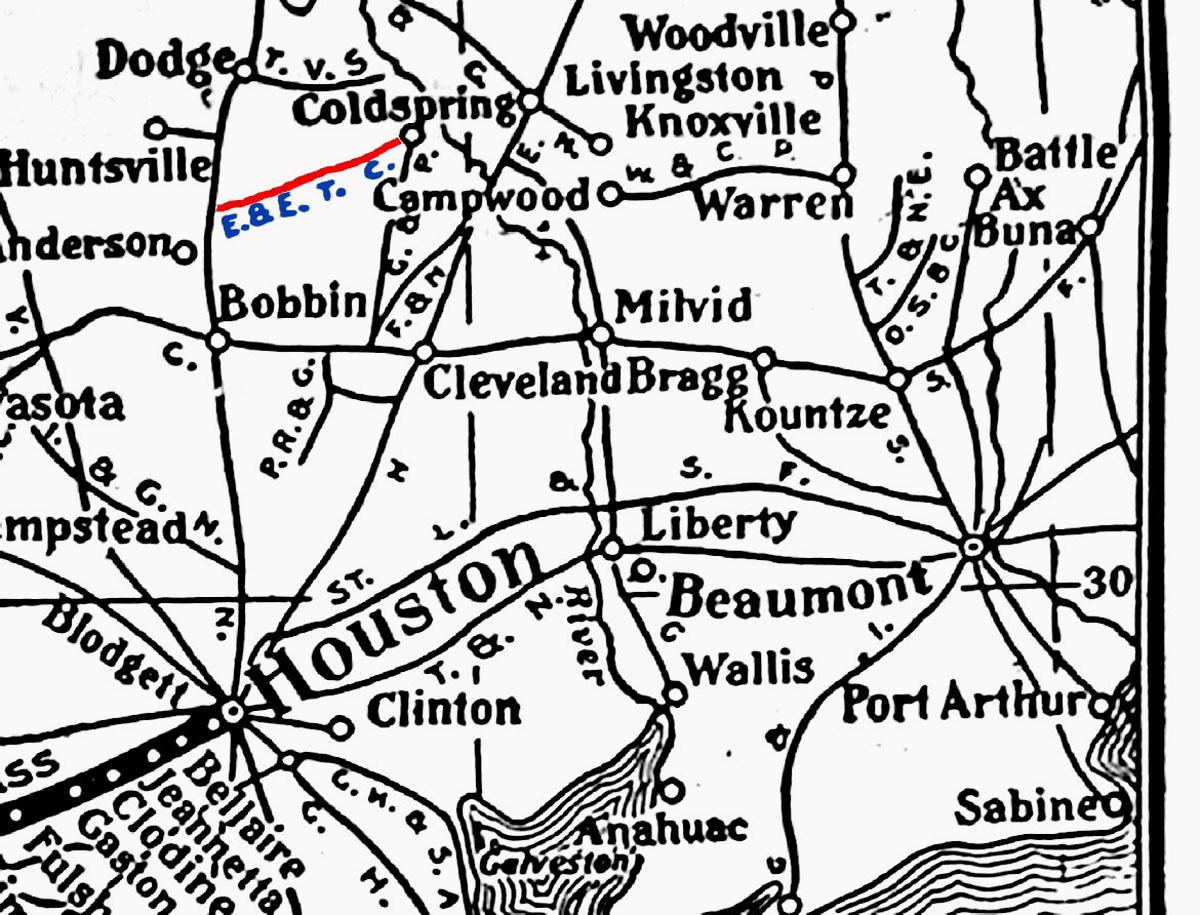
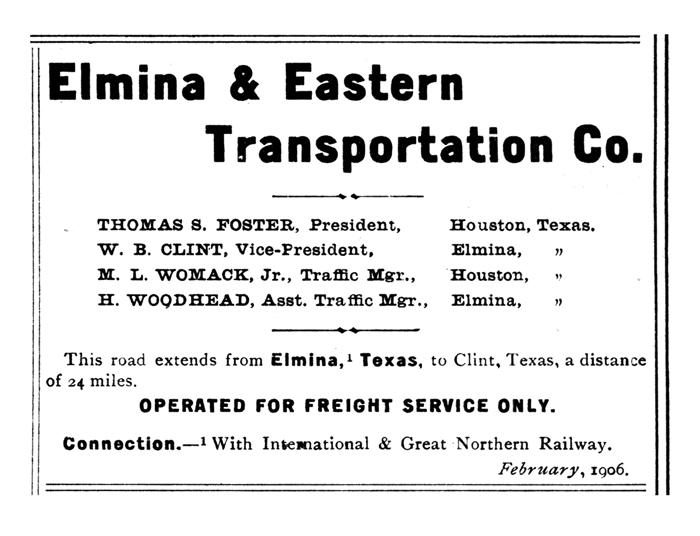
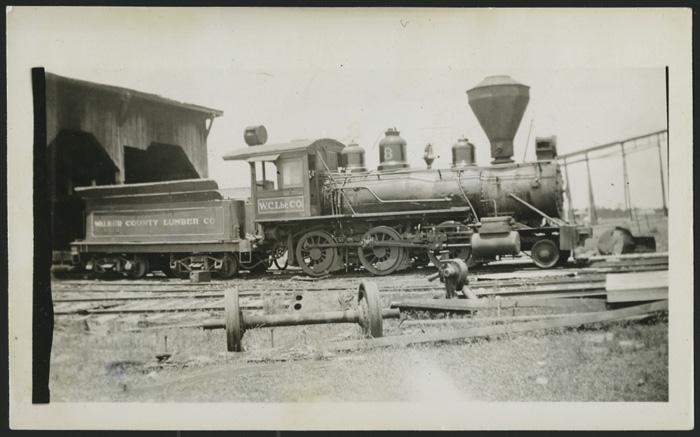
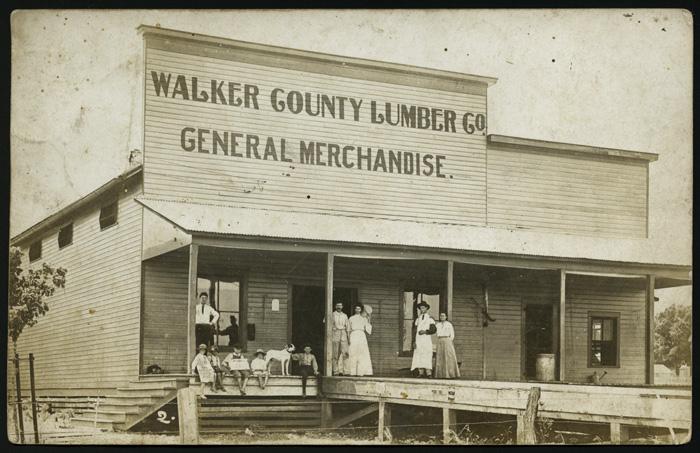
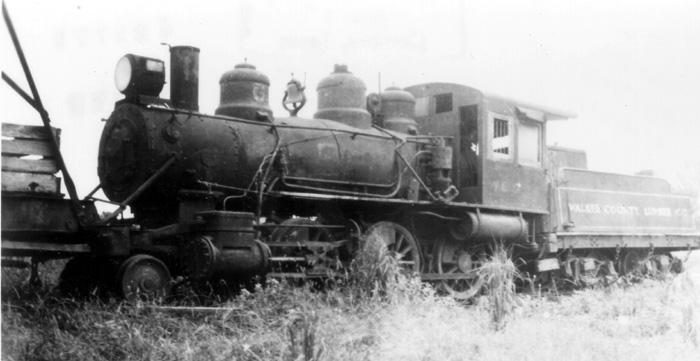
Elmina, believed to be named after the El Mina Masonic Temple in Galveston, was a settlement about a mile north of New Waverly and 13 miles south of Huntsville. Today, little remains of this town, aside from a few ruins on a country road, providing evidence of its existence. In 1870, lumberman Kit Oliphant built a sawmill on the site where Elmina would later stand. By the early 1900's, Oliphant sold the mill to the Walker County Lumber Company, who brought in lumbermen, greatly accelerating the growth of the small town. The Walker County Lumber Company wanted to use Elmina as a major sawmill and to process pine timber from the nearby forests in San Jacinto and Walker counties. They used the surrounding railroads to transport their materials, operated by the Elmina & Eastern Transportation Company. The town's population began to rise quickly, ranking second in Walker County behind Huntsville. [1]
Letters from Elmira’s former residents reveal information about the work schedule. Interestingly, breakfast was served three times - once at 5:15 A.M. for the woods crew, again at 6:15 A.M. for the mill and planer crew, and one final time at 7:15 A.M. for the people who worked in the office. Supper was served at 6:45 P.M. to the townspeople and to the woods crew when they returned. From the same letters, we know that there was a movie theater in the town in 1906, which burned down only a few years later. [2]
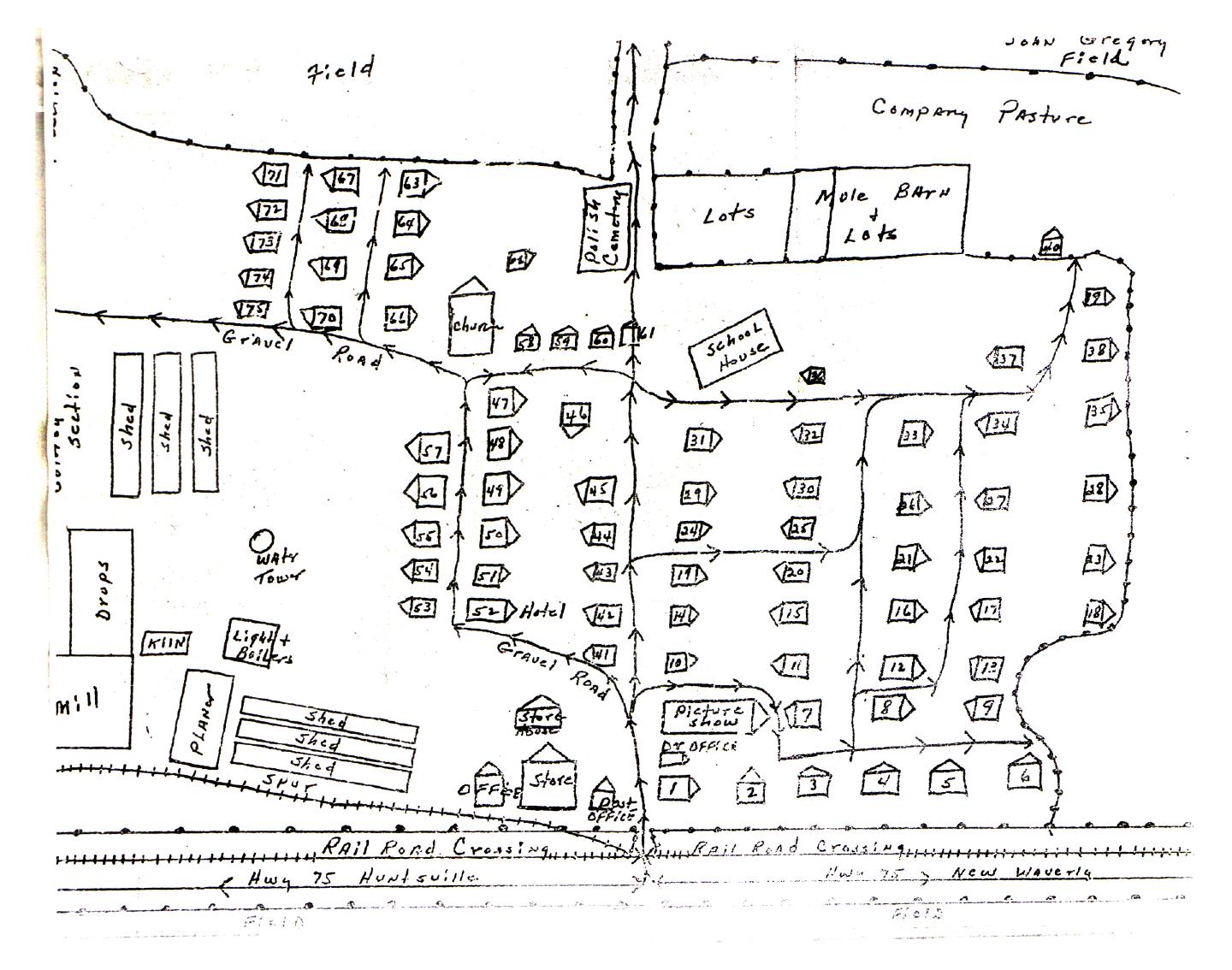
A map of the area sketched by Howard Oliphant shows that the Walker County Lumber Company planned to build 75 company-owned houses, a kiln, a schoolhouse, a church, and other basic amenities. Aside from the company-owned housing, many people lived in camps surrounding the area. Accounting for the employees working at the mill and their families, Elmina had a total population of about 700 people. The quickly growing town bustled with life, though it struggled to keep up with the sudden surge in population. [3]
By 1929, the once lively town of Elmina began slowly fading away when the Walker County Lumber Company shut down the sawmill. With the Great Depression on the horizon and the fact that nearby timber had been mostly harvested, workers had to work harder than ever to move the wood over increasingly greater distances. It didn't help that a fire at the mill began soon after, destroying it. With the economy already struggling and since the mill was hardly profitable, the company decided to shut it down instead of rebuilding it. With the closure, the community that once existed there slowly faded away. [4]
The story of Elmina is rather tragic. Its settlers were mostly Polish immigrants seeking to make a living in a prospective town. They endured World War I and pushed themselves through difficult working conditions. Despite that, they managed to cultivate a successful town, only ruined by unfortunate circumstances. The workers there lived arduous lives, and although the town of Elmina no longer exists, its legacy remains prominent. Descendants of Elmina still live in the surrounding area. The school that once resided in Elmina merged with the New Waverly Independent School District, combining operations. Most of the railroads Elmina used for the transportation of lumber still exist there today. And finally, a cemetery located just north of New Waverly was renamed in honor of the town and the workers who once lay there. [5]
Images