Harry F. Estill
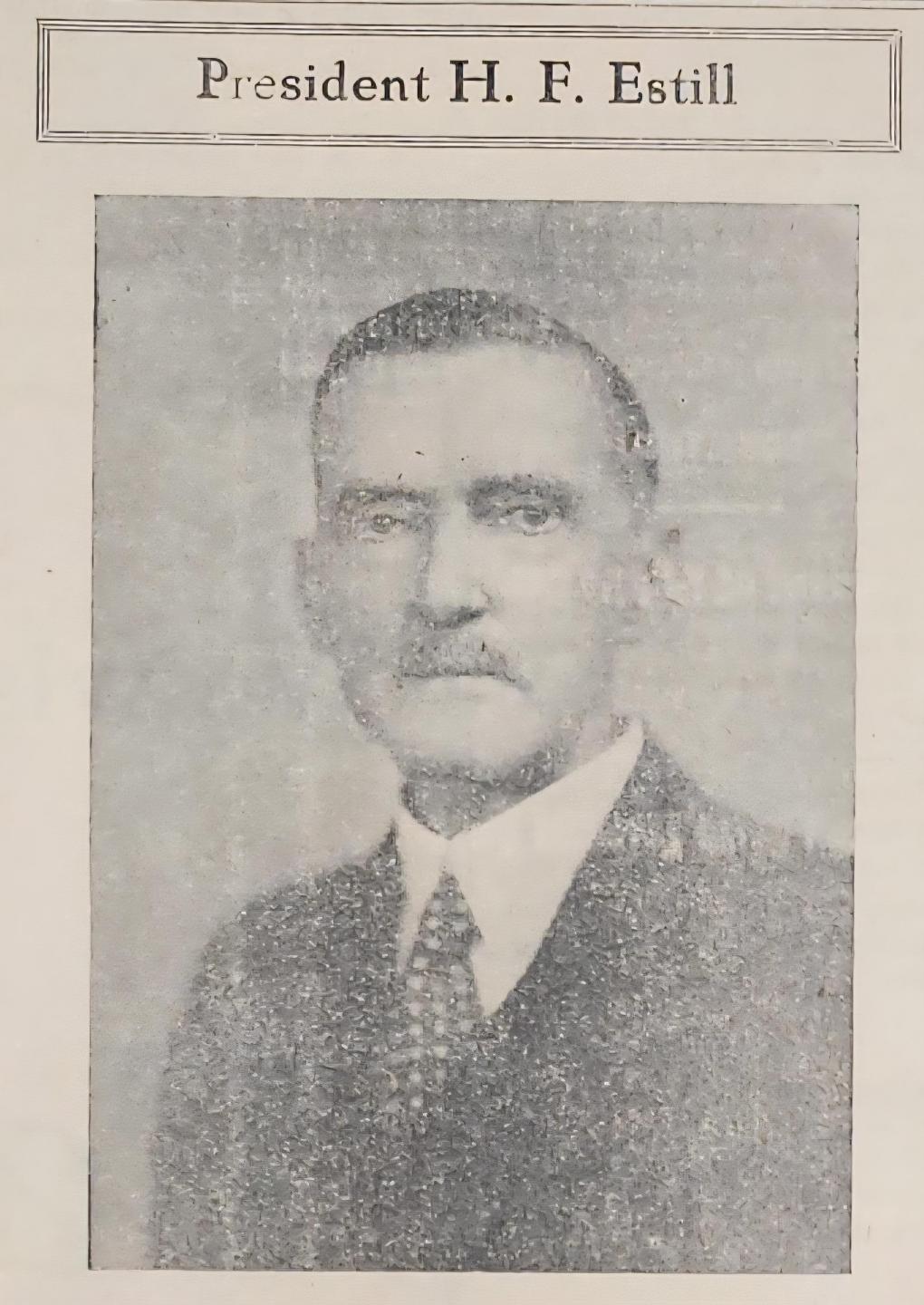
Dr. Harry Fishburne Estill, the fifth and longest-serving president of Sam Houston State Teachers’ College (SHSTC), greatly influenced both the institution’s development and its culture. This essay will examine how Estill’s leadership contributed to the college’s scholarly growth, the expansion of its facilities and curriculum, and the establishment of a lasting legacy respected by his family, colleagues, students, and alums. [1]
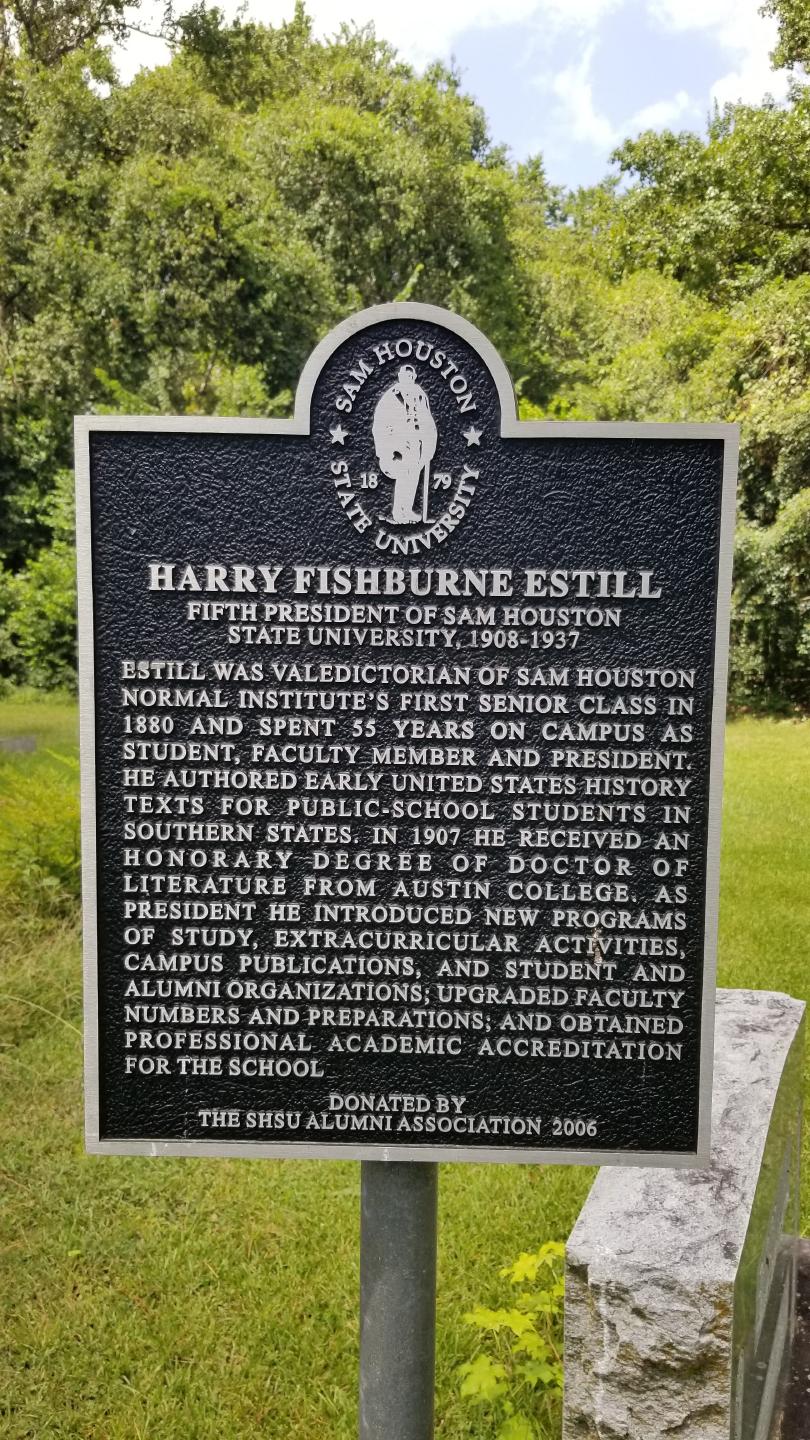
Harry F. Estill was born on August 12, 1861, in Lexington, Virginia, to Charles Patrick and Katherine Fishburne Estill. After serving as a captain in the Civil War, Charles became a teacher at Odd Fellows University in Bryan, Texas, where the family reunited. Harry graduated as valedictorian of the first class at Sam Houston Normal Institute (SHNI) in 1880. In 1881, Charles became a Latin professor at SHNI but passed away the next year. Harry took over his father’s position and was named vice-president of the college in 1898. While teaching, Harry met Loulie Sharpe Sexton, whom he married in 1907 after SHNI president Henry Pritchett became ill. Harry Estill took on the president’s duties and officially became president in 1908. As president, Estill was known for his discipline, humility, and devotion to excellence. He cared deeply for his students, as shown by his strictness and his personal welcome to the first-year class of 1934-1935 in the Houstonian, ending with, “Sincerely, your friend.” Estill focused on both students' academic and spiritual growth. He required daily chapel assemblies and often guest speakers to talk to students about their future as teachers across Texas. [2]
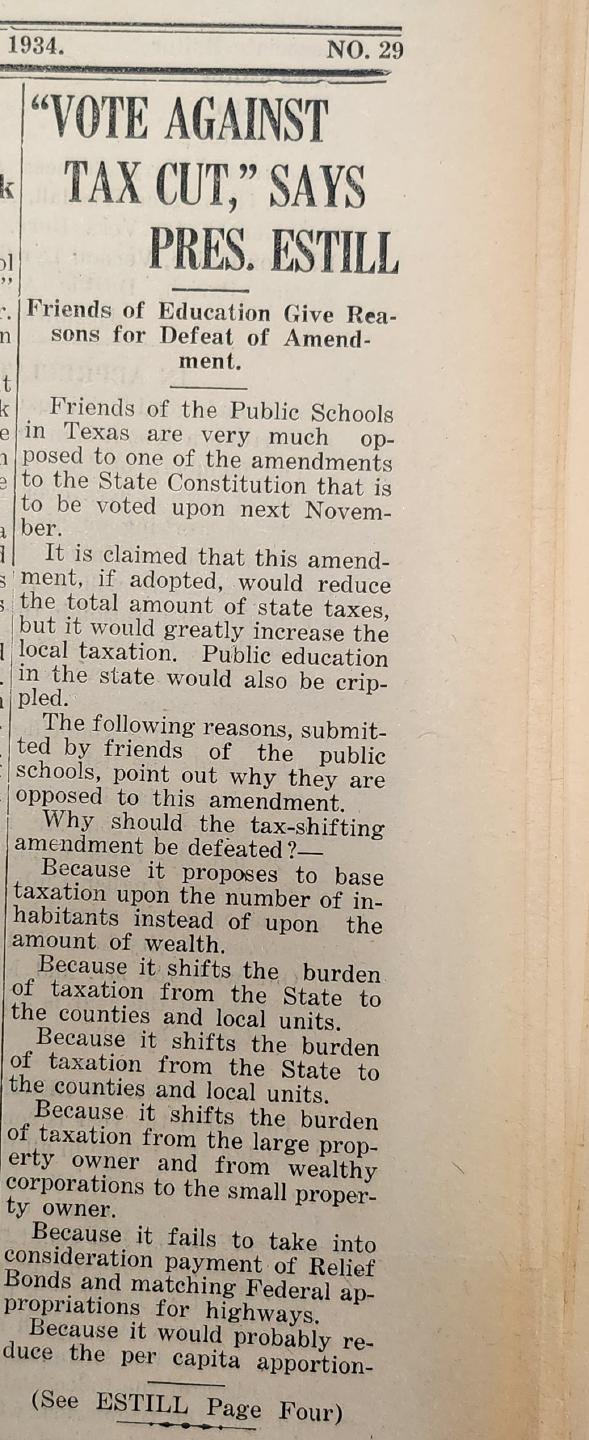
Estill cared deeply about his students’ well-being and the future of education in Texas. As president of the Texas State Teachers’ Association and vice president of the college teachers' section of the National Education Association, he was an influential leader among educators. Estill’s leadership extended beyond administrative roles, directly shaping educational policy and practice in the state. For example, in 1934, the Texas City Sun reported that Sam Houston State Teachers College, the Texas State Teachers Association, and neighboring institutions such as the Agricultural and Mechanical College of Texas and East Texas State Teachers College collaborated to oppose Senate Joint Resolution No. 13, which proposed amending the Texas Constitution to limit the total amount of state revenue that could be collected from taxes, licenses, permits, and fees every two years. Estill recognized the potentially detrimental effects this change would have on school funding, especially for disadvantaged rural communities. According to an analysis of school funding in rural counties in 1890, relying more on local property taxes and basing taxes on population rather than wealth would have reduced per-student funding, particularly in areas with greater inequality, because counties with more unequal farm sizes had significantly less revenue available for schools. Although Estill was no longer president of the association, he demonstrated his continued devotion to educational equity and institutional advancement by publicly opposing the amendment in written correspondence. The Houstonian covered SJR #13, and Estill urged citizens, students, and teachers to oppose it, showing his role as an advocate for both his institution and public education more broadly. According to a report from Sam Houston State University, Estill’s presidency was distinguished by considerable institutional growth and progress. When he started, SHNI had about 500 students and 18 faculty members. Through his deliberate leadership, Estill directed the construction of new facilities, expanded the curriculum, and recruited more faculty, thereby enhancing both the learning environment and the college’s reputation. In 1918, he oversaw SHNI’s transformation from a two-year normal institute to a four-year teacher’s college, which culminated in its renaming as Sam Houston State Teacher’s College in 1923. He was named president emeritus in 1937 and continued teaching history. By the time he retired, SHSTC had about 1,800 students and 75 faculty members, and was widely recognized in Texas for preparing teachers with strong moral character. [3]
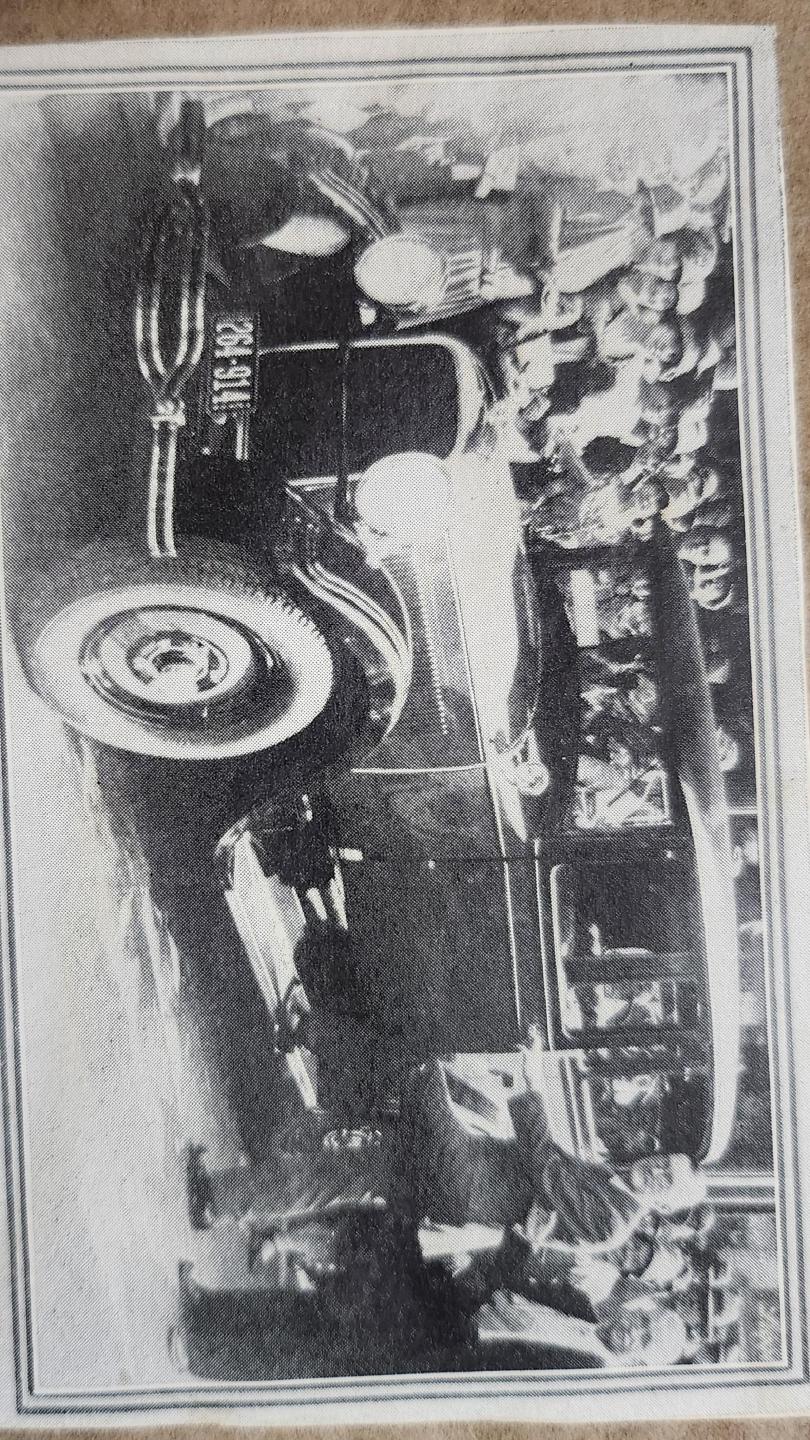
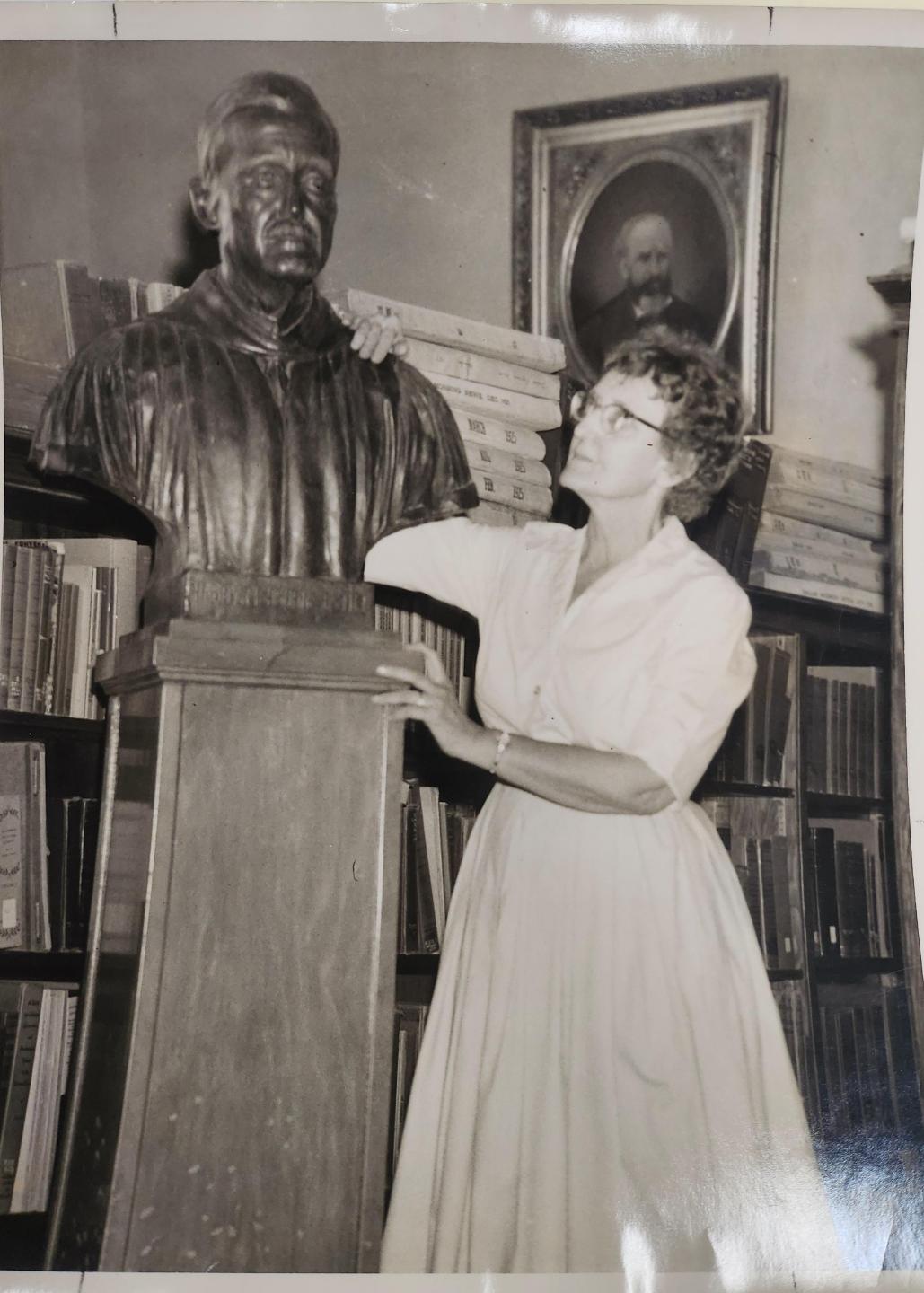
Furthermore, SHSTC students respected Estill, and their admiration lasted long after they graduated. Alums made special efforts to honor him and keep his memory alive. In 1927, Estill was given a Studebaker President Sedan to celebrate his 35 years of service at SHSTC. According to the Sam Houston State University website, William Z. Hayes, a member of the Board of Regents, collaborated with alums to secure funding for a car. Although discussions in 1942 considered creating a bronze bust of Estill, the onset of World War II led to the postponement of the project. According to Sam Houston State University, the Estill Library was dedicated in 1930 and features a bronze plaque at the entrance honoring President Harry Fishburne Estill for his efforts in securing the funds needed to build the library for Sam Houston State Teachers College. [4]
Estill died in 1942 and was interred alongside his wife in Oakwood Cemetery, Huntsville, Texas. He wrought a profound and permanent impact on SHSU. According to the City of Huntsville, Oakwood Cemetery is located in central Huntsville along 9th Street between Sam Houston Memorial Drive and Ryan's Ferry Road. Estill was laid to rest there with his wife in 1942, leaving a legacy at Sam Houston State Teachers’ College that reflected his lifelong devotion to service.” [5]
Images