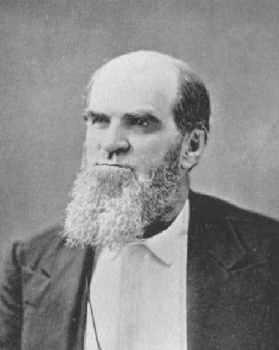
Walker County Prison System Post- Civil War
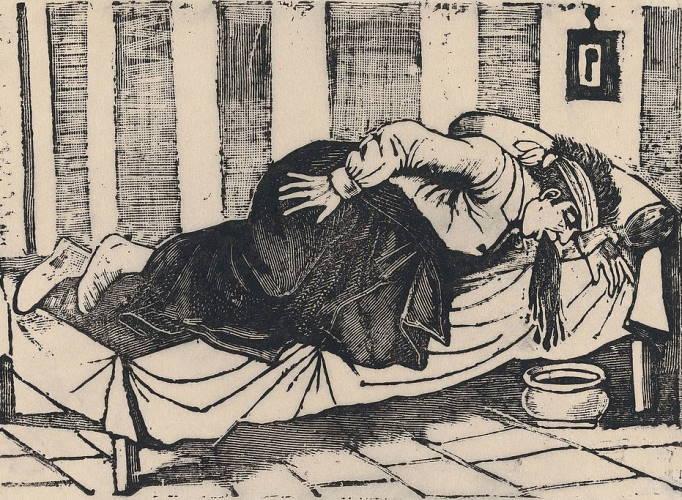
[2]“Details - the Huntsville Yellow Fever Epidemic of 1867 - Atlas Number 5507018491 - Atlas: Texas Historical Commission,” n.d. https://atlas.thc.texas.gov/Details/5507018491/print.
With the end of the Civil War on April 9, 1865, millions of enslaved African Americans were now free. However, legal emancipation did not end the deep-seated social, economic, and political problems that African Americans faced throughout Texas. Discrimination continued to affect the social and economic lives of Blacks living in Walker County during Reconstruction. To make matters worse, a yellow fever outbreak swept the South in 1867, killing about 10% of the local population. By 1870, the local black and white population had dropped sharply, and racial tensions had grown. [1]
Huntsville and Walker County, in general, have represented the center of the Texas prison system since the 1840s. The state's first penitentiary was also located there. After the Civil War, southern lawmakers passed "Black Codes" that turned minor offenses, like failing to provide proof of employment or breaking curfew, into crimes, leading to many more arrests, particularly of African American men. In Texas, the Convict Lease System, which became common in Walker County, let private people or businesses rent out prisoners, usually Black men, for exorbitant fees. [2]
At first, prisoners built railroads, such as the Houston & Great Northern Railroad, built by the Phelps Dodge Company, which ran through Walker County. Convict laborers did more than lay track; they also constructed Dodge Station in 1872. The project proved so successful that the leaders of the community that sprang up around the station named their town Dodge, in honor of the corporation that had brought so much business to their area. Although Dodge lacked large prison units, it featured farms operated through convict leasing. Popular throughout the post-Civil War South, convict leasing allowed local governments and even private businesses to use prisoners as laborers. By keeping large segments of Walker County’s African American population behind bars, local officials denied them the freedom promised by the 13th, 14th, and 15th Amendments to the Constitution. [3]
The Convict Lease System reveals how the change from slavery to freedom in the mid-1800s merely created new ways to exploit and control Black workers by often turning normal behavior into crimes. In 1874, the U.S. Army moved several prisoners from Huntsville to a military prison in Kansas. The inmates reported to federal officials that Texas prison personnel frequently deprived them of proper food and clothing and threatened them with guns, whipping, and torture. In fact, one prisoner had been shot while “trying to escape.” In a subsequent investigation of Huntsville’s prison system, state inspector J.K.P. Campbell noted that the Huntsville Prison’s dispensary lacked any medicine and demanded that prison officials explain how 49 sick prisoners could be treated with no supplies. Campbell’s investigation also revealed outbreaks of scurvy and severe physical abuse of prisoners that had resulted in permanent, untreated injuries. Such findings proved that the convict lease system continued to use slavery-like work practices, which maintained an ongoing system of racial and social inequality. [4]
The number of convicts in Texas rose from 146 to 264 between the end of the Civil War and the fall of 1866. However, in 1876, the Texas legislature passed a law that ended Huntsville Penitentiary's contract with private companies and returned control of convict leasing to the state. In 1879, Governor Richard B. Hubbard established a board of directors, a supervisor, and guards to monitor conditions at the prison. He also contracted with a new firm, Cunningham and Ellis, to make minor improvements to repair penitentiary buildings and remodel the prison hospital. But the company later bribed local officials to cover up the underlying harshness and abusiveness of the convict lease system. As such, the racial exploitation surrounding convict leasing continued to persist not only following Reconstruction but well into the Civil Rights era as well. [5]
Images
[2]“Details - the Huntsville Yellow Fever Epidemic of 1867 - Atlas Number 5507018491 - Atlas: Texas Historical Commission,” n.d. https://atlas.thc.texas.gov/Details/5507018491/print.
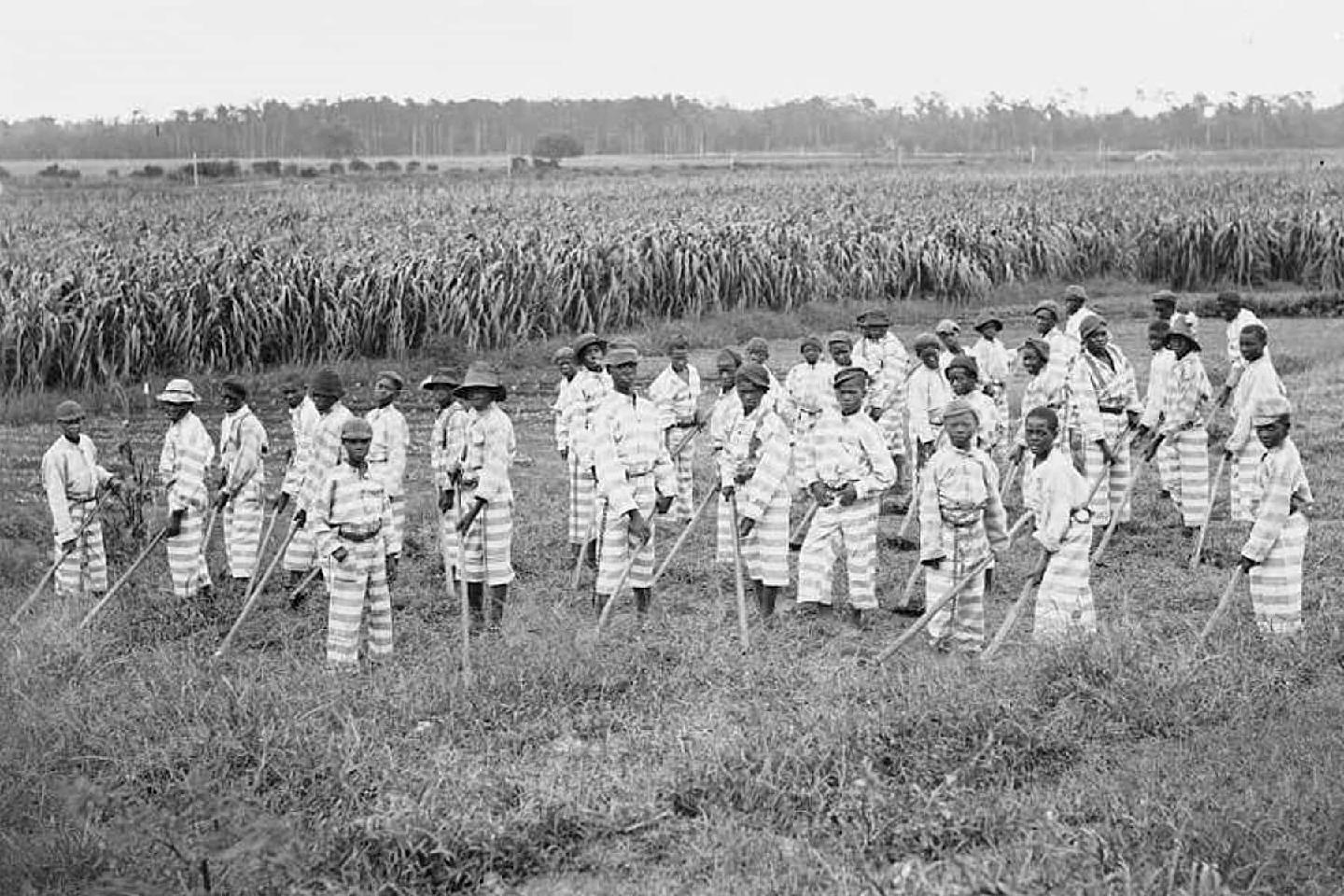
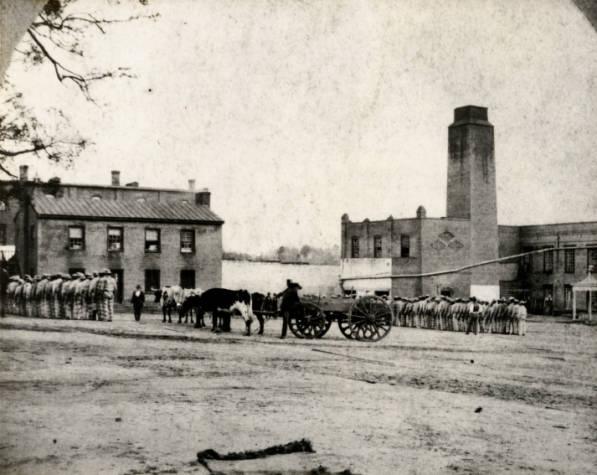
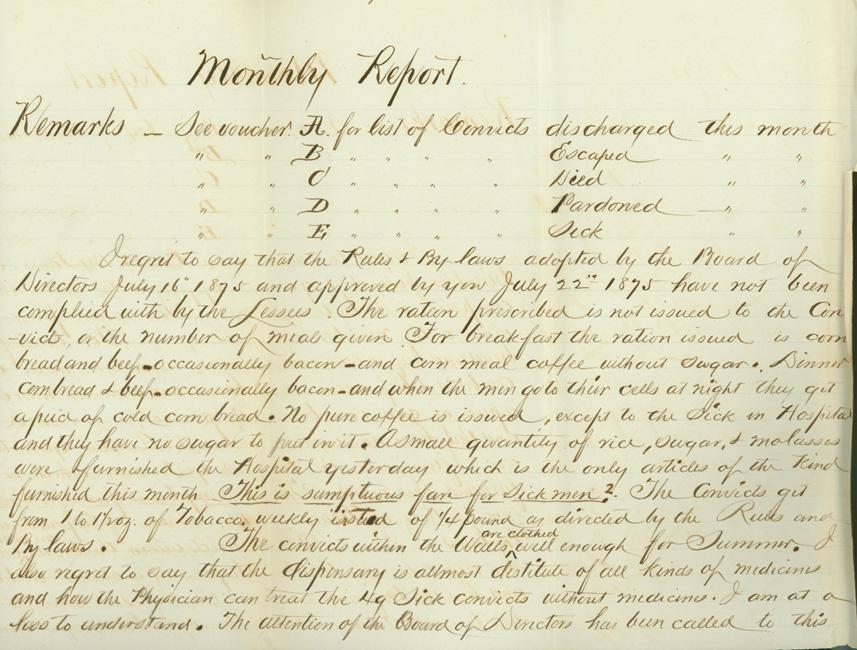
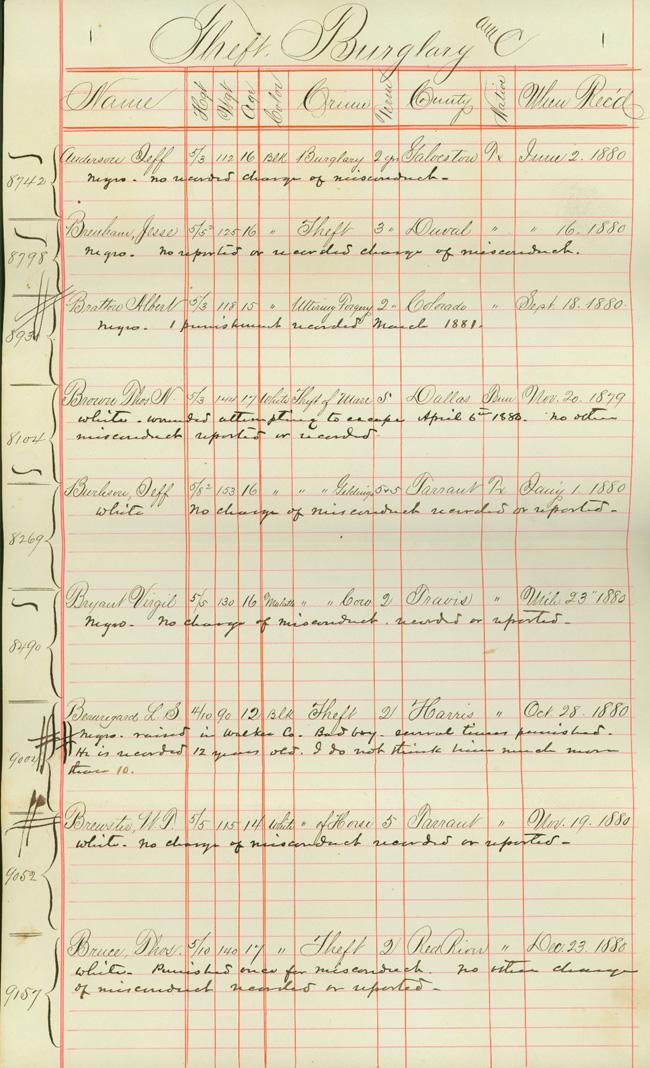
Due to the brutal nature of the Convict Lease System paired with the new "Black Code" laws, many of the prisoners were incredibly young. Presumably so that the leasers could utilize the children's small bodies and stamina. One-third of the prisoners in this report were under the age of 21. This report is somewhat unique in that it has a blend of white and black convicts. The youngest is reported to be 12 years old; however, Inspector Campbell noted that the boy does not look any older than 10. This system punished even children severely, and many died young due to malnutrition and other forms of abuse. Source: [1]Commission, Texas State Library and Archives. Fear, Force, and Leather: The Texas State Prison’s First Hundred Years, 1848-1948, 2010.