Filed Under Story

Phelps: A Railroad Town
Located East of Huntsville, Texas, in Walker County, lies a little town along Farm-to-Market Road 2296, south of Highway 190, called Phelps. While passing through, travelers often notice that this part of the Piney Woods seems quiet and bare. However, Phelps has a history of major changes that have influenced Texas. The close-knit community was a result of railroad construction, travel, and migration.

The story of Phelps can be traced back to the 1860s, when engineers for the Houston and Great Northern Railroad Company (HGNR) began surveying a railroad route through Walker County. They planned to build a railroad that stretched from Houston to the Red River and eventually to the Canadian border. The first organizers of the railroad consisted of Ebenezar B. Nichols, William Marsh Rice, W. J. Hutchins, H.D. Taylor, B. A. Shepherd, and Moses Taylor. Work crews completed a 55-mile track from Houston to New Waverly in 1871. The following year, the HGNR built another track from New Waverly to Crockett, Texas, that stretched 56 miles long. The railroad’s entrance into Walker County began to influence the region's political, economic, and social life. [1]

The Houston and Great Northern Railroad companies spurred the creation of Phelps. In 1870, the company established the Waverly station about 10 miles west of Old Waverly. Residents of Old Waverly loudly opposed granting the company a right-of-way for the railroad. Leaders of Waverly also believed that the railroad would bring along “tramps and ignorance to the town and kill cattle.” Years prior, a yellow fever outbreak had knocked out a portion of the population. The sickness also took out family members of those who had already been residing in the area and were on their way to the region, but never made it. The disfavor of Old Waverly residents led to the establishment of the Waverly station. The station was followed by the foundation and establishment of New Waverly that same year, which attracted a large population and left Old Waverly to decline in population quietly over the succeeding decades. [2]

In 1871, Phelps-Dodge Construction Company established a depot and telegraph station in a region that would soon become known as Phelps. The town was named after the company. The station's founding sparked a community to bloom in the area. In 1874, residents established a post office, a hotel, a church, a general store, and a school. Huntsville civic leaders had come to understand the railway's benefits and regretted their previous opposition. This is especially true because Old Waverly had given Walker County a preview of what rejecting the railway could lead to. The spur at Phelps connected Huntsville to the main railway line. This connection, in turn, contributed to the growth of the Phelps community. [3]

As the Phelps area began to swell, sawmills started operating, and they quickly became a staple in the region. Over 100 families worked in the sawmills, with many of them residing in Phelps. [3] In 1890, the community’s population report listed about 25 residents. By 1914, a similar report indicated that Phelps had more than 300 residents. As Walker County evolved and experienced significant changes, Phelps’s population declined. In the late 1930s, sawmill popularity declined, and many ceased operating. [4]

Images
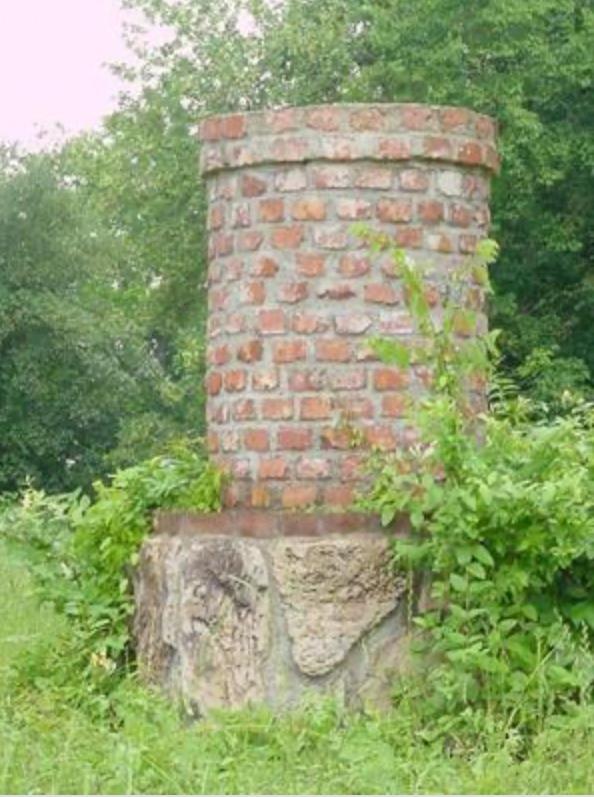
A Cistern That Sits In Phelps, Texas
A Cistern That Sits In Phelps, Texas The station constructed in Phelps, Texas is what started the growth of the knit community, which led to the establishments of a business and sawmills. Sawmills were popular in the area, with an estimation of about 100 families working in the sawmills, and most of those families residing in Phelps. The town had a working post office, hotel, and a school for the community to put into use and utilize as tools thrive as a small circle connected to Walker County. Although each business and institution, including the sawmills, silently faded and shut down overtime, their impact and history remains a part of Walker County. Source: https://www.texasescapes.com/EastTexasTowns/Phelps-Texas.htm
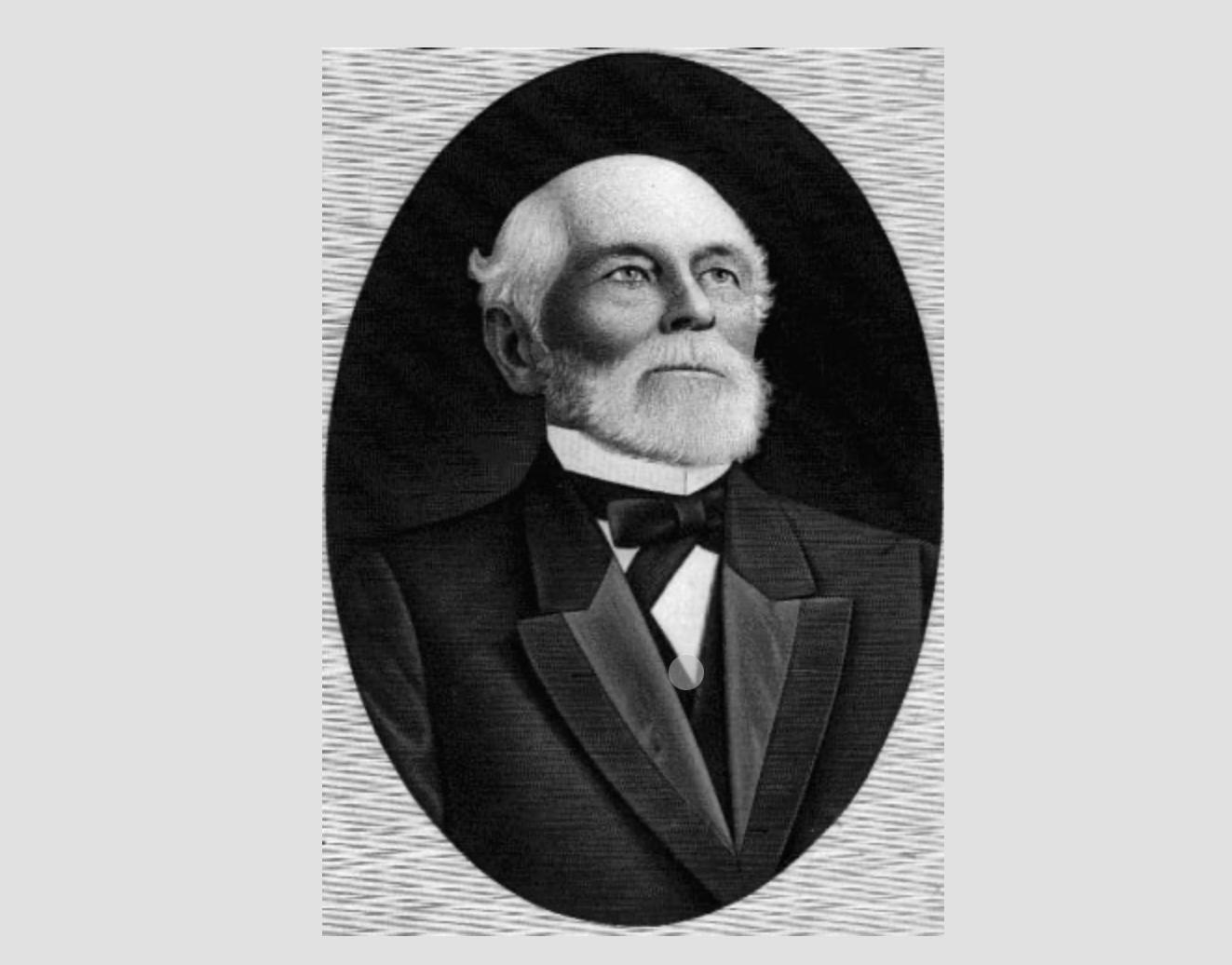
William Marsh Rice (1816-1900)
William Marsh Rice (1816-1900) William Marsh Rice was one of the first organizers of the railroad for the Houston and Great Northern Railroad company. He was joined by Ebenezar B. Nichols, W. J. Hutchins, H.D. Taylor, and B. A. Shepherd, and Moses Taylor. A known merchant and financier who was born in Springfield, Massachusetts, he moved to Houston, Texas after the panic of 1837. After gaining profits from a job at the Milan Hotel where he furnished and served liquor in the establishment, he eventually started his own company by the name of William Rice and Company in 1856. Before William Rice and Company, he also founded the Houston and Galveston Navigation Company in 1851 along with other investors. Source: https://www.tshaonline.org/handbook/entries/rice-william-marsh
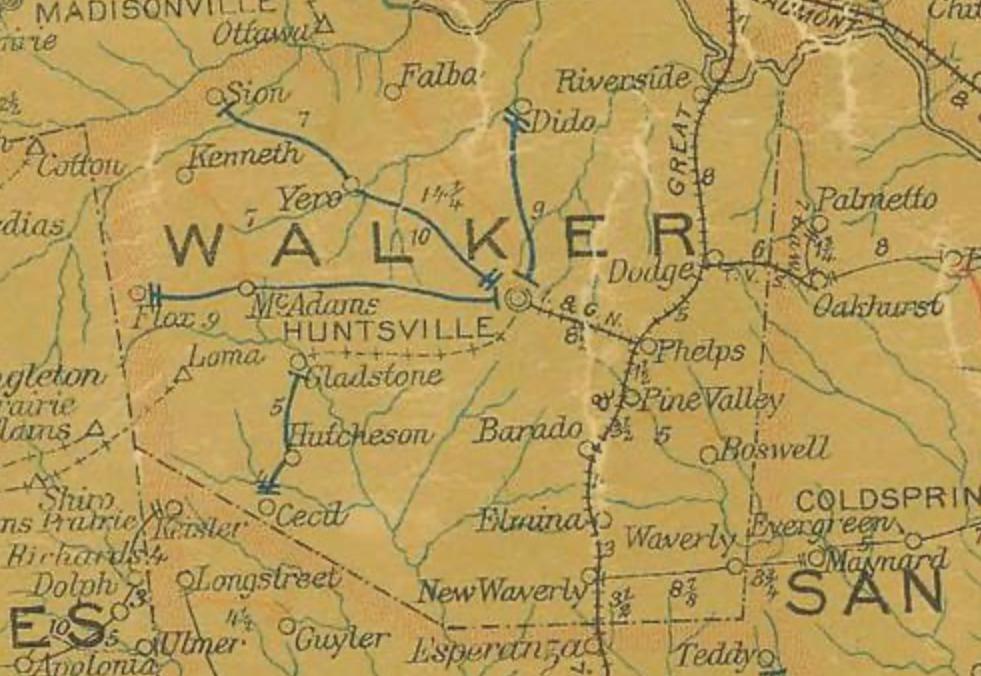
Phelps, Texas And The Railroad Shown On A 1907 Postal Map.
Phelps, Texas And The Railroad Shown On A 1907 Postal Map. Phelps, Texas occupies a small area just about six miles East of Huntsville, Texas, laying along Farm-To-Market-Road 2296, south of Highway 190. Walker County is compromised of many little towns, each with upbringings of migration and marks of evolving communities. While some towns have remained more prominent than others, every establishment and founding of the different towns have impacted how Walker County stand today. Each of the various towns have in one way or another contributed to the traditions the Walker County community holds dearly. The community continues to grow and learn about the history that made the region what it is in the present. Source: https://www.texasescapes.com/EastTexasTowns/Phelps-Texas.htm
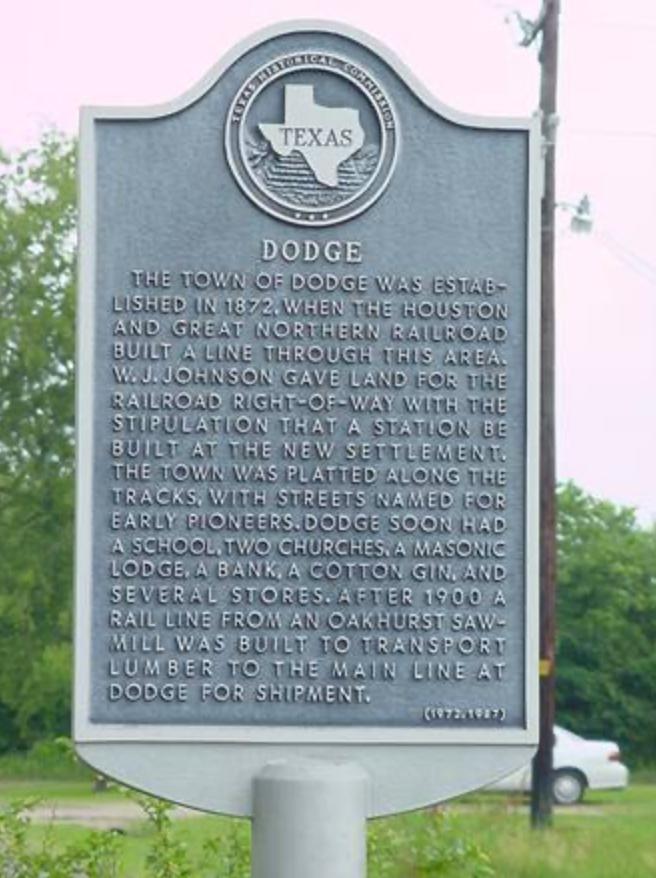
Dodge, Texas Historical Marker
Dodge, Texas Historical Marker The founding and curation of Phelps, Texas contributed to the growth in the nearby Palmer County, by inspiring the establishment of another knit community, Dodge, Texas. A few settlers had arrived to the Dodge area in 1825. In the year 1872, a settler residing in the area by the name of William Parmer, who was the son of one of the first settlers in the Dodge area, had granted a right-of-way to the Houston and Great Northern Railroad. Later that same year, Dodge Station was constructed and became of great use for further communication with various people and regions. The Phelps-Dodge Company was responsible for construction, as the company was for Phelps, which is where the town obtained the name. Source: https://www.texasescapes.com/EastTexasTowns/Dodge-Texas.htm
Logo of the International Great Northern Railroad Company
Logo of the International Great Northern Railroad Company The railroad formed in 1873 was carried out by the International Great Northern and Houston and Great Northern Railroad Company. Houston’s railroad was charted on October 22, 1866 and The IGN’s on August 5, 1870. Houston and Great Northern had branches connecting and spread out across different regions of Texas, such as Phelps, Huntsville, Palestine, and East Columbia. The company owned approximately 252 miles of track. In 1873, there was a financial panic that spooked many companies and businesses. However, the IGN remained steadily expanding, owning about 177 miles of track at the time. By 1881, the IGN had reached Rockdale, Austin, San Antonio, and Laredo. Source: https://www.tshaonline.org/handbook/entries/international-great-northern-railroad

Location

Map

Metadata

Reagan Galloway, “Phelps: A Railroad Town,” East Texas History, accessed October 1, 2026, https://easttexashistory.org/items/show/450.