Bishop Ward Normal and Collegiate Institute
From 1862-1877, the United States underwent the Civil War, the Emancipation Proclamation, and Reconstruction. During this period, both Black and white Texans experienced significant changes in politics and society. The end of slavery and the freedom of African Americans represented two of the greatest challenges [1].
The federal government set up the Freedmen's Bureau in 1865 to "bring about social change for African Americans." A significant portion of its responsibilities involved broadening educational opportunities, viewed to ensure "long-term protection for freedmen." But many white Texas lawmakers were against these efforts because racism was still a formidable problem in Texas politics. After the Civil War, African Americans in Texas fought back against oppression by working to make schools more accessible and expand educational opportunities. Historically Black colleges and universities (HBCUs) also began appearing in Texas around 1878, despite some resistance from white officials. [2]
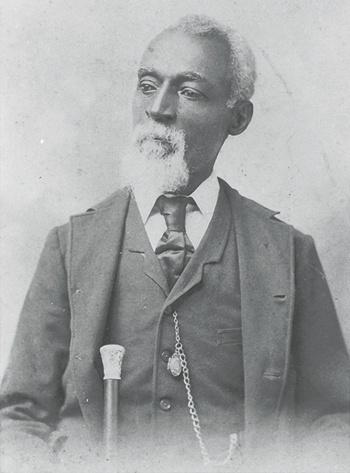
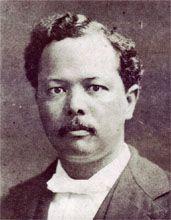
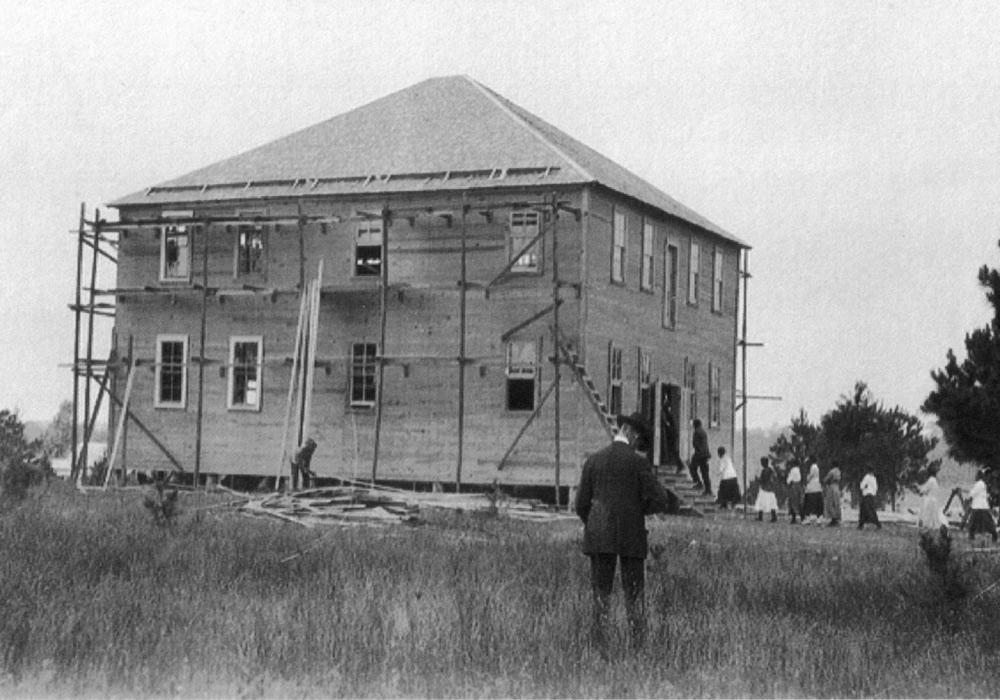
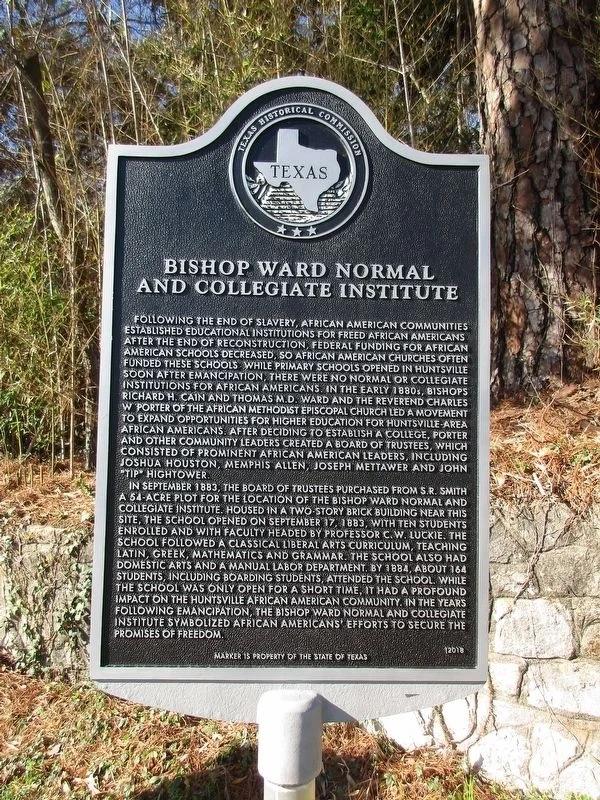
The African Methodist Episcopal Church built on these early efforts by starting a city-wide campaign to teach African Americans in Huntsville, Texas. Church leaders bought 54 acres from the S.R. Smith family to build one of the state's first HBCUs. Episcopal Church leaders Richard Cain, Thomas Ward, and Charles Porter oversaw the project. Joshua Houston, whom Texas Governor Sam Houston had once enslaved, also played a major role in founding the school. On September 13, 1883, the Bishop Ward Normal and Collegiate Institute opened on Smith Hill in Huntsville. It was the fifth HBCU in Texas. Professor Charles W. Luckie was responsible for the school. The curriculum focused on the classical liberal arts, with a particular emphasis on "teaching Latin, Greek, Mathematics, and Grammar." It also trained students to become teachers, thereby improving education for African Americans across the state. The school offered classes in home arts and manual labor to meet the needs of students with different interests. [3]
The Bishop Ward Normal and Collegiate Institute closed after seven years due to insufficient funding. This closure paralleled the financial problems that many Black schools faced during the Reconstruction Era. [4]
The school's closure brought attention to the ongoing funding problems in African American education, but its inability to secure ongoing funding limited its lifespan. The school was open for only a short time, but it had a significant impact on higher education for African Americans in Walker County, Texas, and across the country. In 1907, Samuel Walker Houston, Joshua Houston's son, continued his father's work by opening the Sam Houston Industrial and Training School, a primary school. The Texas Historical Commission erected a historical marker in 2018 to highlight the institute's importance. The Bishop Ward Normal and Collegiate Institute proved crucial in providing local African Americans with more opportunities to obtain an education. It also helped inspire more HBCUs across the country. [5]
Images