Joseph Baldwin
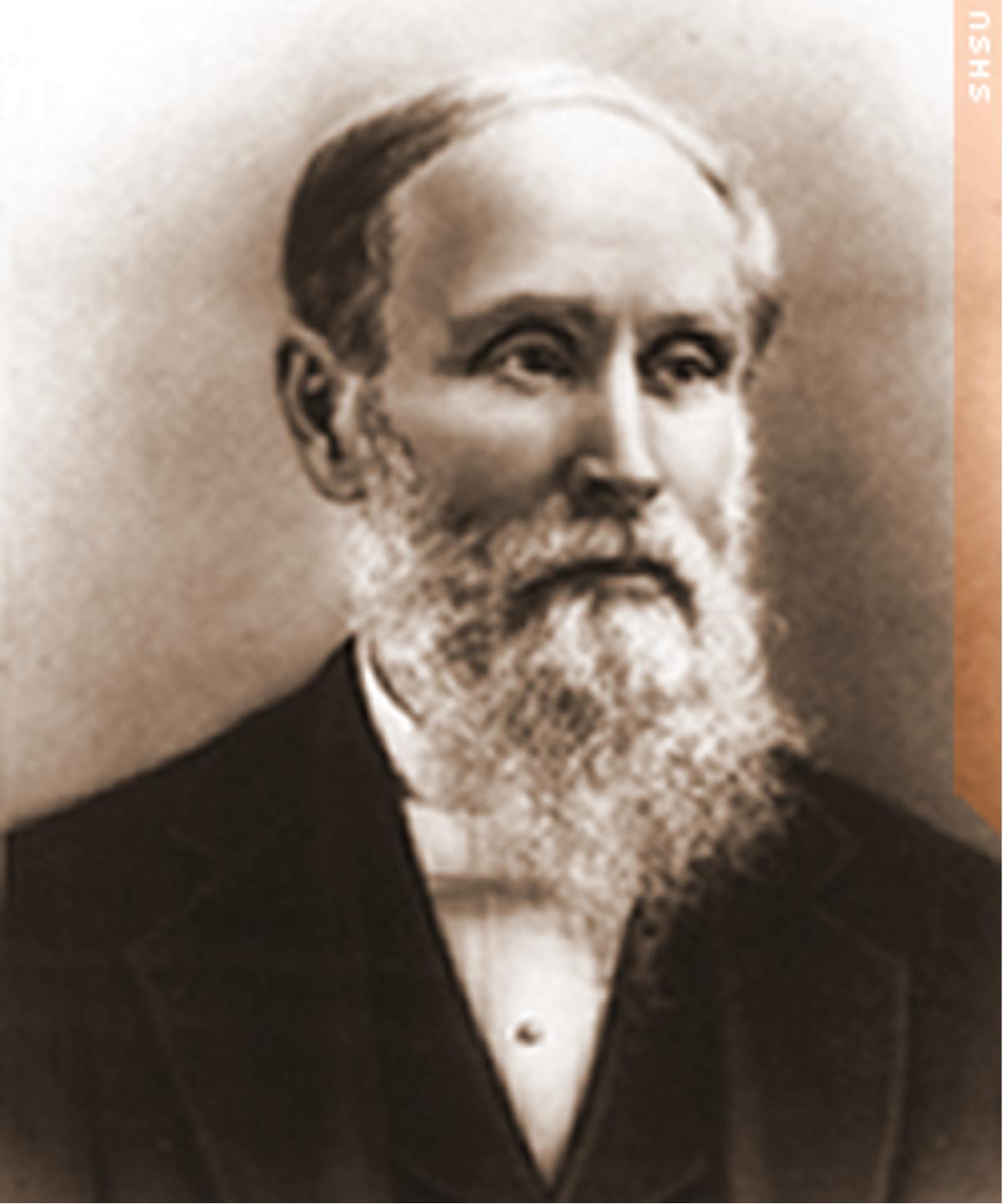
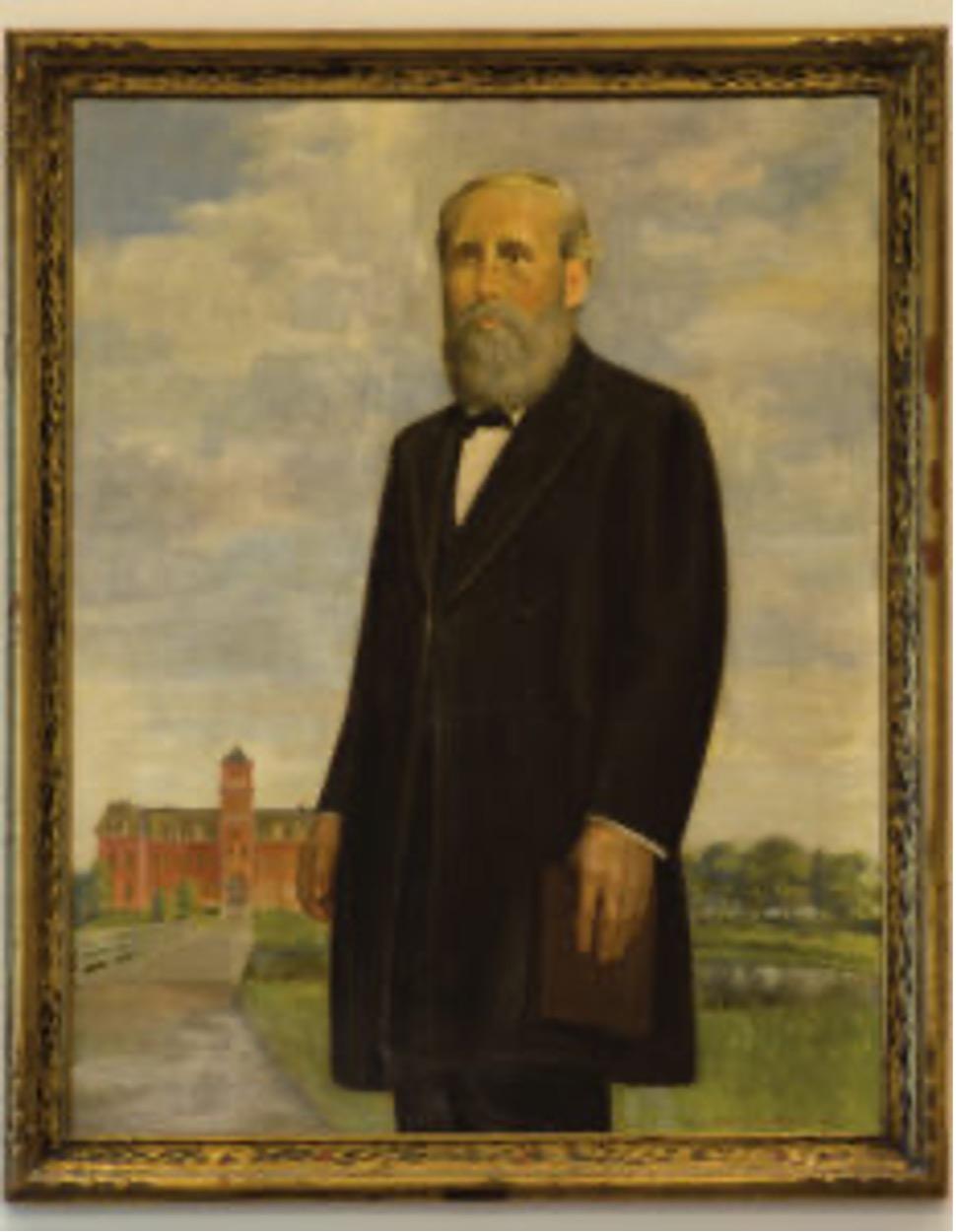
Joseph Baldwin's vision and leadership greatly influenced the development of higher education in Huntsville during the New South era. He brought decades of expertise in teacher education and institutional leadership to Huntsville as president of Sam Houston Normal Institute from 1881 to 1891. His experience establishing and running regular schools across several states placed him in a position to strengthen and expand the institute's mission during a transformative period in Texas history. Baldwin contributed to the development of a solid academic foundation at SHNI that would continue after the institution became Sam Houston State University. [1]
Born in 1827 in Newcastle, Pennsylvania, Baldwin attended Bartlett's Academy and then earned a Bachelor of Arts at Bethany College in West Virginia in 1848. Following graduation, he took college jobs in Missouri, first in Platte City and then in Savannah. Early in his career, Baldwin sought to further his studies. He demonstrated his commitment to raising the bar for teacher preparation by helping to form the Missouri State Teachers Association in 1856 and serving as its vice president. In 1857, Baldwin enrolled in the Lancaster County Normal School in Pennsylvania to acquire formal training in teacher instruction methods after seeing the value of specialized preparation for educators. [2]
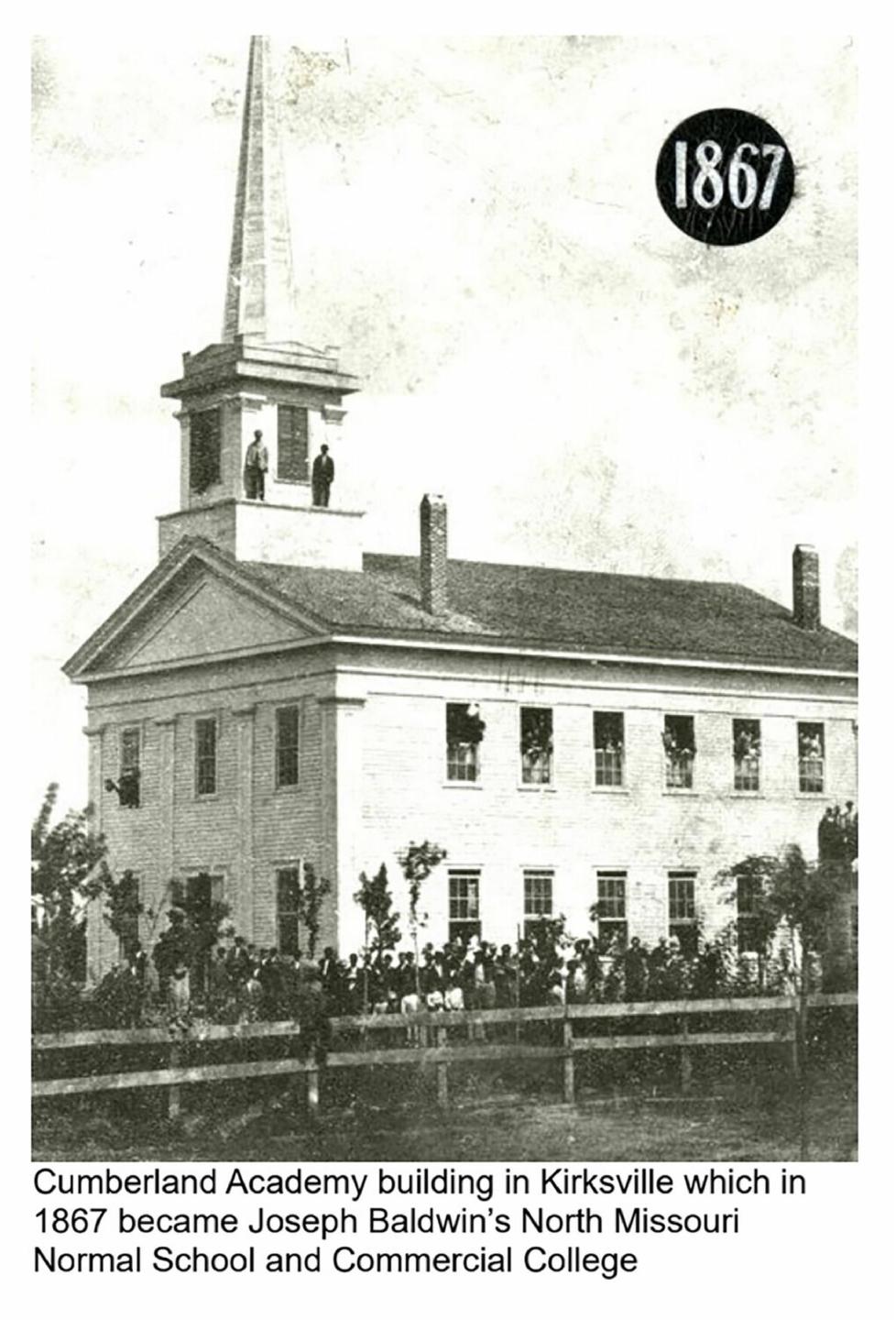
Baldwin's career demonstrated his spirit of innovation in traditional schooling. He established the Indiana Normal School in 1858, the state's first and the country's sixth normal school. At a time when institutionalized training programs remained relatively new, this accomplishment made him a pioneer in teacher preparation. Serving in the Indiana Infantry during the American Civil War from 1863 to 1864 momentarily halted his career path. However, Baldwin continued to grow his influence in education after the war. He established the North Missouri Normal School and Commercial College, which would eventually become Truman State University, in Kirksville, Missouri, in 1867. Baldwin became the institution's first president when it was named Missouri's first public teaching college in 1870. [3]
Baldwin left his job in Missouri in 1881 to take over as head of the Sam Houston Normal Institute in Huntsville, Texas. The institute's physical infrastructure and identity were still being developed at the time. Following the Civil War and Reconstruction, the New South era placed a strong emphasis on modernization and educational reform as a means of achieving regional recovery. Baldwin's presence was ideal for Huntsville's aspirations to establish itself as a hub for civic advancement and teacher preparation. He was well-suited for strengthening the academic and administrative framework of the university because of his vast experience in creating and overseeing educational establishments. [4]
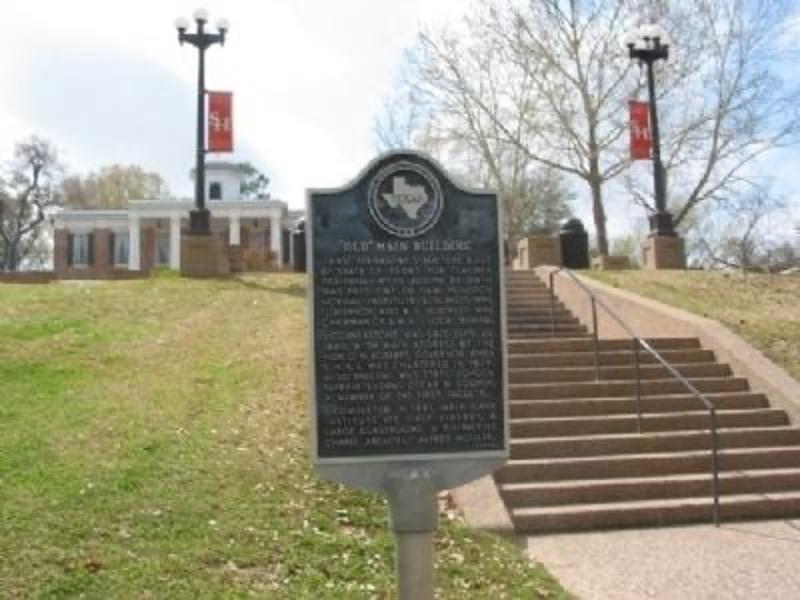
Baldwin led a major campus expansion and improvement while serving as president from 1881 to 1891. He oversaw the reconstruction of the Austin College Building, which included adding a third story, after seeing the need for more classroom space. Additionally, he oversaw the construction of the Main Building, which became the campus's second most important building. These physical extensions reaffirmed the institution's significance in the community and represented its development and stability. According to local historical narratives like Walker County: Postcard History Series and Historic Walker County, the campus gradually came to define Huntsville's environment during this time. [5]
Baldwin's impact went beyond administrative tasks and the building of the campus’s infrastructure. He was adamant that teaching was a profession that required academic rigor, discipline, and organized training. The Normal Institute prioritized moral character, classroom practice, and educational theory under his direction. This method was in line with late-nineteenth-century national trends toward the professionalization of education. Baldwin's standing as a pioneer in teacher education was strengthened by his wider intellectual contributions, including writings on educational philosophy and methodology. Through his guidance, Sam Houston Normal Institute became more than just a local institution. It developed into part of the broader American movement toward standardized teacher preparation. [6]
Baldwin's lifetime contributions to education were acknowledged in 1891 when Bethany College awarded him an honorary Doctor of Laws degree. He left Huntsville that same year to take a position as chair of the University of Texas at Austin's Pedagogy Department. His change reflected his standing in the country as well as his ongoing commitment to developing educational philosophy. He left a significant influence in American education before passing away two years after retiring as Professor Emeritus in 1897. [7]
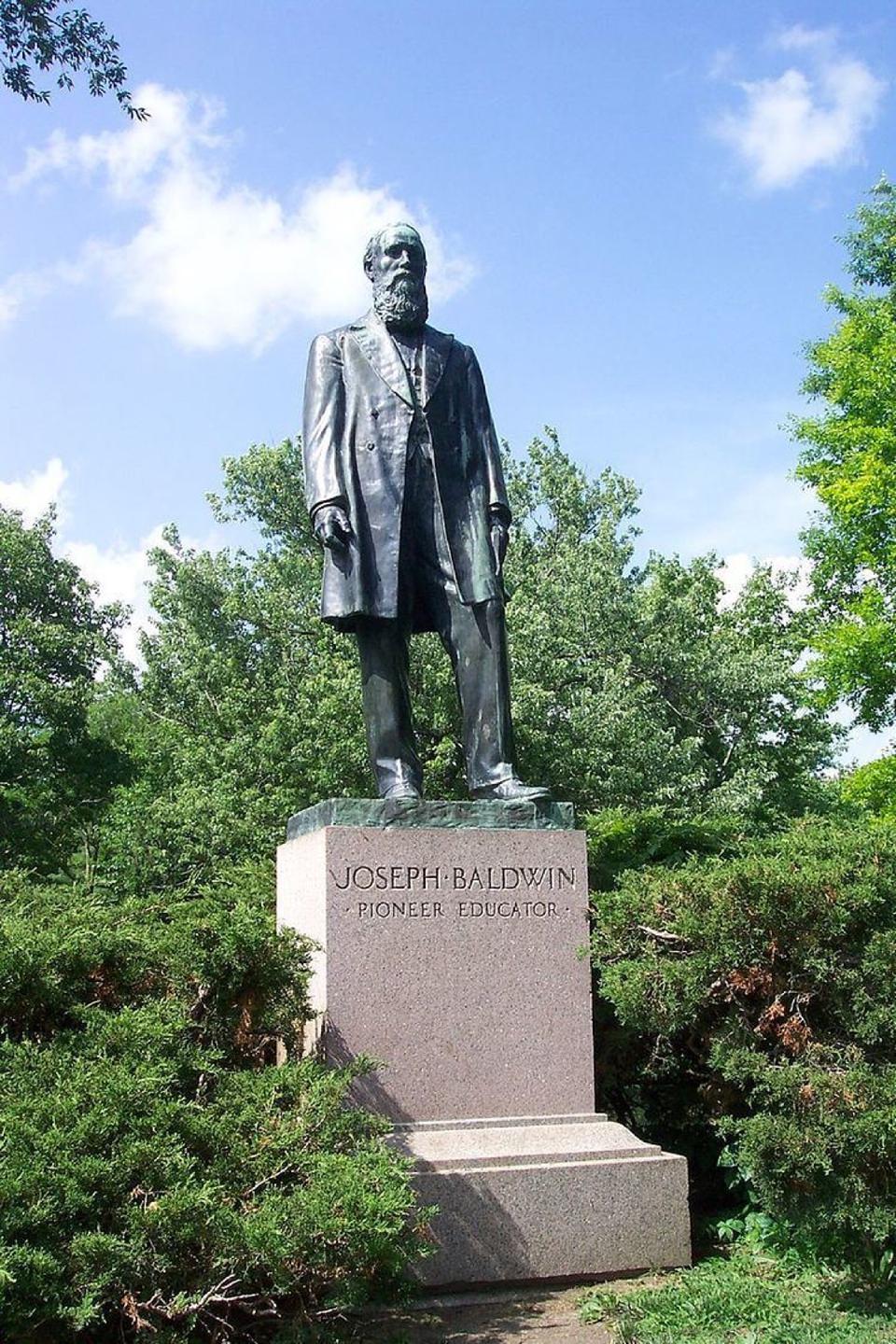
Baldwin's accomplishments have been recognized by Truman State University and Sam Houston State University. He was honored by the 1899 class of SHSU with a stained-glass window in Memorial Hall of Old Main. Although the 1918 Education Building eventually fell to the wrecking ball, it was later rebuilt and renamed in his honor. To preserve his legacy on campus, a residence hall for students bears his name today. In addition, buildings at Truman State University bear Baldwin's name. On October 27, 1927, the one hundredth anniversary of Baldwin's birth, a statue honoring him was placed on the south end of the university campus. [8]
During a pivotal time in Huntsville's history, Joseph Baldwin served as president of SHNI. His administrative leadership, vision, and experience increased the institution's physical presence and enhanced its academic reputation. In addition to influencing the institute's early years, his work helped establish Huntsville as a hub for higher education in Texas.
In summary, Joseph Baldwin was a significant player in Sam Houston State University's history as well as the larger evolution of teacher education in the US. Baldwin's leadership at Huntsville from 1881 to 1891 contributed to the establishment of one of Texas's most prestigious public colleges. Both the organization he oversaw and the community his dedication to education affected are still impacted by his legacy.
Images