Richard Williams
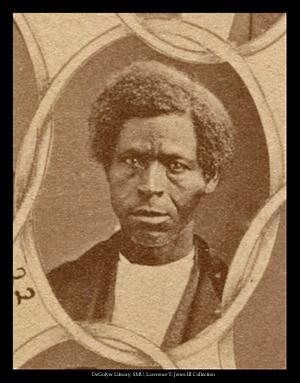
An account of Richard Williams, a Black legislator elected in Huntsville, Texas, to the 12th and 13th legislatures.
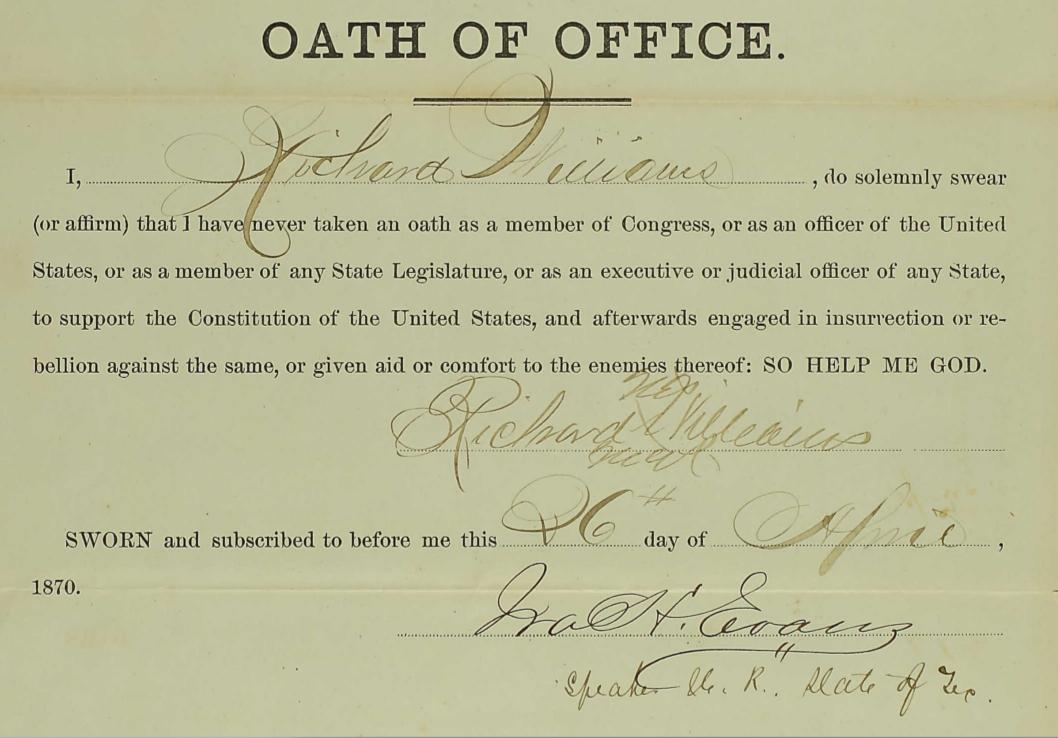
Born in Colleton, South Carolina, in 1822, Richard Williams came to Texas in 1856 as an enslaved man. Trained as a blacksmith, he also served as a minister to the local African American community in Huntsville. After emancipation on June 19, 1865, Williams remained in Huntsville, where he worked as a mechanic and politician, serving in the 12th and 13th Texas legislatures from 1870 to 1874. Williams represented one of 42 black Reconstruction-era legislators, and one of six black men who served in the 13th legislature. [1]
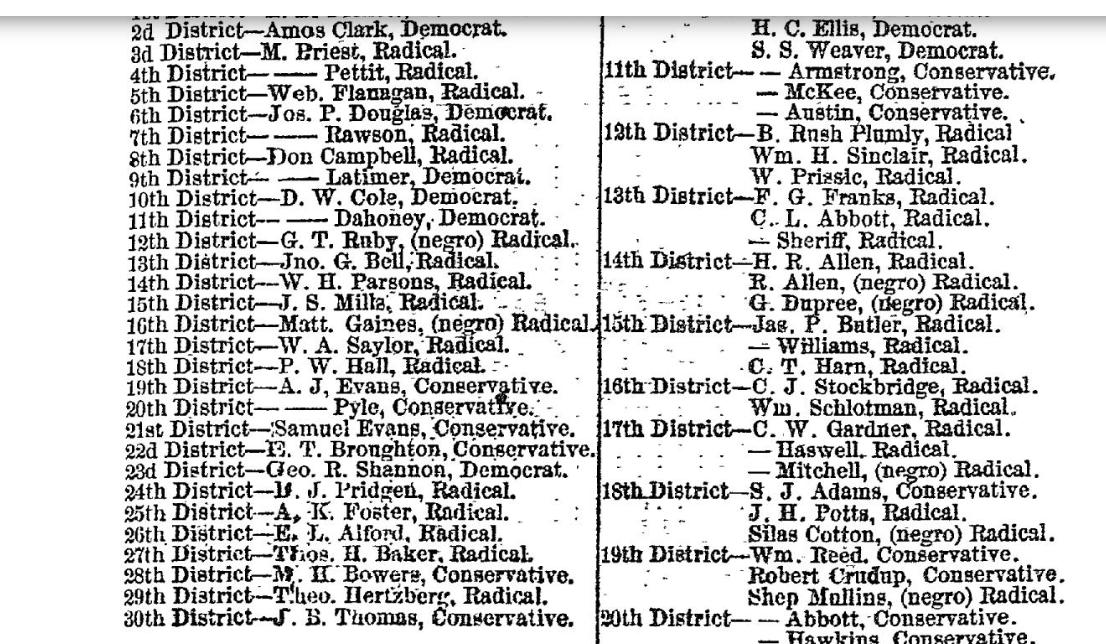
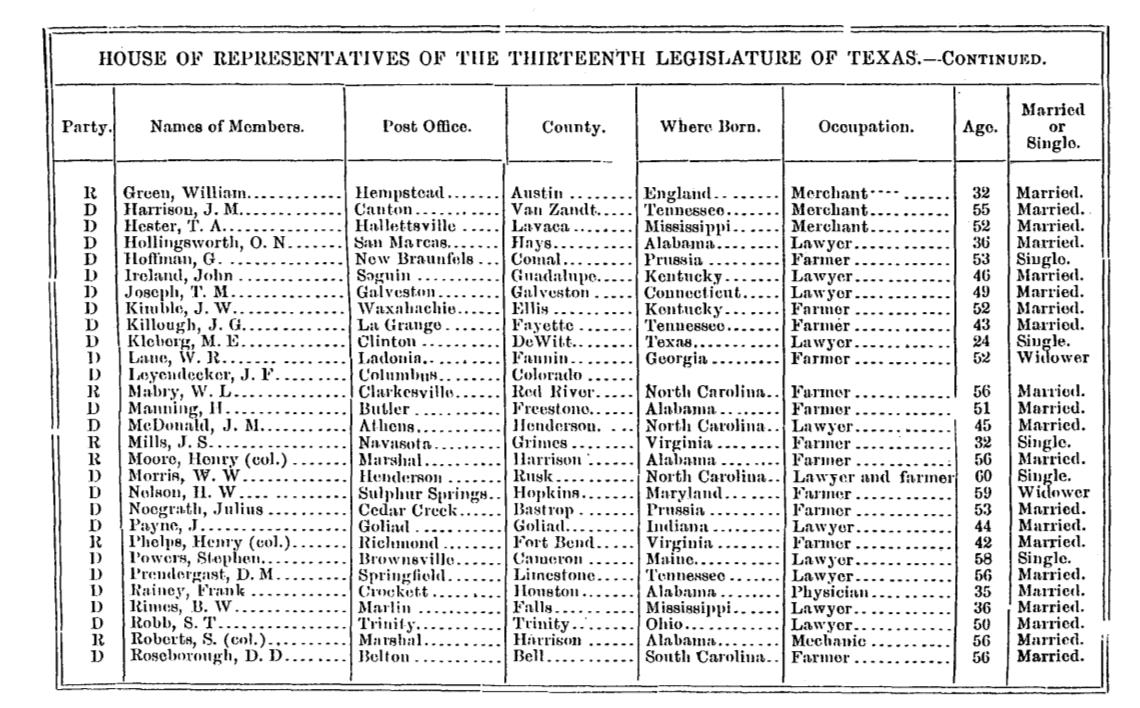
The Texas Almanac of 1870 includes a list of the current Texas legislature (the 12th at the time) and lists Williams as a radical representative for the 15th district, which would have comprised Walker, Madison, and Grimes Counties. Legislators on this list were divided into democratic, conservative, and radical political parties, with the latter two opposing factions that comprised the Republican party. In a directory of the House of Representatives of the 13th legislature, Williams is listed as a colored ("col.") member of the Republican party. On this list, members are sorted by party only, with no distinction between conservative, moderate, or radical republicans. This may be an indication of the coming overrule of the radical republicans by the conservatives who wanted to have a better chance against the democrats. [2]
Richard Williams was not only a Radical Republican but was also a part of the Radical Republican Association. Radical republicans supported passing the 14th and 15th amendments in the wake of Black Codes, which arranged matters so that black people were kept in a state of virtual slavery, despite the 13th Amendment to the U.S. Constitution. The Radical Republican Association was composed of both black and white Republican legislators who wanted to help the current administration (namely, Republican Governor Edmund J. Davis) successfully carry out party measures. The members took an oath of secrecy regarding what the association discussed, though they often voted in accordance with the policies advocated by Governor Davis. Williams, alongside the rest of the 12th legislature, successfully ratified the 14th and 15th amendments in Texas, as well as establishing public schools and homestead laws [3].
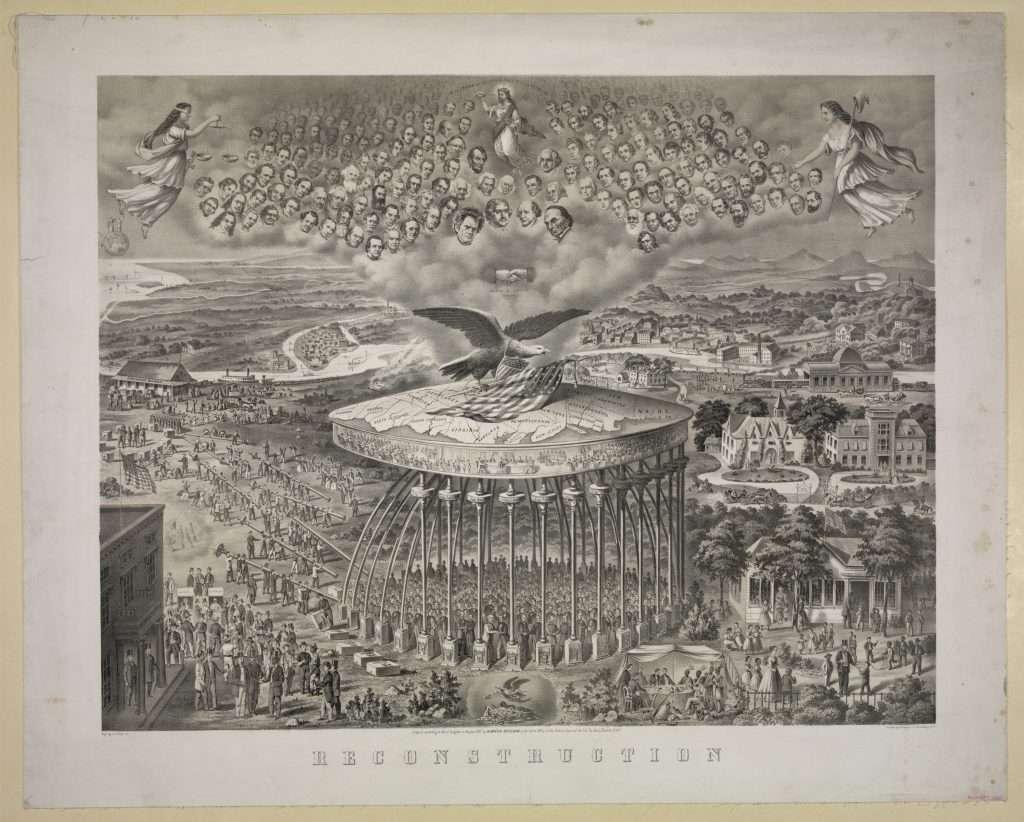
The fall of the Radical Republicans and the end of Reconstruction in Texas came in 1873, when a Democratic candidate defeated Governor Davis. The Constitutional Convention of 1875 resulted in a drop in the number of black legislators in Texas, due to both an increase in voter intimidation and a decrease in the black population in Texas. At the same time, a white conservative faction of the republican party was strengthening itself. To successfully compete with the democrats, African Americans were cast out in order to grow the party's white base. Richard Williams was among those who were not elected again after the 13th legislature ended in 1874. By 1897, the last remaining black legislator from the Reconstruction era had left office. [4]
Images