Pamelia Dickinson Mann at Washington-on-the-Brazos: Frontier Justice and Gendered Law
In 1836, Washington-on-the-Brazos stood at the center of a turning point in Texas history. Delegates, soldiers, politicians, and travelers crowded into the town to take part in the Constitutional Convention to decide if Texas would declare independence from Mexico. The event transformed this small East Texas town into a temporary capital of ideas, debate, and uncertainty. With limited infrastructure and an influx of people, boardinghouses became essential spaces. They provided food, shelter, and a place to exchange information. One such site was the boardinghouse operated by Pamelia Dickinson Mann and her husband, Marshall Mann. Though modest in scale, this boardinghouse played a meaningful role in the social life surrounding the creation of the Republic of Texas. [1]
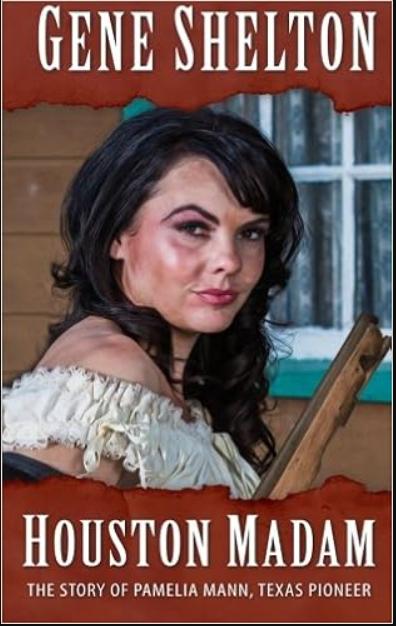
Pamelia Dickinson Mann arrived in Texas with a reputation shaped by survival, independence, and confrontation. Sources disagree on her early life. Some records suggest she was born in Kentucky around 1800, while others place her birth in Tennessee. What is clearer is that she lived a life marked by movement and self-reliance. Before coming to Texas, Mann spent time in New Orleans and other cities, where she supported herself by running boardinghouses. These experiences prepared her for the unstable and often violent conditions of frontier Texas. [2]
By the time of the 1836 Constitutional Convention, Mann and her husband operated a boardinghouse in Washington-on-the-Brazos. They sold meals for $1.25 a day, a price that reflected both scarcity and demand during the convention period. Guests included delegates, soldiers, and other visitors drawn to the political activity in town. The boardinghouse served practical needs, but it also created a shared space where conversations continued after formal meetings ended. [3]
Boarding houses held a prominent place in early Texas communities. They functioned as informal centers of communication and connection. Travelers exchanged news, debated political ideas, and formed relationships that extended beyond the walls of official buildings. Mann’s boardinghouse fit this pattern. While no official convention sessions took place there, the site supported the people who shaped Texas governance. This role gives the boardinghouse historical significance beyond its physical structure. Mann herself shaped the boardinghouse's character. Contemporary accounts describe her as bold, commanding, and unwilling to submit quietly to authority. At her boardinghouse, Mann enforced order and defended her interests without hesitation. Her leadership helped maintain stability in a crowded and tense environment. [4]
During the convention, Mann developed a relationship with Sam Houston. Their connection unfolded in domestic settings rather than formal political spaces. Houston, already a prominent figure in Texas politics, stayed in Washington-on-the-Brazos during the convention and interacted regularly with Mann. Their relationship continued during the Texas Revolution and into the years that followed. While Houston’s status often draws attention, Mann did not occupy a passive role. Her presence in his life reflects the ways women influenced political culture through proximity, labor, and personal authority rather than official titles. [5]
Houston’s later life adds geographic and symbolic weight to this relationship. After serving as president of the Republic of Texas and later as governor, Houston settled in Huntsville, Walker County, where he lived from 1847 until his death in 1863. Huntsville became the concluding chapter of Houston’s public and private life, and it is where he is buried today. The town, though quieter than Washington-on-the-Brazos during the revolution, represents continuity rather than contrast: a place where political authority intersected with domestic space, personal relationships, and community life. Mann’s earlier influence on Houston occurred long before Huntsville became his permanent home, but both settings reveal how informal environments shaped the men who governed Texas. [6]
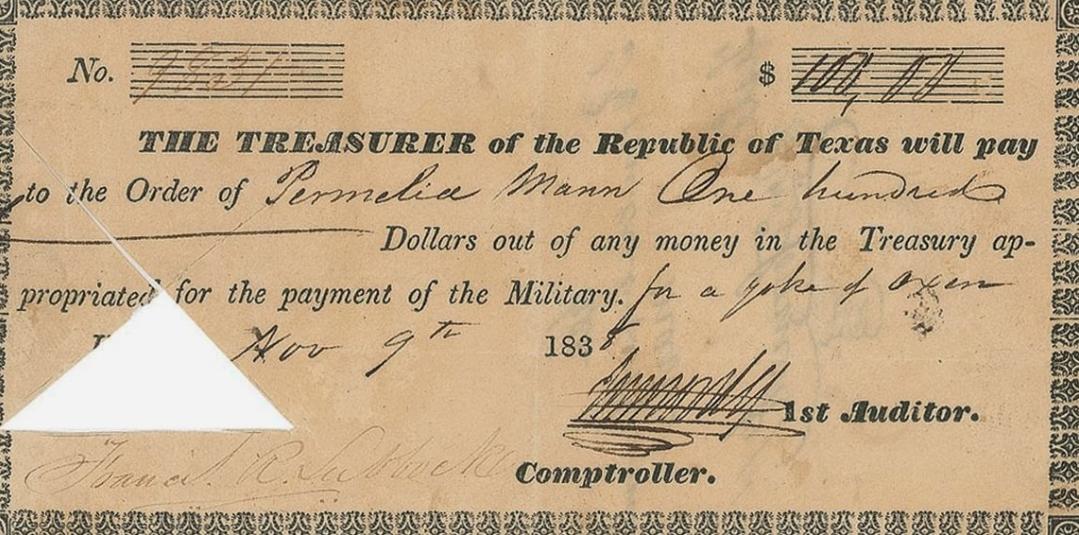
After the convention ended, violence soon followed. The fall of the Alamo in March 1836 triggered the Runaway Scrape, as civilians fled eastward alongside the Texian Army to avoid the advancing Mexican forces. Mann joined this movement. She traveled with her family and livestock, demonstrating her determination to survive on her own terms. During this retreat, Houston’s officers took a yoke of her oxen to pull artillery wagons through flooded roads. Mann initially agreed after being told the army was heading toward the United States border. When Houston instead turned south toward Harrisburg, she demanded her oxen back and reclaimed them herself. [7]
This incident further strengthened Mann’s reputation for fearlessness. One soldier sent to retrieve the oxen later returned with torn clothing and reported that Mann was “more man than woman” after confronting him directly. Such stories, though shaped by gendered language, reveal how Mann asserted control over her property and refused to yield even to military authority. These confrontations also highlight the blurred boundaries between civilian life and military power during the revolution, a dynamic that continued to define Texas communities, including places like Huntsville, as the Republic matured into a state. [8]
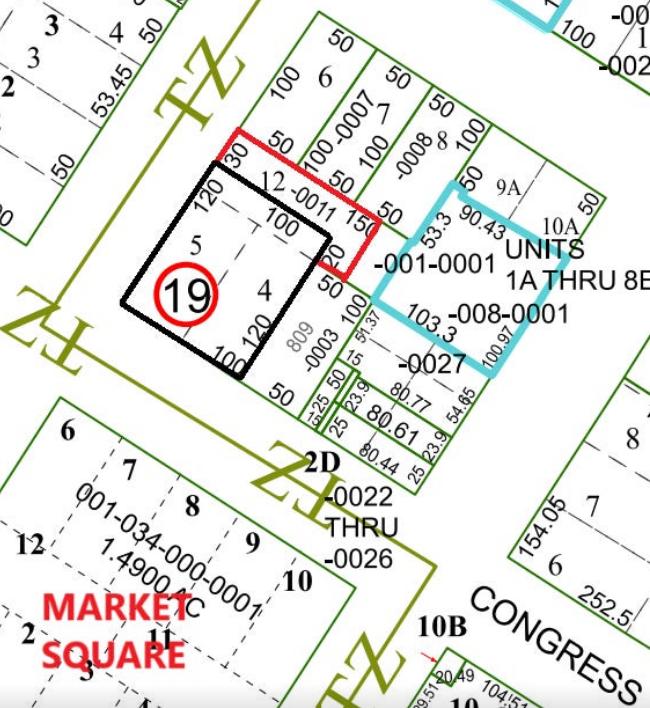
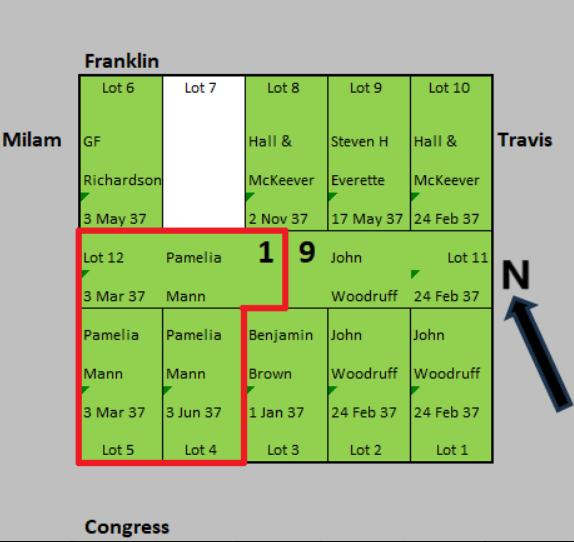
Following the revolution, Mann relocated to the newly founded city of Houston, where she established the Mansion House, often described as the city’s first hotel. This later business venture brought her greater wealth and notoriety. By 1840, Mann owned significant land, livestock, and urban property, marking her as one of the most financially successful women in early Texas. While the Mansion House became central to her legacy, her earlier boardinghouse at Washington on the Brazos remains an important chapter in her story. [9]
The Washington-on-the-Brazos boardinghouse represents the foundation of Mann’s success. It reveals how she used hospitality as both labor and strategy. In a male-dominated frontier society, Mann created stability through commerce and commanded respect through strength. Her boardinghouse allowed her to convert domestic work into influence at a moment when Texas stood on the edge of independence. [10]
Mann’s later years involved continued legal disputes, personal loss, and illness. She died of yellow fever in 1842 and was buried in what later became Founders Memorial Park in Houston. Sam Houston, by contrast, lived into the era of statehood and made his home in Huntsville, Walker County, where his legacy was memorialized in ways unavailable to women like Mann. Yet Houston’s political career cannot be separated from the relationships and environments that sustained him earlier, including Mann’s boardinghouse during the revolution. [11]
The Dickinson Mann Boardinghouse stands as a reminder that history does not unfold only in government halls or on battlefields. It also takes shape in kitchens, dining rooms, and shared living spaces. At Washington-on-the-Brazos, Mann’s boardinghouse supported the people who shaped the Republic of Texas while reflecting the courage required to survive the frontier. When placed alongside Houston’s later life in Huntsville, the boardinghouse underscores how informal, domestic spaces across Texas quietly shaped the state’s political foundations. Through fearlessness, business skill, and command of her environment, Pamelia Dickinson Mann transformed a simple boardinghouse into a site of lasting historical importance.
Images