United States v. Texas (1970)
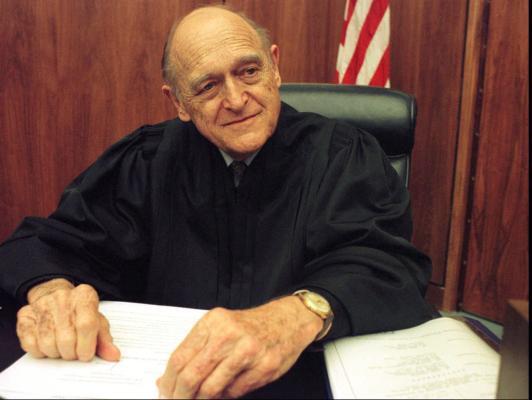
“The time is long past for permitting the States of this Union to enjoy the benefits of Federal assistance while refusing to accept a concurrent obligation with that of the National government to take affirmative action to insure the protection of constitutional rights and the enforcement of Federal statutes.” – United States v. Texas, 330 F. Supp. 235 (E.D. Tex. 1971)
Most Texas public schools desegregated in the 1960s, but in 1970, racial segregation still hid in plain sight in a number of districts, especially in East Texas. For example, the predominantly white Daingerfield Independent School District routinely accepted transfers of white students from the neighboring, and predominantly black, Cason ISD. The U.S. Department of Health, Education, and Welfare (HEW) warned Daingerfield against this in 1968, only to watch the district annex a section of Cason ISD that encompassed all of its remaining white students. In its investigation, HEW found other districts had engaged in similar school district gerrymandering to produce racially segregated outcomes.
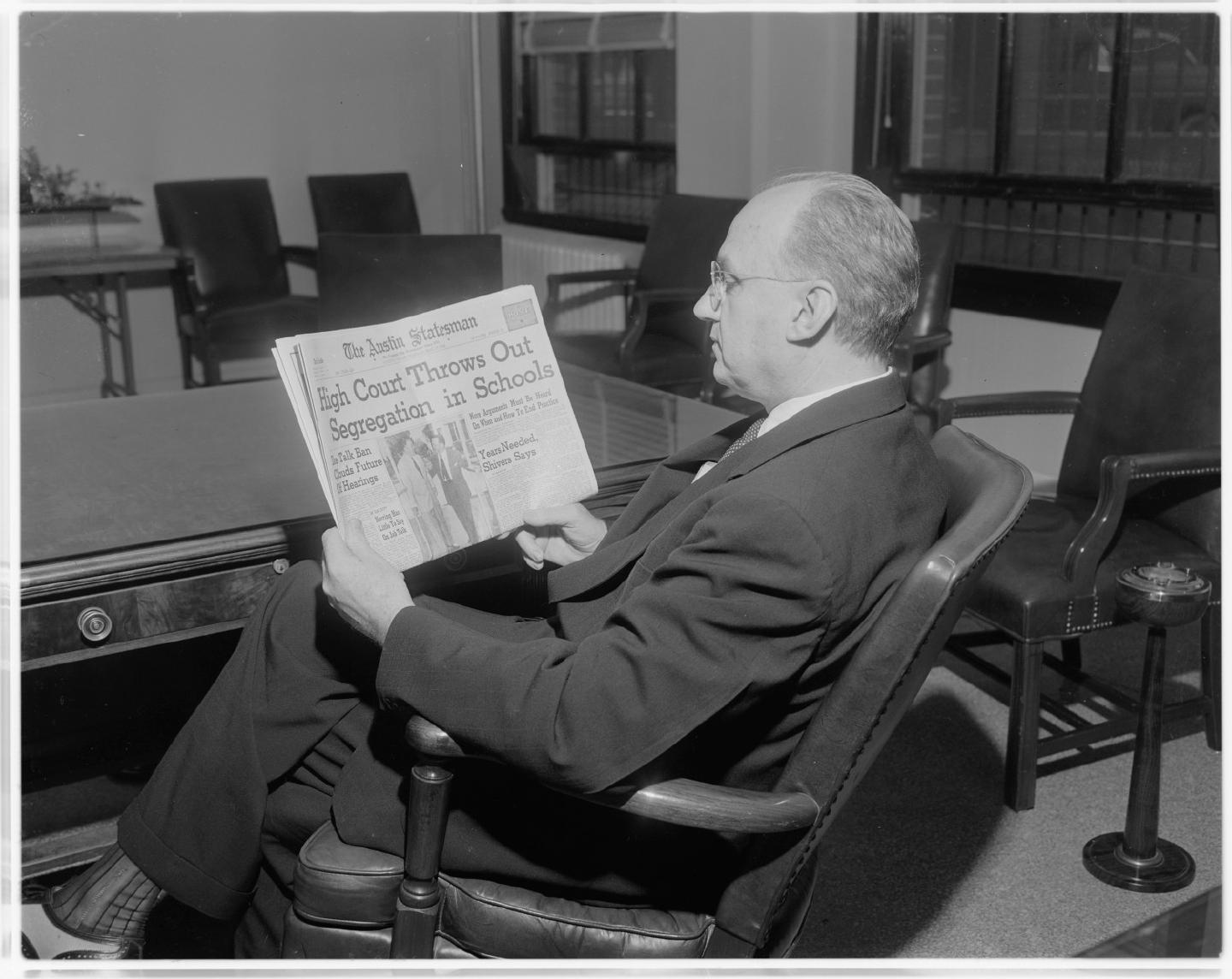
HEW’s first instinct was to withhold federal aid dollars from these districts, but because some of the offenders did not receive federal funds, the case was referred to the U.S. Department of Justice (DOJ) instead. DOJ investigators found nine instances of small all-black school districts neighboring large predominantly white districts. The investigation also unearthed significant inequalities between these black and white districts in terms of educational facilities and resources. Fifteen years after Brown v. Board of Education (1954), it was clear that segregated schools remained in Texas.
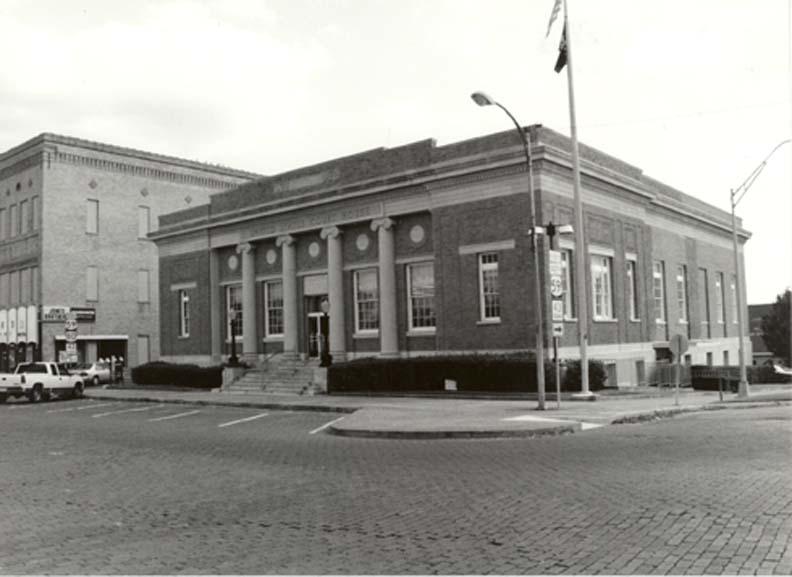
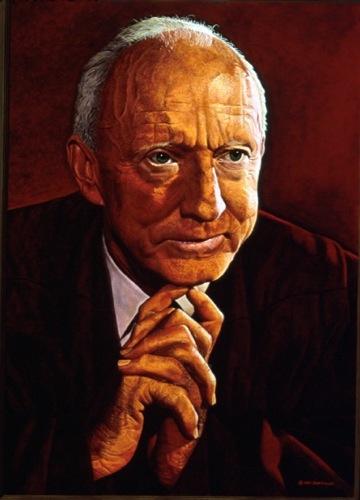
The DOJ reasoned that it would take too long to litigate each instance of discrimination uncovered, therefore a statewide court order would be more effective. It filed suit on March 6, 1970 in the Marshall Division of the U.S. District Court for the Eastern District of Texas. Not only were the gerrymandered school districts named as defendants, but the State of Texas and the Texas Education Agency (TEA) were as well. The DOJ specifically chose to file in the Marshall Division where its attorneys anticipated a favorable ruling under Judge William Wayne Justice, who had indicated pro-integration views in a 1969 case involving Tatum ISD. They would not be disappointed.
Though it would have far-reaching ramifications, United States v. Texas (1970) was not recognized as a significant case at the time, and proceedings began with plenty of empty seats in the courtroom. The DOJ presented well-documented violations of both Title VI of the 1964 Civil Rights Act and the Fourteenth Amendment through denial of equal education in the all-black school districts identified. In addition to racially motivated student transfers and adjustments of district boundaries, some school districts were also designing bus routes to perpetuate racial segregation. Since the state and the TEA were responsible for funding and supervising the districts, the DOJ argued that they were complicit in the discrimination taking place. In its defense, the state’s legal team appeared woefully unprepared to make any convincing arguments to the contrary.
With compelling evidence so heavily stacked in the federal government’s favor, Justice considered the case an easy decision. Finding that racial segregation and discrimination were indeed at hand, Justice looked to the precedent in Brown v. Board of Education II (1955), which made federal district courts responsible for supervising school desegregation, as well as Green v. County School Board (1968), which demanded the elimination of racial discrimination through specific criteria. Justice ordered all of the defendant school districts to submit integration plans in collaboration with the U.S. Office of Education and the TEA. Meanwhile, the TEA was ordered to stop approving district boundary changes and inter-district student transfers. No later than January 1, 1971, the TEA was required to submit its own plan to fully desegregate Texas public schools.
Justice issued more detailed instructions through Civil Order 5281 in April of 1971. The remaining all-black school districts were ordered to combine with a neighboring school district to “eliminate by positive means all vestiges of the dual school structure.” As the primary agent of enforcement, the TEA was required to examine all inter-district student transfers through the lens of desegregation and disapprove those which ran counter to this goal. The same held true for all district annexations or consolidations. The TEA would also inspect bus routes, extracurricular activities, and staffing assignments to eliminate all traces of segregation and discrimination. It was required to explain why any small districts which were more than 66% minority or more than 90% white could not be consolidated with a larger neighboring district. Schools with a 66% or higher minority population would be examined annually. Justice ordered the TEA to punish all violations by withholding funds or even denying accreditation.
The U.S. Court of Appeals for the Fifth Circuit denied the state’s appeal in July of 1971, but modified Justice’s order to prevent it from superseding current or future desegregation rulings outside the Eastern District. This effectively removed big districts like Houston, Dallas, and Austin from Justice’s supervision, but the plan still applied to over one thousand school districts, making it the broadest school desegregation order in history.
By Justice’s own estimation, United States v. Texas “helped a great deal in stopping white flight in rural school districts,” however “the ruling was not as effective as it could have been.” One of the order’s main limitations was its slow and lukewarm enforcement by the TEA. Badly understaffed for such a role, the agency’s requests for increased resourcing were denied by the state, which only sought the bare minimum necessary for compliance. Justice had assumed the DOJ would closely monitor enforcement, but the Nixon administration proved increasingly disinterested, and Justice received no support from his fellow federal judges in the state. As Justice put it, “I was just one judge in East Texas, with no one to help in the enforcement of the order.”
A study by the Lyndon B. Johnson School of Public Affairs at the University of Texas noted that from 1970 to 1979 the state's 12% of districts with moderate to heavy segregation were reduced by half. Although the TEA scaled back its enforcement efforts during the 1980s, Texas public schools were clearly less segregated than they would have been without Justice’s order. United States v. Texas proved very successful in eliminating segregated bus routes and the racial gerrymandering of school district boundaries. Justice never retired, and continued to oversee the lawsuit until his death in 2009.
Images