Black Schools of Smith County

Chopping firewood might not seem like a fun closing activity for most school students today, but for John Mosely, it was neither a punishment nor a chore. It was one of the highlights of his school day.
Mosely, a student at the all-black Jackson School in Smith County, Texas in the 1950s, remembered having a sense of pride when he got to go to a nearby thicket with other boys his age to break tree limbs and gather kindling to feed the large wood stove which heated his classroom.
As he recalled decades later, it was a responsibility he was proud to take on. “It was a privilege,” Mosley said. “You had to have all your work done, and you couldn't be in any trouble. After school, you would get the wood so it would be ready the next day. You'd come early, while it was still dark outside and start the fire.”
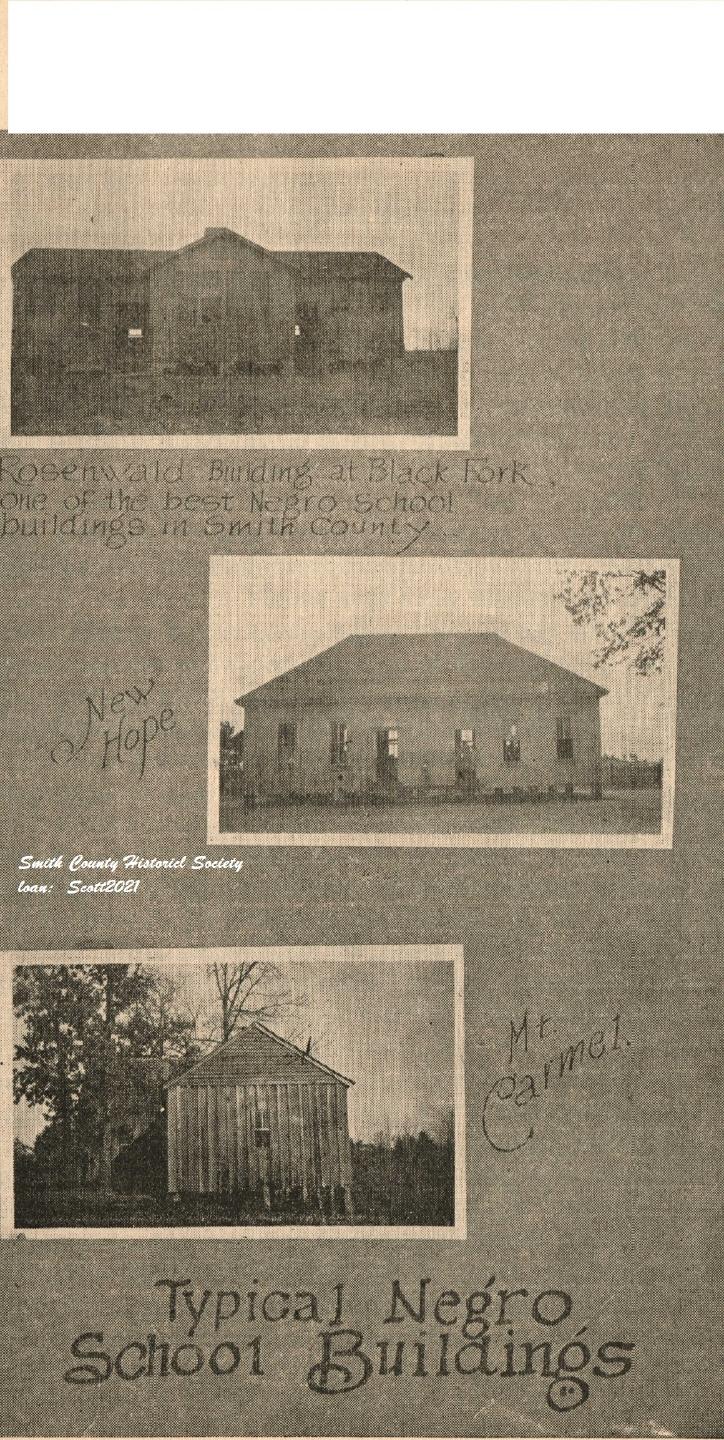
Mosley was not alone when he willingly sacrificed his time and effort for his school. Jackson School was one of 72 schools that opened in the early twentieth century to serve East Texas county’s black populace. Like many black schools at the time, the state only partially funded the school, so the community had to work together to see to the students’ needs.
Unable to afford football uniforms, school officials decided to start a basketball team as it only required the purchase of a ball. Men from the community then carved out a dirt court in the school’s lawn and mounted two metal hoops to serve as goals. On game days, a local farmer would quit work early so he could pick up the players on his wood-sided truck and drive them to the games.
That sense of pride and willingness to sacrifice for your school was not unique to Jackson School. Historian James Smallwood noted that enthusiasm for public education by Texas’ black residents began immediately after the Civil War. In the Antebellum years, most slave owners did not approve of slaves having an education. In June 1865, when Union forces occupied Texas at the conclusion of the war, about 95 percent of the state’s black population were illiterate. Understanding the power of education and the role it could play in “economic advancement, social equality, and political power,” blacks enthusiastically embraced the opportunities for providing their children with an education.
Henry Bullock, the first black professor hired by the University of Texas, stated that the black education movement in the state was not “imposed” on blacks by “overzealous Northerners” but seized by them as they sought to help themselves.
Smallwood noted that the “self-help” philosophy was ubiquitous among black residents of Texas in the early twentieth century. Many wanted to “do all possible” to improve the lives of their children through education.
Even before the Freedman’s Bureau established its presence in the state in September 1865, blacks began pooling together their monies to purchase writing slates and primers. Soon after they began organizing their own schools.
This was especially true in East Texas, which was home to about 90 percent of Texas’ black populace. Those who had previously received some education as free blacks or as slaves served as the first teachers at these early schools.
By the time the Freedman’s Bureau opened its first office in Tyler in 1867, blacks had already established their first school in Smith County. The first black public school in Smith County opened in 1887.
By the start of the 20th century, there were seventy-two public and private schools in Smith County.
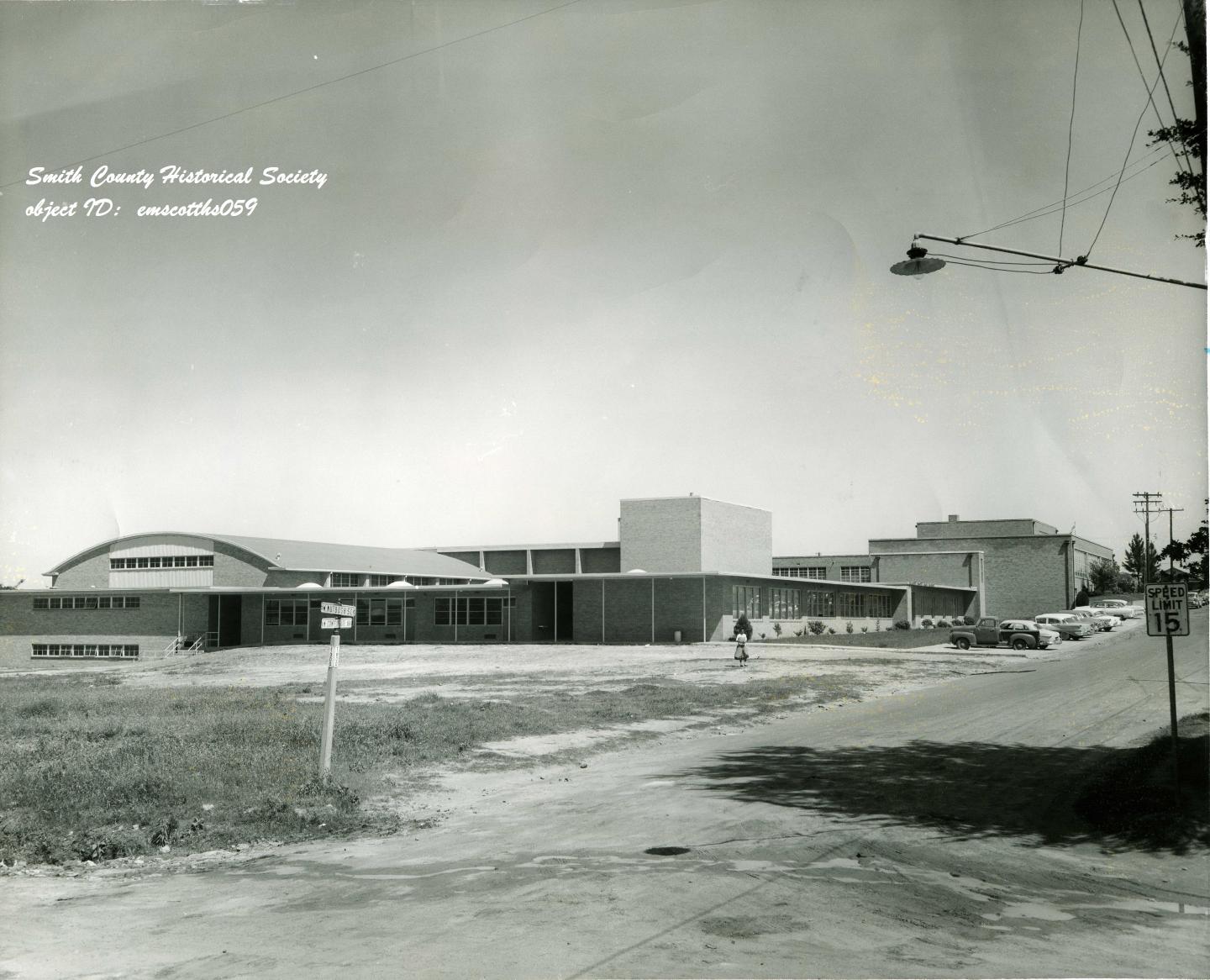
In addition to Jackson, another all-black school in the area was Emmett J. Scott High School. The original school, which served first through tenth grades, opened in 1888 and had just four classrooms. When Scott High School opened in 1949 it had 26 classrooms and facilities that many of the rural all-black schools lacked such as an auditorium, band hall, gymnasium, administrative suites.
Edward Moore, a student at Scott Junior High, remembered how proud parents and students were in having the opportunity to gain an education.
“All these teachers at Emmett Scott Junior High School, they were concerned about us getting an education,” Moore said. “The dropout rate was pretty low. I think it says a lot for our community and our teachers back in the day.”
After the U.S. Supreme Court ruled the segregation of public schools to be unconstitutional in 1954, segregation was banned.
Jackson School was eventually absorbed into the all-white Chapel Hill school district that same year. The other all-black schools closed through the 1960s and the 1970s. Scott High School closed in 1970 after a federal court ordered all Tyler public schools to integrate.
Still, for many who attended one of Smith County's all-black schools, having attained education at one of the schools remained a source of pride.
Sarah Ryder, who was in the inaugural ninth-grade class at Jackson School in 1926, remembered that in those critical days before the Civil Rights movement, having a school in your community – even with all the challenges – provided its students and the community with a sense of dignity.
"It was important to have the school in your district because your community has an identity,” she recalled. “A school was more than just a place to learn. It meant you had teachers living in your community. Teachers were important people. They were your leaders.”
Video
Images