The 1878 Lynching of Walter Dering
The 1878 Lynching That Challenged the Rule of Law
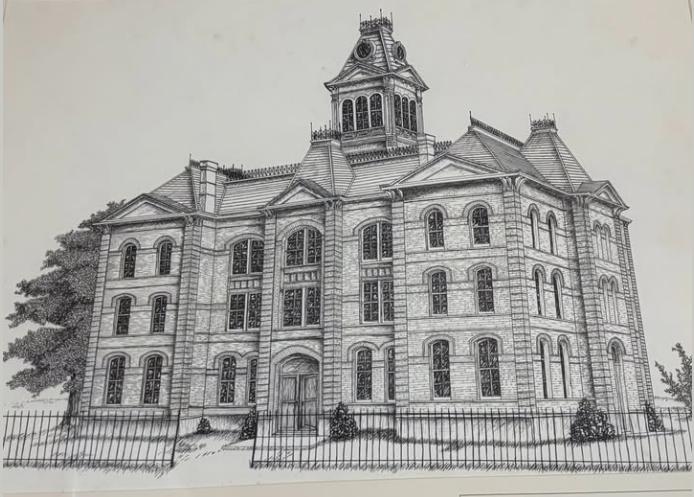
What happens when courthouse, built to uphold justice, becomes the backdrop for mob violence? In April 1878, the square surrounding the Walker County Courthouse in Huntsville witnessed the lynching of Walter Dering, revealing how racial fear and public fury overpowered the rule of law in post Reconstruction East Texas.
On a warm day in April 1878, the people of Huntsville gathered on the courthouse square expecting punishment, not a trial. Within sight of the courtroom doors, a mob prepared to conduct its own version of “justice.” By the end of the day, Walter Dering would be dead, and the authority of the Walker County Courthouse would be publicly put at risk. [1]
The courthouse square had long functioned as the civic center of Walker County. Established in 1846 and named for Texas Ranger Samuel Hamilton Walker, Huntsville served as the political and economic center of the county. The courthouse represented a key feature of daily life in the town. It was a site where farmers recorded deeds, families settled estates, merchants resolved disputes, and accused individuals faced formal charges in court. The building represented law and order in a region shaped by frontier violence, wartime devastation, and the politics of Reconstruction. [2]
Reconstruction introduced sweeping legal and social changes. Formerly enslaved men and women sought protection under the 13th, 14th, and 15th amendments to the Constitution that promised freedom, citizenship, and equal protection under the law. Many white residents, however, resisted these transformations. Across East Texas, racial tension intensified as white southerners attempted to regain the traditional control they had wielded over local communities before the war. Allegations involving Black men and white men represented a major flashpoint in this process. [3]
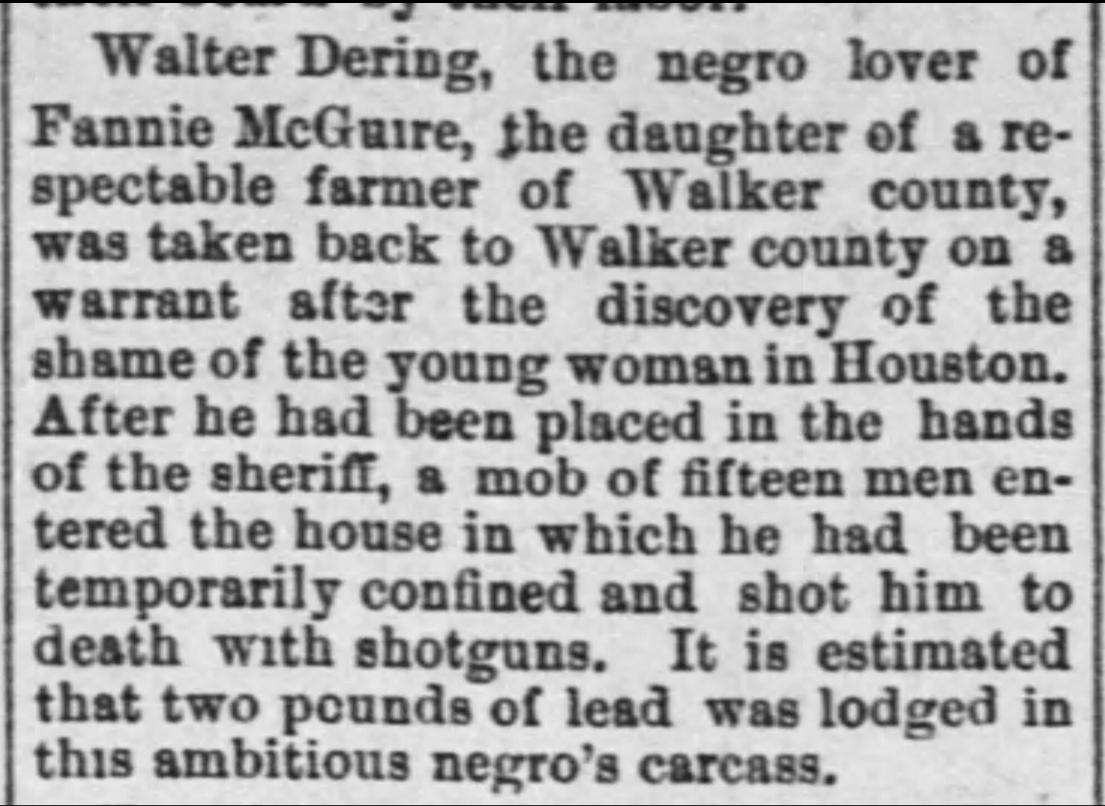
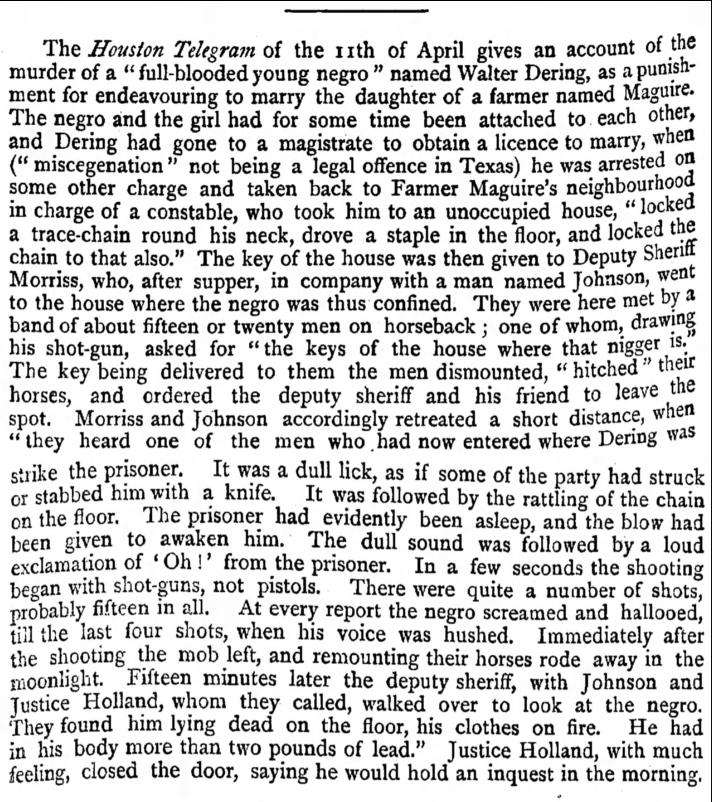
In 1878, Walter Dering, an eighteen-year-old African American native of Walker County, faced accusations of assaulting Fannie, McGuire a white woman. Local newspapers quickly reported on the case, causing fear and anger among the local white community. Before a court could assemble a jury or examine evidence, crowds formed around the jail and courthouse square. Although local police officers placed Dering in custody, mob leaders demanded that they be handed the prisoner. The mob seized Dering and brought him into the open square. Within clear view of the courthouse, they executed Dering with several shotgun blasts. Without any semblance of due process, the crowd delivered a fatal sentence within the shadow of the Walker County Courthouse. [4]
Lynchings in the late nineteenth century functioned as instruments of racial control as much as acts of punishment. They displayed white dominance and reinforced white supremacy. When violence unfolded on courthouse grounds, the message became even more powerful. The very space designed to ensure justice became proof that legal protections could vanish when confronted by white mobs. For Black residents of Walker County, the killing of Walter Dering underscored the limits of the rights promised by Radical Republicans in Congress. [5]
The event also revealed the local government's weaknesses. After all, the rule of law relied on the ability of local police and judges to convince or compel most Huntsville’s residents to uphold the law. In April 1878, the courthouse remained standing, yet its ability to protect civil rights was shattered. [6]
The story of Walter Dering challenges visitors and residents to reflect on the meaning of justice in East Texas history. By remembering the lynching of 1878, we reveal a chapter of Walker County’s past that involves race, power, and the ongoing struggle to align public institutions with the ideals they supposedly uphold.
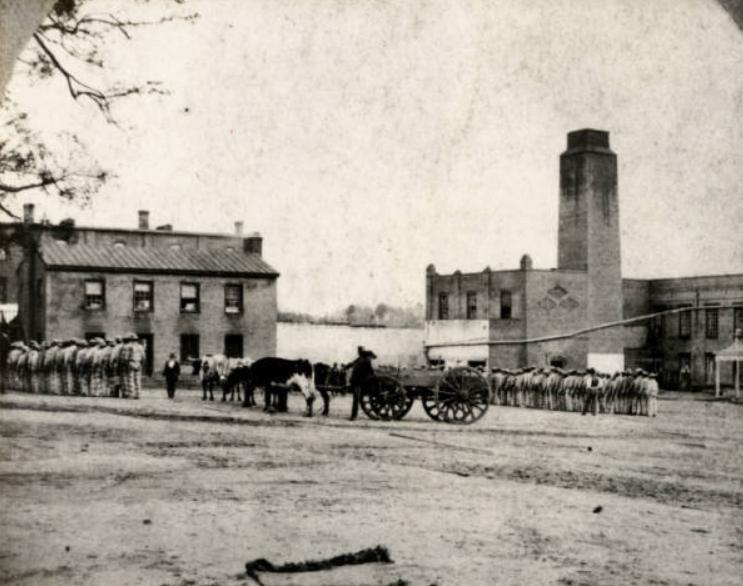
Images
Location
1100 University Avenue
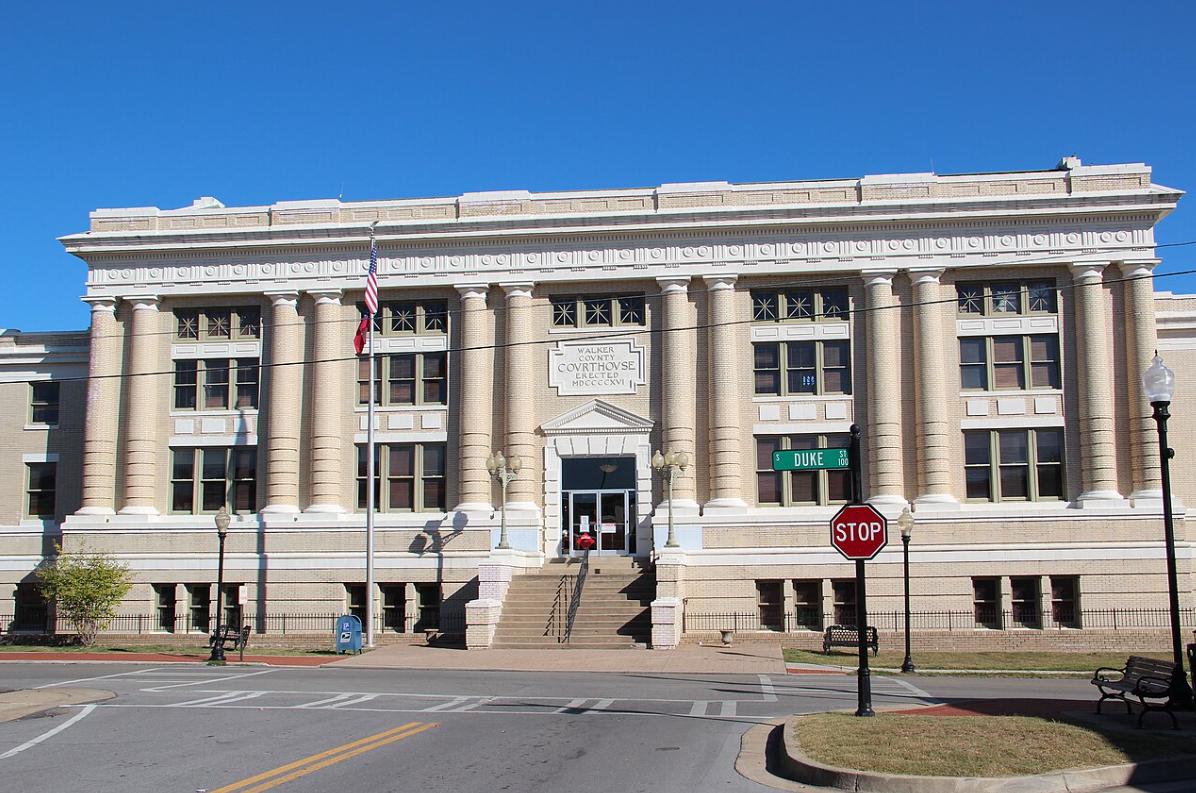
Huntsville, TX 77340 | The Walker County Courthouse is located in downtown Huntsville at 1100 University Avenue, on the historic courthouse square. The building remains an active government facility, so visitors must pass through security screening before entering. Government offices typically operate during regular weekday business hours, and the courthouse may close on county holidays.
Public parking is available around the courthouse square and along adjacent streets. Sidewalks and crosswalks provide pedestrian access from all sides of the square. Visitors should check the official Walker County website for current office hours, holiday closures, and any temporary restrictions before planning a visit.