Patterns of Early Settlement in Huntsville, Texas (1835–1860)
In the mid-1800s, Huntsville, Texas, was a small frontier town that laid the groundwork for a major educational center with the founding of Austin College. The Brazos Presbytery of the Old School Presbyterian Church chartered the college in 1849. Its creation represented part of a larger effort to build schools throughout the early Republic of Texas. Huntsville residents showed dedicated support for the proposed institution by raising $10,000 and donating five acres of land for the college’s location. Unlike other early Texas colleges, such as Rutersville College and Baylor University, which were also established to promote education in the growing state, Austin College carved out a unique position by emphasizing a liberal arts education with a strong connection to significant Texas historical figures. [1]
Governor George Wood signed the college’s charter, drawing inspiration from well-known schools such as Harvard, Yale, and Princeton. By aligning the charter with these esteemed institutions, Texas’s leaders sought to elevate the state's cultural standing and assert its commitment to high educational standards during this formative period. In time, Austin College became the oldest higher education institution in Texas still operating under its original charter, even after relocating. After considering several names, the college’s board named the institution for Stephen F. Austin, the “Father of Texas.” [2]
From the beginning, Austin College was intricately connected to influential figures in Texas history. Two former presidents of the Republic of Texas, Sam Houston and Anson Jones, served on the first board of trustees, giving the college both prestige and influence. Houston did more than lend his political luster to the college. He took part in the dedication of its first building, later called Austin Hall, in 1851, and his support helped raise the college’s profile in the growing state. [3]
Austin College was officially incorporated in Huntsville on November 22, 1849, marking a foundational period when early leaders debated differing visions for the college's future. Dr. Samuel McKinney, an Irish-born Presbyterian minister and experienced teacher, served as the first president of Austin College. He led the school from its opening in 1850 until 1853, then returned for a second term during the Civil War. McKinney resigned after a personal disagreement with Sam Houston and returned home to Mississippi. While most histories do not detail their conflict, his early departure shows how difficult it was to run a frontier college. [4]
Even amid leadership changes and the difficulties of the Civil War and Reconstruction, Austin College did well in its early years and played a significant role in shaping Huntsville’s identity. The college offered more than just the liberal arts; in 1855, it established the first law school in Texas, demonstrating its ambition and influence in the region. [5]
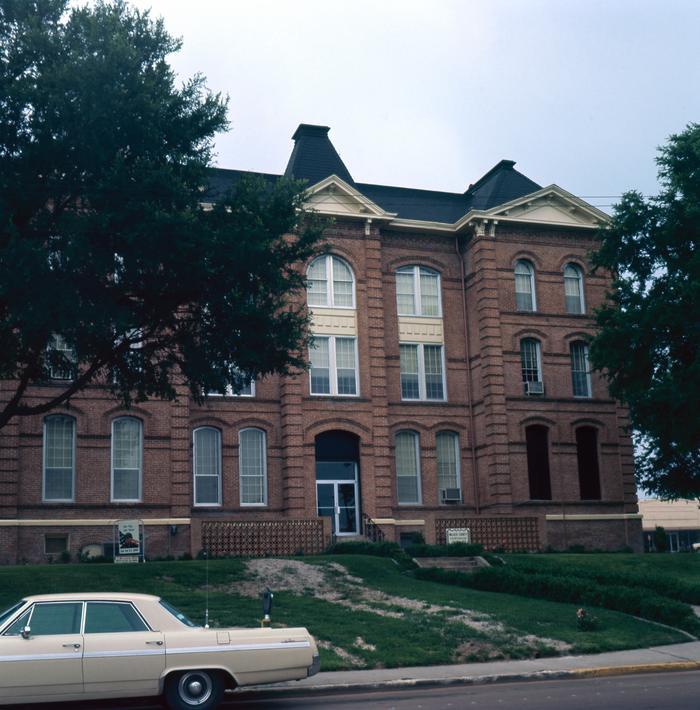
The original Austin College campus, built around what is now called Austin Hall, became a well-known landmark in Huntsville. Built in the Greek Classical style between 1851 and 1852, the building symbolized the pursuit of knowledge on the Texas frontier. [6]
However, throughout the 1860s, East Texas faced a severe public health crisis, with yellow fever outbreaks that significantly affected the population and community life of Walker County. A staggering mortality rate from the fever underscored the gravity of the situation, prompting a re-evaluation of the college's location. [7]
Coupled with fewer students after the Civil War and decisions by church leaders, these outbreaks led to the relocation of the college to Sherman, Texas, in 1876. Sherman was considered a more favorable location due to its healthier climate, as it was less susceptible to the yellow fever outbreaks that plagued Huntsville. Additionally, Sherman was growing economically and socially, offering resources and opportunities for expansion. [8]
In 1879, Texas opened the Sam Houston Normal Institute, the state's first publicly funded teacher-training school, on the old Austin College campus. Named for the same Texas leader who had supported Austin College, the institute—later called Sam Houston State University—kept Huntsville's educational tradition alive. The school opened in the fall of 1850 and prospered until the Civil War and Reconstruction, when enrollments and funding declined. For example, the tradition of debating societies, prevalent at Austin College, continued to foster critical thinking and public speaking skills at the new institution. Austin College’s commitment to rigorous academic standards was evident in its consistent emphasis on close faculty-student interactions, which remained an important part of its educational philosophy. Such continuity ensured that, as the mission evolved, the core educational principles laid by Austin College continued to shape the institute's development. [9]
Images