The Lynching of Esseck White
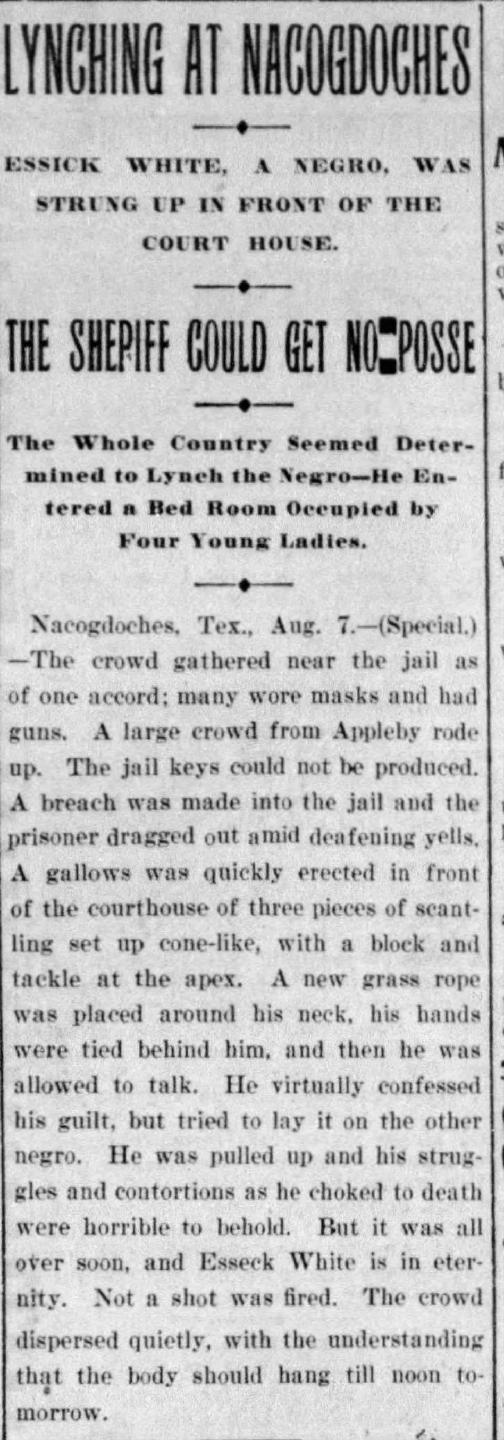
Esseck White, accused of attempted rape, was one of the final confirmed lynchings in Nacogdoches County on the night of August 8, 1897. While Governor Charles Culberson ordered the militia, commanded by Texas legend General Woodford Mabry, to assist the local Sheriff Andrew Jackson (John) Spradley in protecting White from a lynch mob, they failed. Moreover, White’s lynching represented a wider trend of accusing African American men of rape to stir anger and justify murder.
On the night of August 4, 1897 Esseck White allegedly broke into the home of Dr. W. P. Fears in Nacogdoches City and cut a lock of hair from one of four girls attending a sleepover. White was further accused of attempted rape. More specifically, the girl to whom the lock of hair belonged was eighteen-year-old Lollie Berger, the daughter of White’s immediate former employer, Robert Berger. The details of the crime are more than a little hazy. First, the number of intruders is not clear. Media reports from the time variably state that only one intruder broke in while others claim two. The papers also cannot seem to agree on who was first alerted to the intruders, only that Fears was informed and that the intruders fled after taking a lock of Lollie’s hair.[1]
Esseck White and Amos Phillips, two African American laborers who had recently worked on Berger’s farm, came under immediate suspicion. There is, however, no real way of knowing who the intruders were. Whatever happened, and whoever did it, the alleged crime was trumped up to an accusation of rape, with the lock of hair as the only piece of evidence. Whether White and Phillips were intent on rape is unknown, but the accusation itself was powerful. Lynching victims were often accused of crimes, but a rape charge was the ultimate pathway to incite mob violence, particularly from poorer white males angered not only by the modicum of advancements made by African Americans in the latter nineteenth century but also by their own failures in the booming marketplace and in providing for their own families. Their wrath and insecurities often manifested as violence toward African Americans.[2]
With what happened with Joe Adams ten years earlier in 1887, when Sheriff Spradley failed to prevent mob tyranny, he tried harder. This time, after the arrest of White, Governor Charles Culberson sent in the militia to help, but mob violence still prevailed. Indeed, only a few weeks before the arrest and lynching of White, House Bill #30 had been passed in the Texas Legislature, which focused on outlawing and punishing mob violence. Armed with such a law, Governor Culberson called in the militia, commanded by Woodford Mabry, to assist in protecting White and Phillips and dissuade the bloodthirsty mob. Unfortunately, the militia did not arrive in time to protect White. In the middle of the night, the mob broke into the jail and dragged White out, screaming. The mob brought him to the front of the courthouse, where they tied White up and lynched him with the use of a quickly assembled gallows. Before White’s death, however, it was reported that the mob allowed him to speak, and White supposedly confessed.[3]
With the militia in town, attention turned to the protection of Amos Phillips, whom Spradley had successfully moved out of the jail (we do not know how or exactly when). Ultimately, under the guard of the militia, Phillips was escorted into town, met with legal authorities, and simply declared innocent. He was then taken to the train station and spirited out of town. His fate and life after this remain unknown.[4]
The accusation of attempted rape, despite the lack of evidence, stirred the anger of the people of Nacogdoches County and made them feel that justice would not be served and that the law needed to be taken into their own hands. They had little evidence, a lock of hair purportedly found on White and a coerced confession under extreme duress. It did not matter. The mob ruled and lynched White anyway. Lynching victims were often accused of crimes or otherwise disrupting peaceful society, but a rape accusation was the ultimate way to put a lynch mob into action. Today, it would be impossible to prove guilt in a court of law with these, but the “justice” of Judge Lynch is most often based on laughably poor cases.[5]
Images
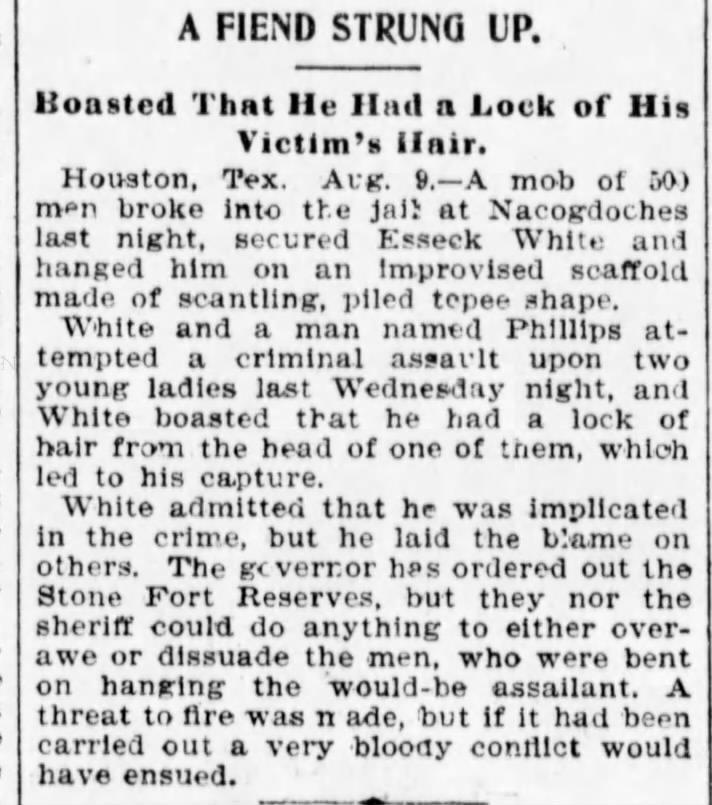
A Fiend Strung Up," Scranton Tribune (PA), August 10, 1897, p. 1.
Date: August 10, 1897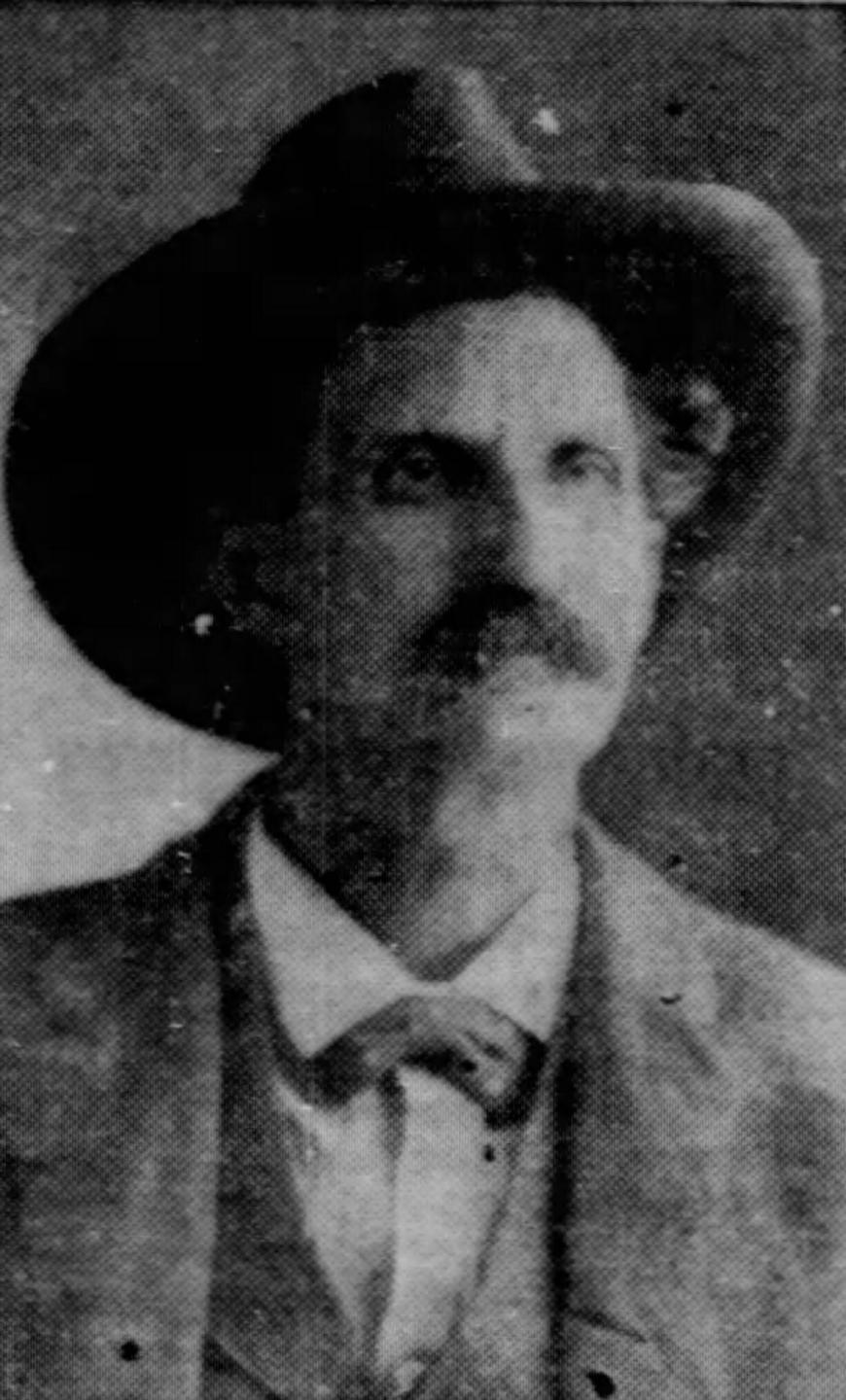
The Times Democrat (New Orleans), October 16, 1902, p. 3.
Date: October 16, 1902