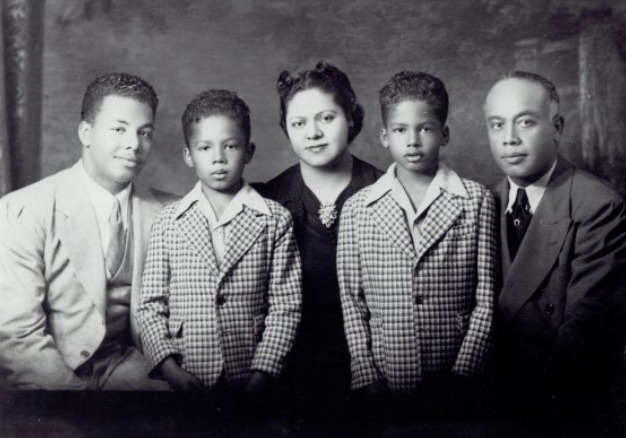
Jake Simmons Jr. and East Texas Oil

There had long been suspicions of untold wealth beneath the feet of East Texans. Throughout the latter half of the nineteenth century the United States had become increasingly reliant on oil, and early wildcatters felt East Texas might just contain a massive oil field capable of enriching those lucky enough to find it. Despite intensive efforts, success was not immediately forthcoming, prompting many to abandon their efforts. But with the January 10, 1901 discovery of oil at Spindletop in Beaumont, Texas, a new era of American oil exploration began. The oil fields of East Texas offered a tenuous promise of economic advancement to its workers and landowners, and the African American population of East Texas took notice just as their white neighbors did.
The first find in Beaumont produced an astonishing 100,000 barrels of oil a day at a time when success entailed crossing the threshold of 100 a day. Lured by the prospect of easy riches, nearly 50,000 people arrived in the first thirty days after the Spindletop discovery. The chaotic influx of people to the region spawned a multitude of health problems ranging from overflows of sewage, sulphur-contaminated drinking water, and the ever-present threat of fire. Oilfield work was so dangerous that employees signed “death warrants” that absolved the oil companies of blame “for bodily harm and death.” The oil boom also did much to further solidify another of the region’s seemingly natural tendencies through the imposition of racial segregation in the oil field.
Spindletop was among the first oil fields to be discovered in an area with a large African American population. During this first East Texas oil boom, the only employment opportunities afforded to black East Texans were the kinds of lowly labor tangential to the process of oil production and therefore shut out of its profits. The “death warrants” extended to white employees could not even be legally signed by African Americans. In addition to their exclusion from the most remunerative oilfield positions was their exclusion from most housing. Beaumont’s white workers were commonly afforded housing by the oil companies themselves. African Americans lived in a segregated tent city east of town known as “South Africa.” Those who managed to live on and work land as farmers were nearly always doing so as tenants; crucially this meant that any oil found on this land would belong not to them, nor would the profits.
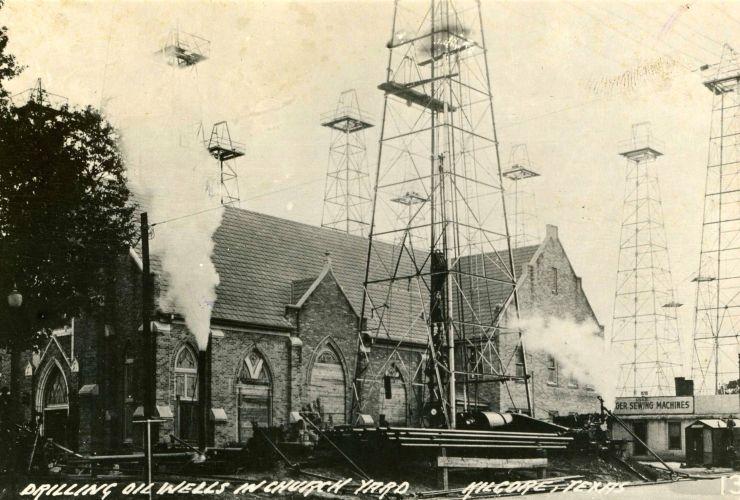
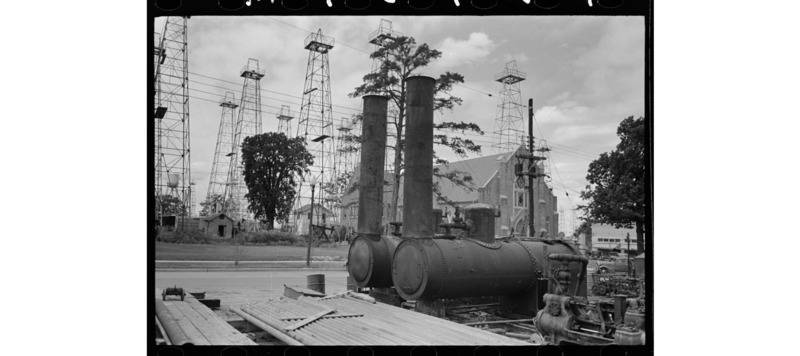
By the 1930s, there were a select few black landowners in East Texas who had seen oil wells come in on their property. But many of these farmers were in significant debt owing to the recent failures of their cotton crops, while others faced white intimidation to sign away their land rights. Churches in the region frequently took up efforts to drill on their own land in hopes of striking oil to further fund their ministries; black churches were no different, and the state’s major newspapers like the Dallas Morning News often happily reported these success stories as proof that oil opened the door for all who were willing to work for it, black or white. But despite these select few success stories, the riches of the East Texas oilfields remained largely elusive to most of the region’s black residents.
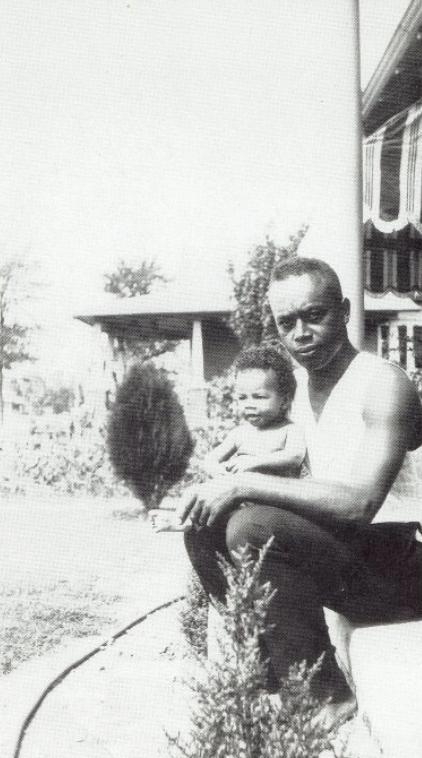
The 1930s also saw a shift in Texas’ oil activity north towards Longview and Kilgore. One of the most successful black oilmen of the 1930s soon arrived on the scene from neighboring Oklahoma. Jake Simmons Jr., a graduate of the Tuskegee Institute and personification of Booker T. Washington’s belief in securing civil rights through economic advancement, arrived in Longview merely looking to buy leases. But the extreme racial stratification of the region led him to append a humanitarian mission of sorts to his business dealings.
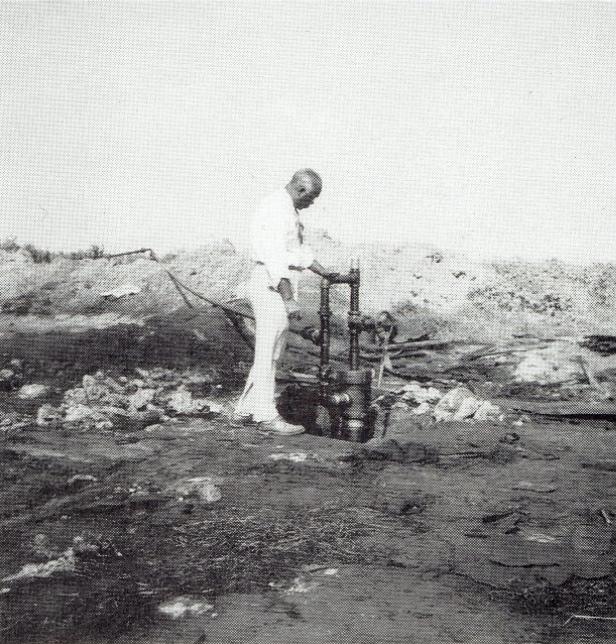
Simmons would finance his operations in Texas by selling land in East Oklahoma to black Texans looking to escape their Jim Crow living conditions. He would then broker leases from black landowners, offering them the kind of fair treatment the region’s banks never had. But convincing them to sell was only the beginning. The title claims and production contracts of black Texans were worth next to nothing. Royalties often found their way into the pockets of crooked brokers and well operators frequently lied about their production, pocketing additional money. Simmons found an attorney, Cecil Storey, willing to defend title claims as well as a drilling company owned by B.F. Phillips that would honor its contracts. Both men were won over by Simmons’ forthrightness and measured, carefully considered ventures. Soon Simmons was doing business with the likes of Texaco and other major oil companies.
Simmons, an ardent follower of the teachings of Booker T. Washington, kept his political opinions and business interests largely separate. Never seeing it as his place to antagonize the white oilmen he did business with into supporting civil rights, he followed the Washingtonian idea of carving out a position for himself that “no man [could] give [him] or take from [him].” But Simmons would at times wield his power to political ends. He was a longtime supporter of the NAACP and in 1938 filed a case against the Muskogee Board of Education in his native Oklahoma, one of the first of its kind to challenge segregation in schools. This case made its way to the United States Supreme Court only to be dismissed. Despite the case’s failure, Simmons remained a clear example of the kind of power afforded by oil.
Simmons and the black landowners stood as proof of the potential financial benefit oil afforded the African American community. But equally as important was oil’s legitimizing power to invite black faces to the meetings of historically white powerbrokers. In 1963, Simmons was appointed to a Commerce Department trade mission to East Africa, an important voice to the newly independent East African states. While there, Simmons would carry out much the same work as in East Texas, dealing fairly with and serving as a protector of East Africans all while securing enormously profitable business deals, many of the proceeds of which funded a range of civil rights interests in the United States.
Images