<?xml version="1.0" encoding="UTF-8"?>
<feed xmlns="http://www.w3.org/2005/Atom">
  <title type="text">East Texas History</title>
  <updated>2026-04-17T19:32:52+00:00</updated>
  <generator uri="http://framework.zend.com" version="1.12.20">Zend_Feed_Writer</generator>
  <link rel="alternate" type="text/html" href="https://easttexashistory.org/"/>
  <link rel="self" type="application/atom+xml" href="https://easttexashistory.org/items/browse?output=rss2"/>
  <id>https://easttexashistory.org/</id>
  <author>
    <name>East Texas History</name>
    <uri>https://easttexashistory.org</uri>
  </author>
  <link rel="hub" href="https://pubsubhubbub.appspot.com/"/>
  <entry>
    <title type="html"><![CDATA[Booker T. Bonner: Leader, Educator, Believer, &amp; Observer]]></title>
    <summary type="html"><![CDATA[<img src="https://easttexashistory.org/files/fullsize/91df01ea90baa4accb935d06d27ab5c4.jpg" alt="Booker T. Booner Background" /><br/><p>The story of Booker Thomas Bonner, generally known as B.T. Bonner, B.T. would begin his life in the town of rural Wallis, southwest of Houston, in 1927. Unlike G.J. Sutton or Moses LeRoy, Booner came from a non-leading family and was not originally a successful union leader like LeRoy himself. B.T. was a son of a sharecropper and seamstress who made ends meet; eventually, Bonner would be known as one of the state's most recognizable civil rights activists in 1963. The educational background of Booner would be sent away to school by his mother and eventually graduate from high school in Houston in 1944 before joining the service at the end of World War II. Bonner began attending Texas Southern University while using veterans' benefits but short-lived; B.T. would need to drop out of school to take care of himself when it came to the sudden passing of his mother in 1950. The death of B.T.'s mother would drive him to crave alcoholism and, eventually, send his well-being into a catastrophic state of having to recuperate from being run over by a car on a highway one late night. While attending the University of Texas, B.T. would find himself a cook job and begin working his way through school, majoring in history and government to become a successful teacher.</p><p>In 1960, Bonner was kindly invited to a "stand-in" movie theater on the university's drag, later to find out that both San Antonio and Austin Students for Direct Action (SDA) are corrupt. The SDA has similar intentions towards limiting members of all races by having them approach the ticket windows and then ask if the employees would sell tickets to all races. Eventually, Black students stood forced to go to the back of the line, and this process would be repeated countless times in one night. Bonner believed that this ideology of removing all races from attempting to attend a movie was obscured. With how abrasive B.T. indeed was when it came to being an observer and leader, he would try with the SDA leaders three times to let him into the movie theater. Later, he would be removed each time and try to be convinced by the SDA of their intentions towards all racial students. Given the circumstances of the 1960 stand-in movie theatre situation, Bonner would make himself predominantly known in his course for the ongoing desegregation struggle in March 1961. Booner would also stage a one-man hunger strike outside the Texas Theater that would last over sixty hours, making B.T. the lone wolf for challenging the SDA for the wrongdoing of treating Black students horribly. From this point, B.T. would be known as one the most radical Black in the state of Texas for drawing attention towards the SDA in demonstrating that any race should try to prevail upon a person's mind.</p><p>In 1962, like activists around Texas, Bonner supplemented his idea for civil rights activities by venturing into electoral politics. Bonner would also get involved with Don Yarborough's gubernatorial campaign for wanting a more established position within the political world. Oddly enough, Bonner would be proven to be a brilliant wildcard against white students, white liberal organizers, black ministers, and traditional elites when organizing African American civil rights and political action. Bonner and his pickets, composed of twenty students from the predominately white University of Texas, would protest outside Governor John Connally's office for wanting an eight-point set of civil rights proposals heard in the acceptance of a meeting by Connally himself. Surely enough, Bonner would get his appointment from Connally in 1963, around the same time that the Democratic Coalition was taking place in 1962-63.</p><p>"The March on Austin" depended upon the ongoing vibrancy and salience of multiracial collaboration. Bonner wanted the governor to capitalize on removing racial references from all applications for state employment, immediately integrate state jobs, and withhold state funds from contractors who practiced discrimination. G.J. Sutton would question and criticize Connally on all accounts, bringing attention to the governor's hypocritical actions for involving himself with the United Political Organization (UPO). Bonner's character would be jeopardized, leaving him convicted of mail theft in 1945 at the early age of seventeen, forcing him to serve a three-year sentence in prison. Bonner would remain the undisputed leader of the March on Austin, eventually forming the Freedom Now Committee that would obtain a permit for a two-mile parade route from Rosewood Park in all-Black East Austin to rally in Wooldridge Park downtown.</p><p>In August 1966, when local elites refused to accept the job demands of Huntsville Action for Youth (HA-YOU), Bonner called on the youth organization to stage its protest march in front of the capitol. Like the Mexican Americans in the NFWA, the African Americans led by B.T. Bonner walked a thin line to highlight ongoing segregation and economic misery facing Blacks throughout East Texas. B.T. Bonner identified as also a leader of the Huntsville Demonstrations and staffer of SCLC, Bonner called out the white liberals for not truly being committed to the Black freedom struggle. B.T. reignited the black civil rights movement in Texas and also brought about tremendous pressure upon Governor Connally. Bonner's vital attributes are ambiguous class status, self-styled radicalism, and criticism of traditional black leaders. Bonner declared that he represented no organization, considered himself well to the left of the NAACP, and had no reason to disdain the UPO at all costs. B.T.’s succession in his rogue sit-in at the capitol had immediate political implications, especially regarding the ongoing debate between the more militant and conservative factions of African American leaders. Booker Bonner became a successful educator and leader in the military and throughout school, eventually following the footsteps of a civil rights activist. Booker Thomas Bonner would pass away at eighty-nine, and the burial site holds B.T.'s body in Harris County, Houston, at the Houston National Cemetery.</p><p><em><strong><a href="https://easttexashistory.org/items/show/374">For more (including 5 images, 1 audio file,&#32;&amp;&#32;1 video) view the original article</a></strong></em></p>]]></summary>
    <published>2022-11-10T13:57:05+00:00</published>
    <updated>2026-04-17T19:32:52+00:00</updated>
    <link rel="alternate" type="text/html" href="https://easttexashistory.org/items/show/374"/>
    <id>https://easttexashistory.org/items/show/374</id>
    <author>
      <name>Jonathan R. Konchak</name>
    </author>
  </entry>
  <entry>
    <title type="html"><![CDATA[United States v. Texas (1970)]]></title>
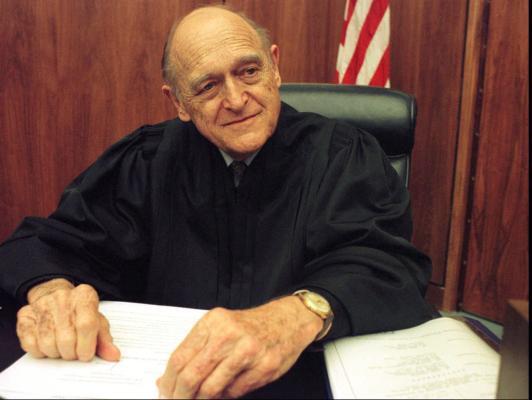
    <summary type="html"><![CDATA[<p><strong><em>“The time is long past for permitting the States of this Union to enjoy the benefits of Federal assistance while refusing to accept a concurrent obligation with that of the National government to take affirmative action to insure the protection of constitutional rights and the enforcement of Federal statutes.” – <em>United States v. Texas</em>, 330 F. Supp. 235 (E.D. Tex. 1971)</em></strong></p><img src="https://easttexashistory.org/files/fullsize/4742720bdd52113d0394434eb4e6455e.jpg" alt="Judge William Wayne Justice" /><br/><p>Most Texas public schools desegregated in the 1960s, but in 1970, racial segregation still hid in plain sight in a number of districts, especially in East Texas. For example, the predominantly white Daingerfield Independent School District routinely accepted transfers of white students from the neighboring, and predominantly black, Cason ISD. The U.S. Department of Health, Education, and Welfare (HEW) warned Daingerfield against this in 1968, only to watch the district annex a section of Cason ISD that encompassed all of its remaining white students. In its investigation, HEW found other districts had engaged in similar school district gerrymandering to produce racially segregated outcomes. </p><p>HEW’s first instinct was to withhold federal aid dollars from these districts, but because some of the offenders did not receive federal funds, the case was referred to the U.S. Department of Justice (DOJ) instead. DOJ investigators found nine instances of small all-black school districts neighboring large predominantly white districts. The investigation also unearthed significant inequalities between these black and white districts in terms of educational facilities and resources. Fifteen years after <em>Brown v. Board of Education</em> (1954), it was clear that segregated schools remained in Texas. </p><p>The DOJ reasoned that it would take too long to litigate each instance of discrimination uncovered, therefore a statewide court order would be more effective. It filed suit on March 6, 1970 in the Marshall Division of the U.S. District Court for the Eastern District of Texas. Not only were the gerrymandered school districts named as defendants, but the State of Texas and the Texas Education Agency (TEA) were as well. The DOJ specifically chose to file in the Marshall Division where its attorneys anticipated a favorable ruling under Judge William Wayne Justice, who had indicated pro-integration views in a 1969 case involving Tatum ISD. They would not be disappointed. </p><p>Though it would have far-reaching ramifications, <em>United States v. Texas</em> (1970) was not recognized as a significant case at the time, and proceedings began with plenty of empty seats in the courtroom. The DOJ presented well-documented violations of both Title VI of the 1964 Civil Rights Act and the Fourteenth Amendment through denial of equal education in the all-black school districts identified. In addition to racially motivated student transfers and adjustments of district boundaries, some school districts were also designing bus routes to perpetuate racial segregation. Since the state and the TEA were responsible for funding and supervising the districts, the DOJ argued that they were complicit in the discrimination taking place. In its defense, the state’s legal team appeared woefully unprepared to make any convincing arguments to the contrary. </p><p>With compelling evidence so heavily stacked in the federal government’s favor, Justice considered the case an easy decision. Finding that racial segregation and discrimination were indeed at hand, Justice looked to the precedent in <em>Brown v. Board of Education II</em> (1955), which made federal district courts responsible for supervising school desegregation, as well as <em>Green v. County School Board</em> (1968), which demanded the elimination of racial discrimination through specific criteria. Justice ordered all of the defendant school districts to submit integration plans in collaboration with the U.S. Office of Education and the TEA. Meanwhile, the TEA was ordered to stop approving district boundary changes and inter-district student transfers. No later than January 1, 1971, the TEA was required to submit its own plan to fully desegregate Texas public schools. </p><p>Justice issued more detailed instructions through Civil Order 5281 in April of 1971. The remaining all-black school districts were ordered to combine with a neighboring school district to “eliminate by positive means all vestiges of the dual school structure.” As the primary agent of enforcement, the TEA was required to examine all inter-district student transfers through the lens of desegregation and disapprove those which ran counter to this goal. The same held true for all district annexations or consolidations. The TEA would also inspect bus routes, extracurricular activities, and staffing assignments to eliminate all traces of segregation and discrimination. It was required to explain why any small districts which were more than 66% minority or more than 90% white could not be consolidated with a larger neighboring district. Schools with a 66% or higher minority population would be examined annually. Justice ordered the TEA to punish all violations by withholding funds or even denying accreditation. </p><p>The U.S. Court of Appeals for the Fifth Circuit denied the state’s appeal in July of 1971, but modified Justice’s order to prevent it from superseding current or future desegregation rulings outside the Eastern District. This effectively removed big districts like Houston, Dallas, and Austin from Justice’s supervision, but the plan still applied to over one thousand school districts, making it the broadest school desegregation order in history. </p><p>By Justice’s own estimation, <em>United States v. Texas</em> “helped a great deal in stopping white flight in rural school districts,” however “the ruling was not as effective as it could have been.” One of the order’s main limitations was its slow and lukewarm enforcement by the TEA. Badly understaffed for such a role, the agency’s requests for increased resourcing were denied by the state, which only sought the bare minimum necessary for compliance. Justice had assumed the DOJ would closely monitor enforcement, but the Nixon administration proved increasingly disinterested, and Justice received no support from his fellow federal judges in the state. As Justice put it, “I was just one judge in East Texas, with no one to help in the enforcement of the order.” </p><p>A study by the Lyndon B. Johnson School of Public Affairs at the University of Texas noted that from 1970 to 1979 the state's 12% of districts with moderate to heavy segregation were reduced by half. Although the TEA scaled back its enforcement efforts during the 1980s, Texas public schools were clearly less segregated than they would have been without Justice’s order. <em>United States v. Texas</em> proved very successful in eliminating segregated bus routes and the racial gerrymandering of school district boundaries. Justice never retired, and continued to oversee the lawsuit until his death in 2009.</p><p><em><strong><a href="https://easttexashistory.org/items/show/370">For more (including 6 images) view the original article</a></strong></em></p>]]></summary>
    <published>2022-11-01T13:10:50+00:00</published>
    <updated>2026-04-17T19:32:52+00:00</updated>
    <link rel="alternate" type="text/html" href="https://easttexashistory.org/items/show/370"/>
    <id>https://easttexashistory.org/items/show/370</id>
    <author>
      <name>Brad Daniel</name>
    </author>
  </entry>
</feed>
