Slave Narrative of Carey Davenport
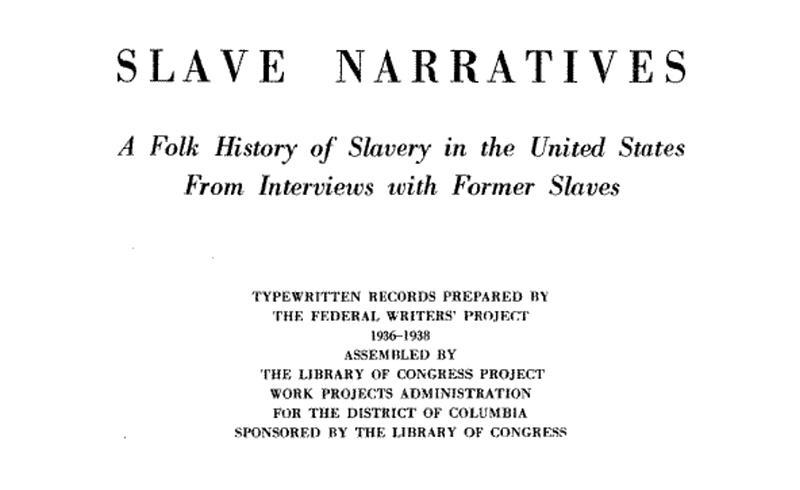
Except for a one-year stint working in a New Orleans hotel, Andy McAdams spent his entire life farming the land in and around Walker County, Texas, both as an enslaved person and a freed person. In the latter half of the 1930s, the Federal Writers’ Project (FWP) interviewed many formerly enslaved people. In fact, several of McAdams’s 17 children worked as interviewers for the FWP. Such interviewers set out to document the stories of those who had lived both in captivity and in freedom. However, many of the questions that FWP administrators approved were worded to encourage answers that would support a “sanitized” version of history. [1]
One such question, aimed at formerly enslaved people, was, “Have you been happier in slavery or free?” This question conceals the tactics of white slave holders and racists to intentionally make survival more difficult for freedpeople in the Reconstruction Era. As such, McAdams’s account contrasted his difficult but structured life as an enslaved person with the uncertainties and harshness of life as a freedman. [2]
In his interview, McAdams recalled his life as an enslaved person as one of holiday celebrations, like the Sabbath and Christmas, during which his master gave gifts to his slaves and afforded them time for rest. He would even allow the enslaved people to congregate to dance and celebrate at nightfall before resting the next day. As an enslaved person, he had food, nice clothing, and access to proper healthcare because of his value as property to the slaveholder. When he recounts his life following the war and the end of his enslavement, he describes extreme poverty, an intense fear of racial violence, and a lack of work, shelter, and healthcare. [3]
After the war and the abolition of slavery, McAdams recalls a celebration in the street among fellow formerly enslaved people. While everyone was celebrating, a white man on horseback rode through the crowd and cut a woman "nearly in half" without ever stopping. This effectively ended the celebration and sent all the freed people into hiding, where they began to wonder how they would survive. Much to McAdam’s disapproval, neither the federal nor state governments provided freedpeople with land or mules, although farming remained the only practical way to make a living in Walker County. McAdams accordingly felt that he and other African Americans were worse off free than as enslaved people because they had nothing to start from and nowhere to go. [4]
McAdams also described the first and only time he ever voted, mentioning that African American voting was heavily discouraged by local whites who often caked up their warnings with violence. Though the new voters were promised protection by the Texas governor, “padderrollers” were there to catch and whip the offending Black men who dared to vote. Paddyrollers, also known as paddy rollers, were armed white organizations that functioned as a police group for Black people both during and after slavery. While he was able to escape the white vigilantes before they whipped and beat him, many of his fellow voters suffered violent punishment for their decision. Such actions effectively stopped many freedmen from voting again, including Andy McAdams. [5]
The question of whether Andy was happier as an enslaved person or free may have an answer that seems counterintuitive to the end of slavery. Still, the poor conditions many African Americans faced post-slavery cannot be separated from the enterprise of slavery itself. A basic lack of possessions, education, and land made life almost impossible for formerly enslaved people, and neither the state nor the federal government moved to support them. Freedpeople struggled to provide enough food for their survival without their masters’ aid, while at the same time, violent racist attacks plagued those who were starting their lives over from scratch. [6]
Despite the attempt by white FWP officials to display a cleaner version of the reality of slave conditions, Andy McAdams concluded that in the long run, the hardships of Reconstruction were worth it so that new Black generations could educate themselves and live more easily than he could. McAdams maintained faith in the future of African Americans as free people, and even if he personally struggled less as an enslaved person, one would presume he would rather his ethnic group be free than have stayed in captivity.
Images