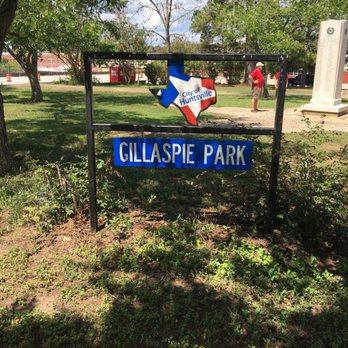
James Gillaspie
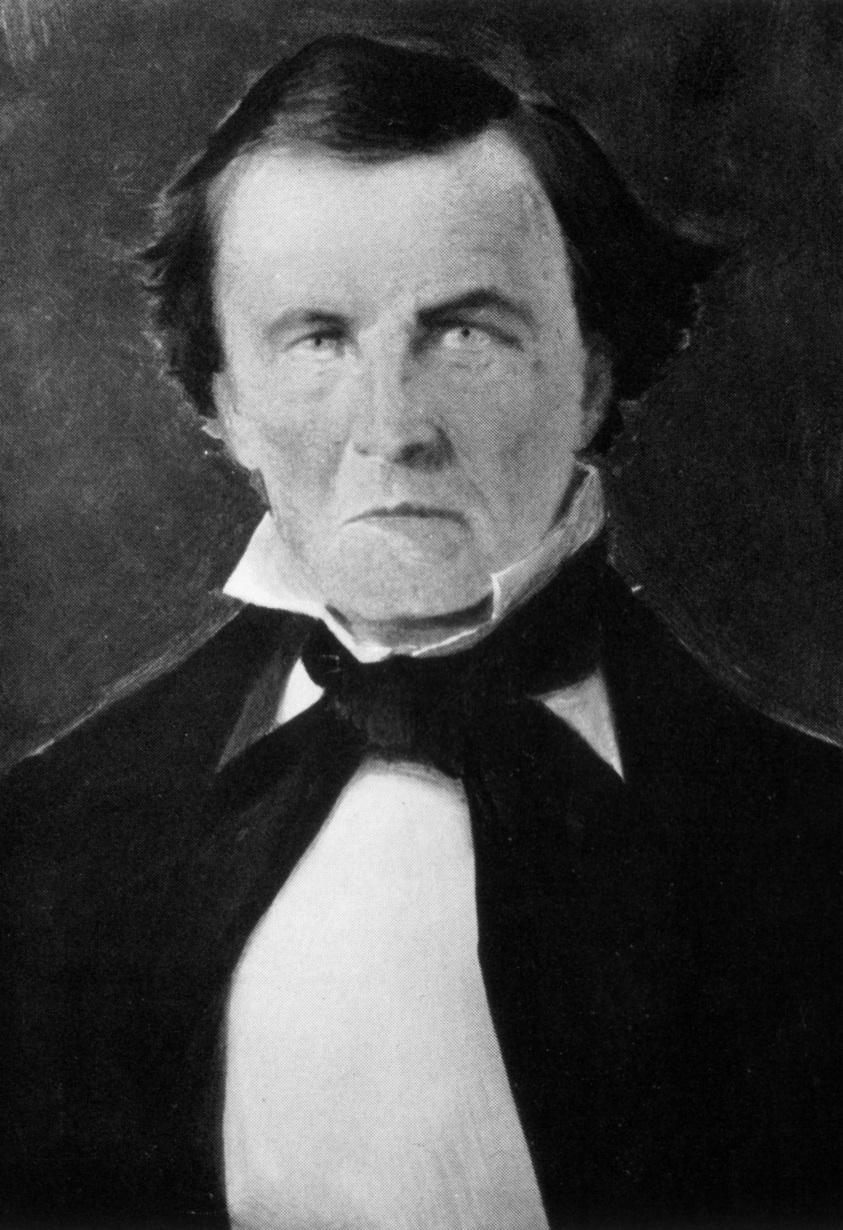
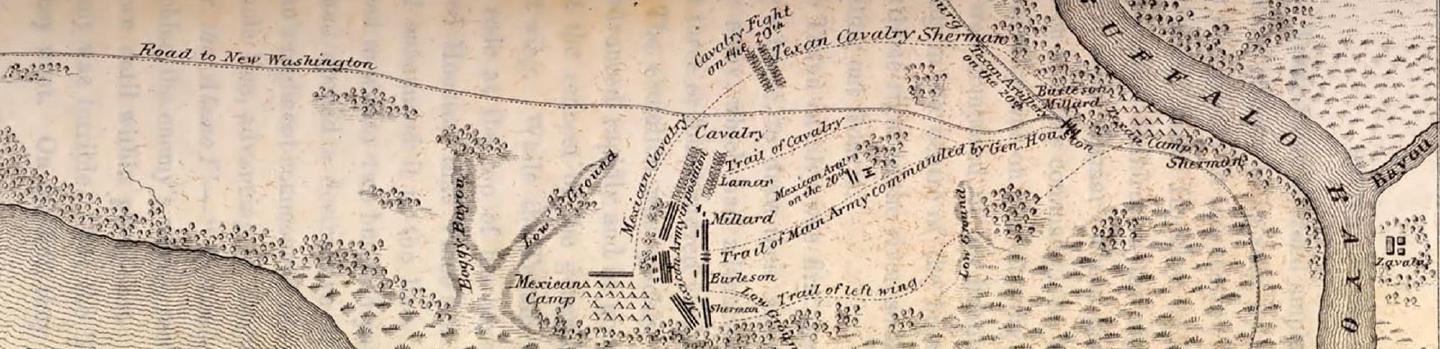
A veteran of three wars and a career public servant, James Gillaspie played a leading role in the development of early Huntsville. Born on January 5, 1805, in Virginia to William and Elizabeth Gillaspie, young James moved with his parents to Tennessee in 1810. When the Texas Revolution broke out in 1835, Gillaspie joined thirty-five fellow Tennesseans to support the Texian cause. Elected by the soldiers of Joseph L. Bennett’s volunteer company as their first lieutenant, Gillaspie was then quickly promoted to Captain of the Sixth Company on April 8, 1836. Given his new rank, Gillaspie commanded the Second Regiment of Texas Volunteers under the command of Colonel Sidney Sherman. In March and April 1836, he helped to cover the retreat of the Texian Army as it eluded Santa Anna’s forces at the Battle of San Jacinto. On April 20, Gillaspie participated in Sherman’s charge at the Battle of San Jacinto and helped to capture retreating Mexican forces. [1]
On May 29, 1836, Gillaspie mustered out of the army and returned to Tennessee, where he married the nineteen-year-old Susan Faris. Susan’s father, Hezekiah Farris, likely introduced the two, having served with Gillaspie during the war. In the early 1840s, the young couple moved to Huntsville to claim a land grant from the Texas Republic as compensation for Gillaspie’s military service. Over the next two decades, the Gillaspies had seven children. [2]
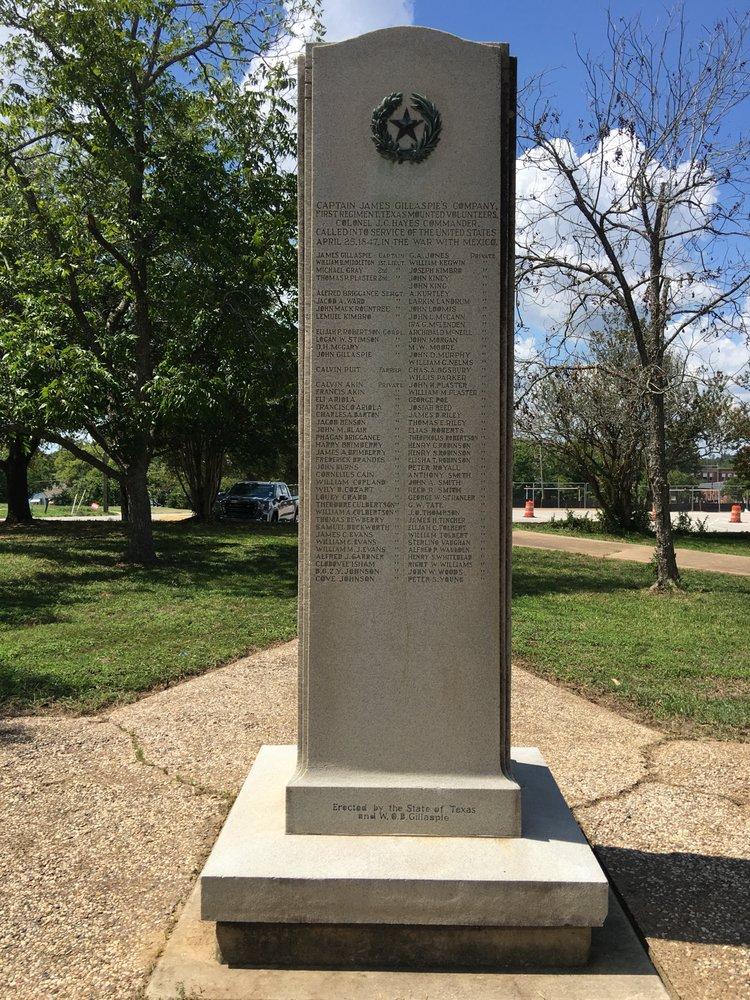
In 1846, war broke out between the United States and Mexico. Organizing a local company of soldiers, Gillaspie and his followers formed the First Regiment, Texas Mounted Volunteers, under Colonel John Coffee “Jack” Hays. A veteran of the Monterrey Campaign and the occupation of Northern Mexico, Gillaspie served by providing reconnaissance, escorting supply trains, and conducting night raids against Mexican forces. Following the war, Gillaspie created a mail route from Houston to New Cincinnati in 1848, which later became a community northeast of Huntsville. [3]
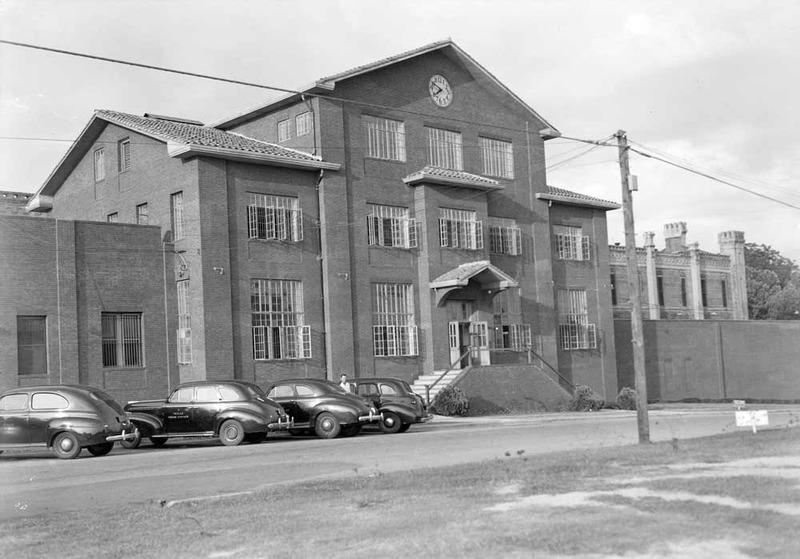
Remaining active in public service, he drew on his military experience to establish a reputation as a good leader and organizer. In 1850, Gillaspie became superintendent of the Texas State Penitentiary in Huntsville, a position he held for eight years. The penitentiary, established in 1849 as the first state prison in Texas, was nicknamed the “Walls Unit.” As superintendent, Gillaspie oversaw daily operations, maintained inmate discipline, and dispatched prisoners to work details. He used prisoner labor to manufacture goods and undertake local construction projects, which contributed to Huntsville's growing economy. Under his watch, the penitentiary became self-supporting, reducing state expenses. In time, the penitentiary created job opportunities for local citizens, attracted state funding, and fueled population growth throughout Walker County. The penitentiary also became a beacon for local merchants who supplied the prison system with food, clothing, linens, and other supplies. Under Gillaspie’s leadership, Huntsville solidified its position as a crucial hub in the Texas prison system, a position it still maintains today. Over the course of his life, Gillaspie served not just Texas but his local community, helping Huntsville grow from a small town into a major administrative and political center. [4]
With the outbreak of the Civil War in 1861, Gillaspie joined the Confederate Army, commanding a company in the Fifth Regiment, Texas Infantry Volunteers. Stationed on Galveston Island, Gillaspie and his men defended the Texas coastline from Union naval operations. As a Confederate supply and communication center, Galveston constituted a strategically important location. Following the war, Gillaspie went back to Huntsville and resumed his previous position as prison superintendent. He held the position until he died in 1867, when he was buried at Oakwood Cemetery in Huntsville, along with his wife, Susan Faris, who had died several years earlier. [5]
Gillaspie’s military service during three conflicts left a considerable influence on his reputation. As a penitentiary superintendent, he remained influential in Huntsville throughout his later years. Through pragmatic leadership, he helped transform Walker County from a small frontier settlement into a booming town. As such, he left a legacy in the development of both Huntsville and Walker County.
Images