The Lynching of Jim Buchanan
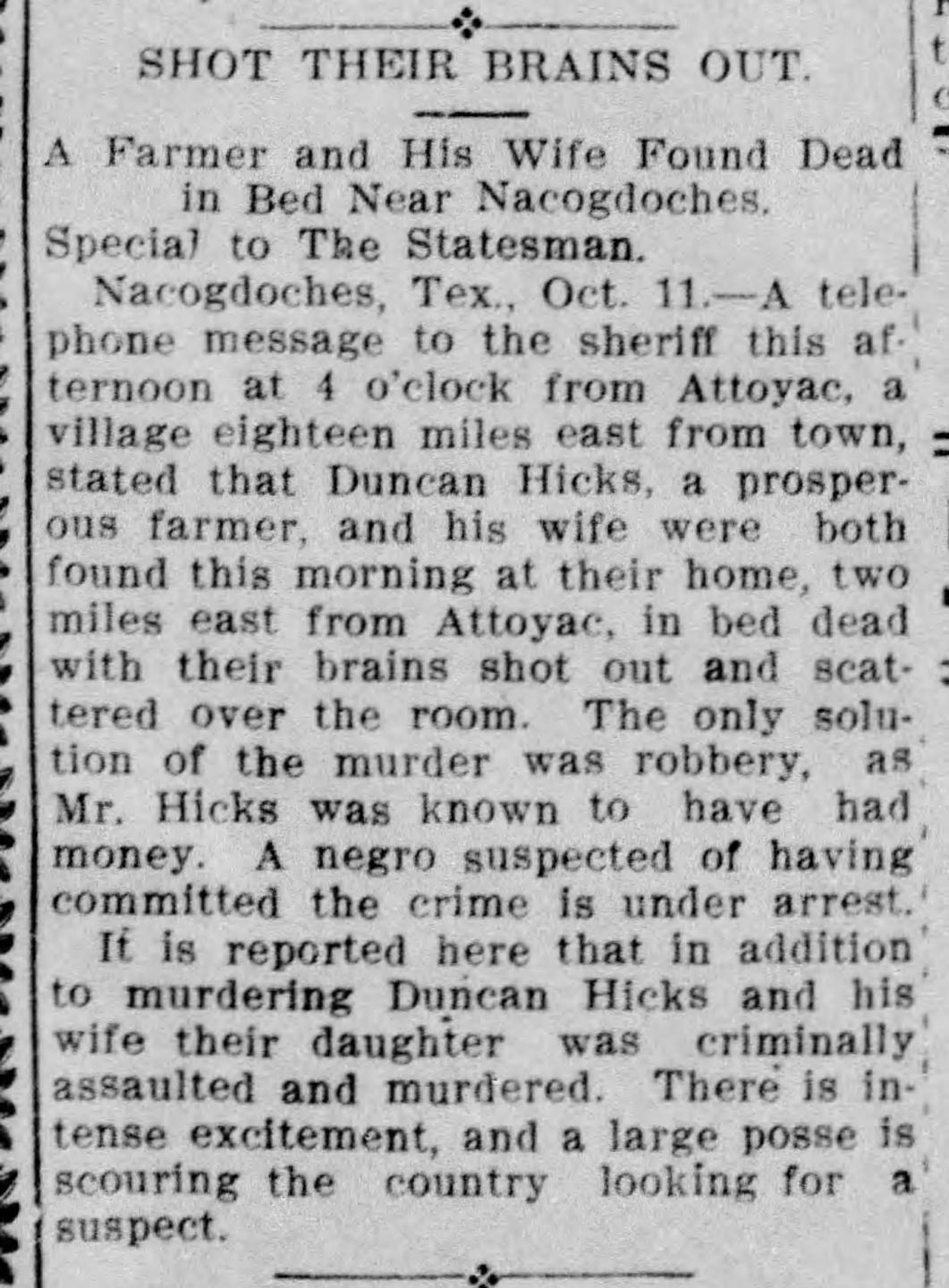
"Shot their Brains Out,” Austin Daily Statesman, October 12, 1902, p. 5.
Date: October 12, 1902Jim Buchanan was a 19- to 20-year-old African American man lynched on October 17, 1902, in Nacogdoches, Texas, after being accused of murdering a white family, Duncan and Nerva Hicks, and raping and killing their daughter, Allie Hicks. As news spread quickly across the country, a white mob formed to express their anger and assert their unchecked power, resulting in the legal lynching of Buchanan. The horrifying details of the mob chase and Buchanan's legal lynching, in which he was given a legal trial, underscore the ascent and full power of Jim Crow in a small, rural East Texas community at the turn of the twentieth century. [1]
The events leading up to Buchanan's lynching began with the accusation of triple murder and rape on October 11, 1902. [2] With little evidence, Nacogdoches County Sheriff Andrew Jackson (John) Spradley formed a posse and began searching for Buchanan, who was hiding out in the local swamps. Eventually, on October 13, Buchanan was arrested and detained at the Nacogdoches County Jail. The crime made headlines all over the country, inciting white rage and increased demands for so-called lynch justice. The newspapers reported that Buchanan freely confessed to Sheriff Spradley, which, at the time, was admissible as illicit evidence. Fearing that Buchanan would be the target of the growing mob, however, Spradley and other law enforcement officials took Buchanan 35 miles northeast of Nacogdoches to Tenaha (Shelby County). In Tenaha, another mob surrounded Spradley and Buchanan, but they eventually escaped by train. Only ten miles later in Timpson, yet another mob formed, stopping Spradley from reaching Nacogdoches. As a last resort, law enforcement officers took Buchanan into the woods near Appleby, as multiple mobs throughout Shelby County searched the woods for the “negro murderer” and Sheriff Spradley. The group eventually ended up in Shreveport, Louisiana, where they were mostly safe from the mobs still searching the woods of East Texas. [3]
Spradley, Buchanan, and the other law enforcement officers left Shreveport on October 15 and headed back towards the mobs waiting and searching for them throughout East Texas in Kilgore, Troupe, Overton, and Jacksonville. They stopped in Longview, Texas, where Buchanan was secretly placed in jail before going to Henderson on October 16. The media in Henderson picked up the story as the local militia, the Henderson Rifles, were ordered to protect Buchanan as the mob outside the jail soared to nearly 3,000 furious locals. Other militias, such as the Horace Chilton Volunteers from Tyler, were ordered to support the Henderson Rifles, and luckily, for the moment, the mob calmed. Finally, Texas Governor Joseph Sayers ordered military protection for Buchanan as he returned to Nacogdoches to stand trial on October 17. [4] (To view a map of Buchanan’s chase throughout East Texas and Louisiana and back to Nacogdoches, visit https://maphub.net/mweems32326/map.)
The people of Nacogdoches had signed a petition a few days before agreeing to hold off a lynching and allow Buchanan a trial if done quickly. All the while, they promised that mob “justice” would prevail if the trial was delayed or if they disagreed with the court ruling (which Spradley also acquiesced to). Multiple newspapers also, and purposefully, incited potential violence by reporting the address of Buchanan’s mother, his alleged criminal past, and his alleged pride in his crime. Meanwhile, the African American community of Nacogdoches gathered at the Colored Methodist Episcopal Church to condemn Buchanan so as not to draw more racial violence upon themselves. [5]
Buchanan’s trial allegedly lasted less than an hour. He waived his rights to an attorney or to contest any evidence and simply confessed to the murders while denying the rape charge. The jury deliberated for only three to five minutes. Originally sentenced to hang 30 days later according to the law, the judge grew evermore fearful of a mob of thousands outside the courthouse doors gathering kindling and kerosene, making it clear Buchanan would not leave Nacogdoches alive that day. The mob had cut the telegraph and telephone lines as well. They had overtaken the militia and seized the train to send it away. With the mob in full control, the judge called Buchanan back to court, and we are told Buchanan waived his 30-day wait period and agreed to be hanged immediately to avoid being burned alive. After being hanged, Sheriff Spradley’s body was left hanging as a gruesome display for the rest of the day, with people posing for photos with his body. No one remembers where they buried him. [6]
The lynching of Jim Buchanan stands as a tragic reminder of the injustices faced by African Americans and as the last lynching in Nacogdoches that would lay the foundation for the Jim Crow era. Newspapers across the country exaggerated and sensationalized his story, using it to justify the racial prejudice and violence imposed upon Buchanan. Buchanan’s story also showed the impact that mob mentality and influence held over the American court system and racial relations at the time, despite the passing of anti-mob laws in America. May his memory inspire us to confront and dismantle the legacy of racism and oppression that continues to plague our society.
Images
"Shot their Brains Out,” Austin Daily Statesman, October 12, 1902, p. 5.
Date: October 12, 1902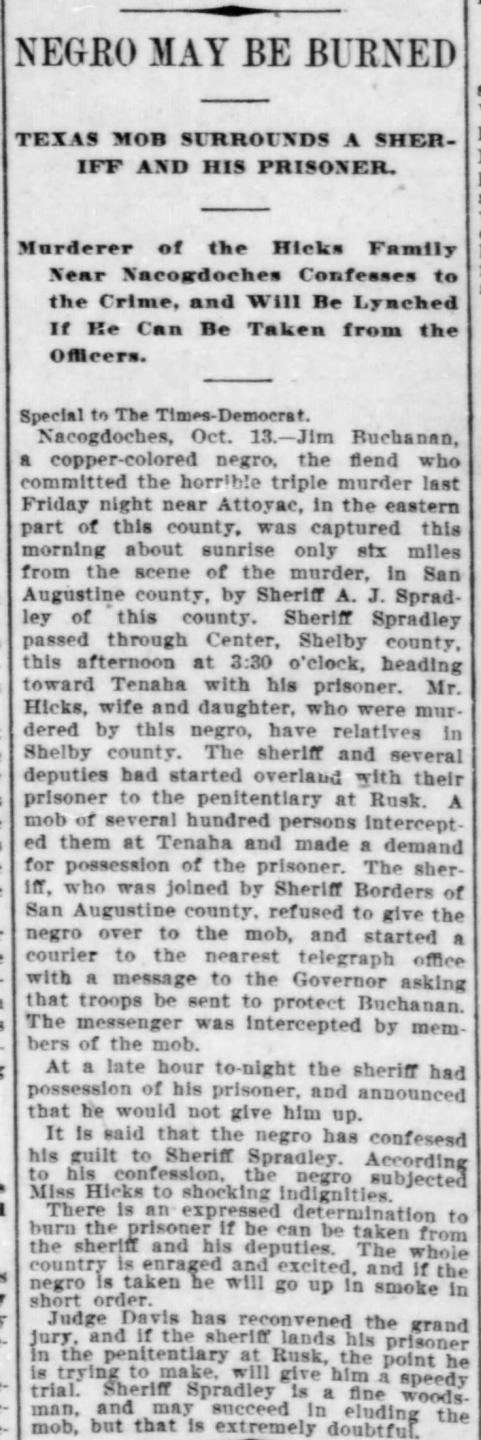
“Negro May be Burned,” The Times Democrat (New Orleans), October 14, 1902, p. 2.
Date: October 14, 1902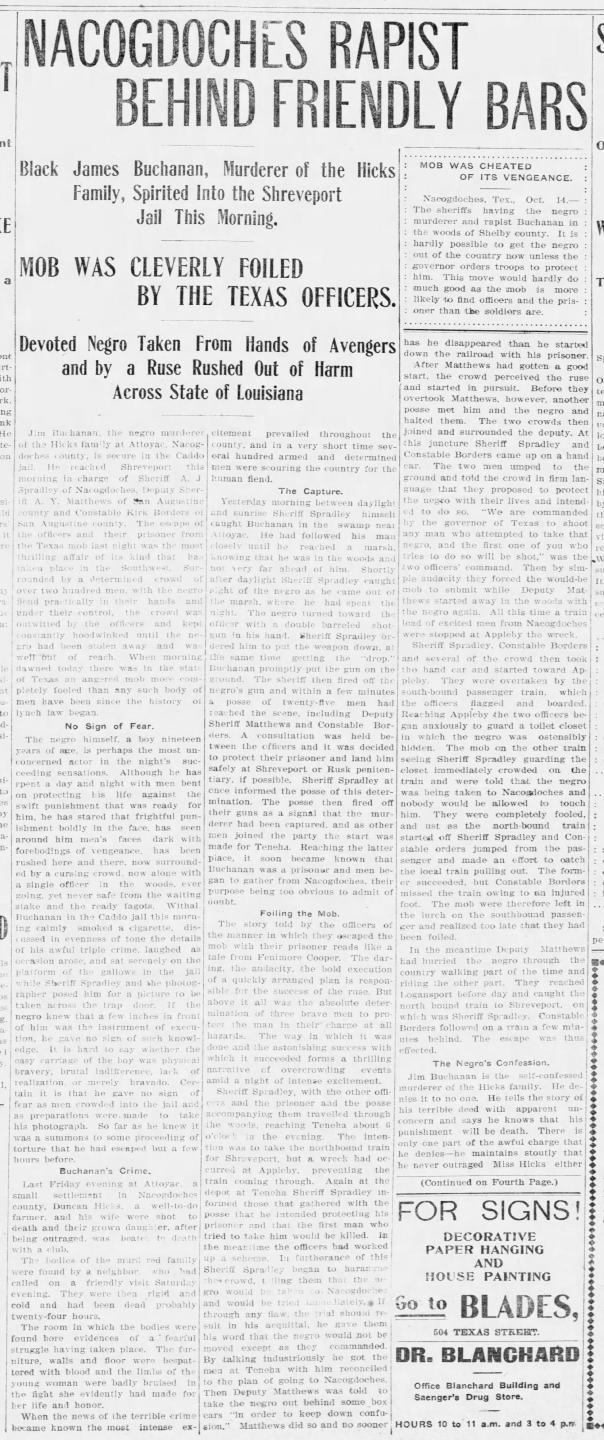
“Nacogdoches Rapist Behind Friendly Bars, The Shreveport Journal, October 14, 1902, p. 1.
Date: October 14, 1902
“Buchanan at Rusk,” Dallas Morning News, October 17, 1902, p. 3.
Date: October 17, 1902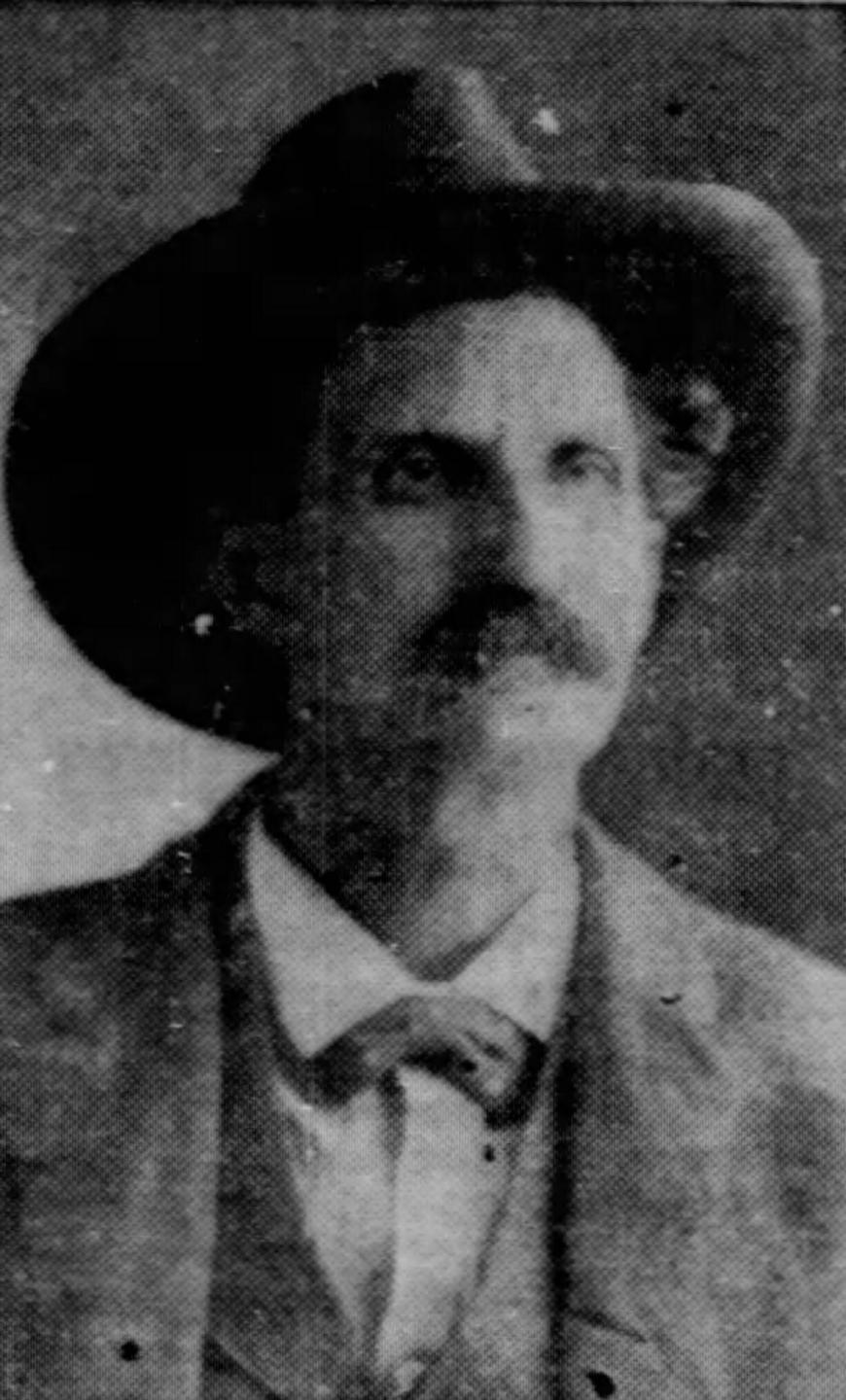
The Times Democrat (New Orleans), October 16, 1902, p. 3.
Date: October 16, 1902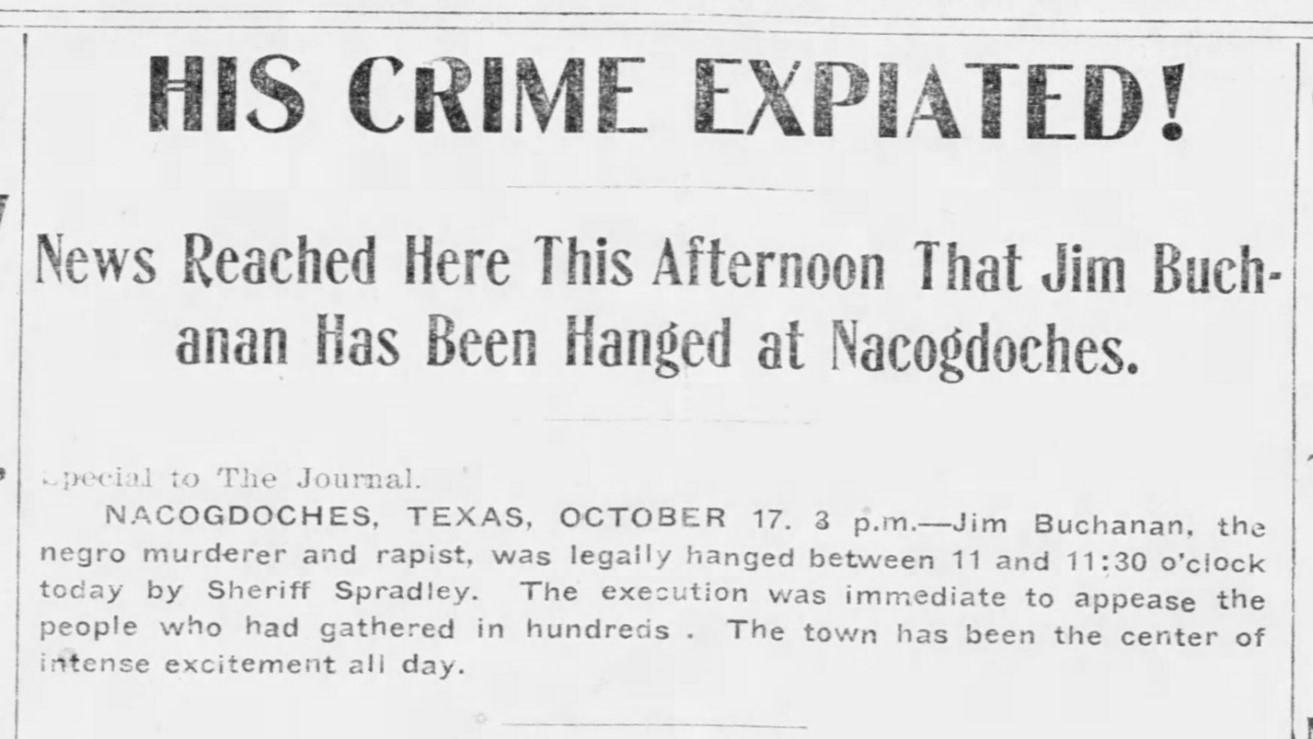
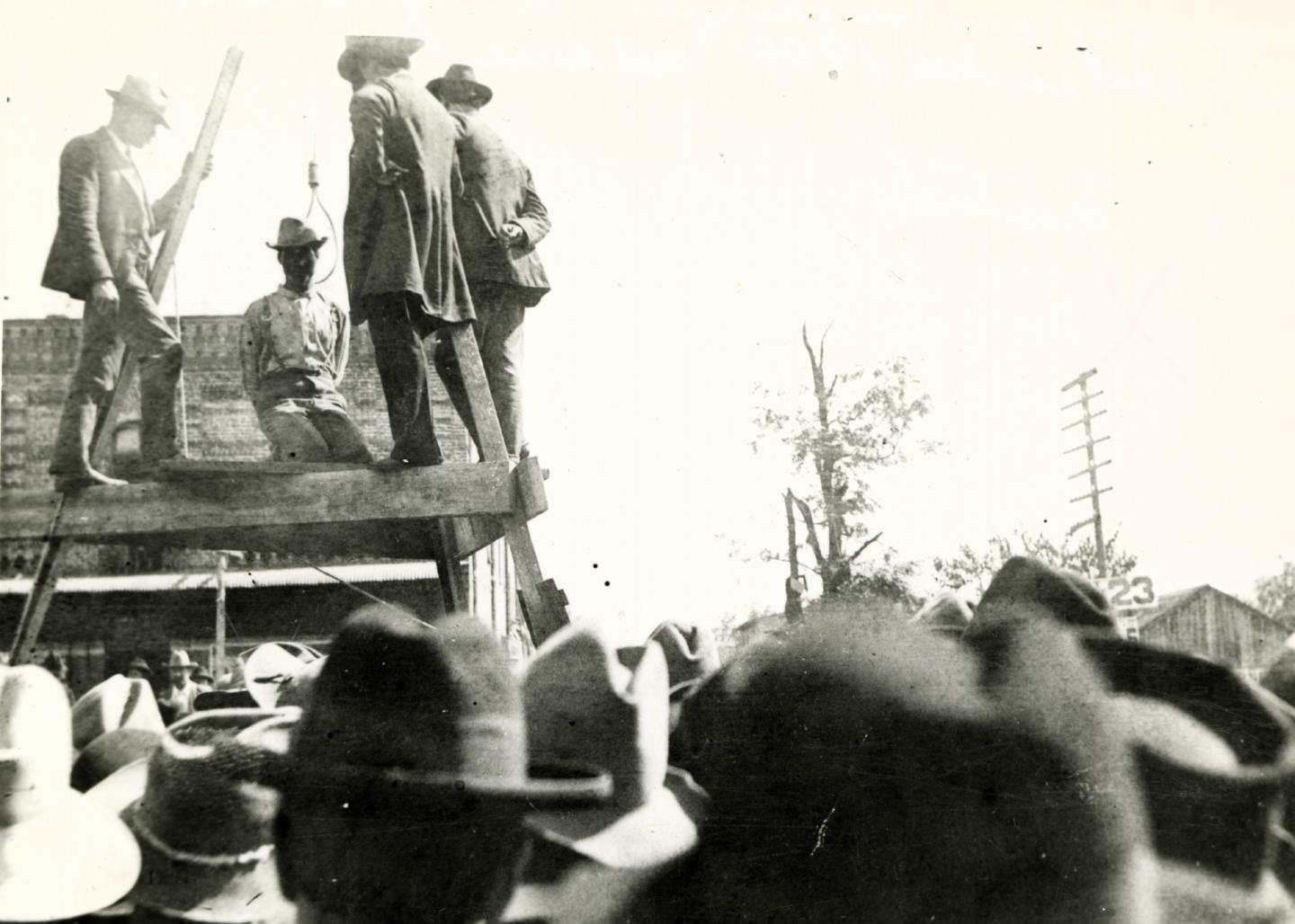
A218, B4, in Nacogdoches hangings, Box: 1, Folder: 1, Teutsch Early Nacogdoches Documents, A-0218, East Texas Research Center, Stephen F. Austin State University, Nacogdoches, TX.
Date: October 17, 1902