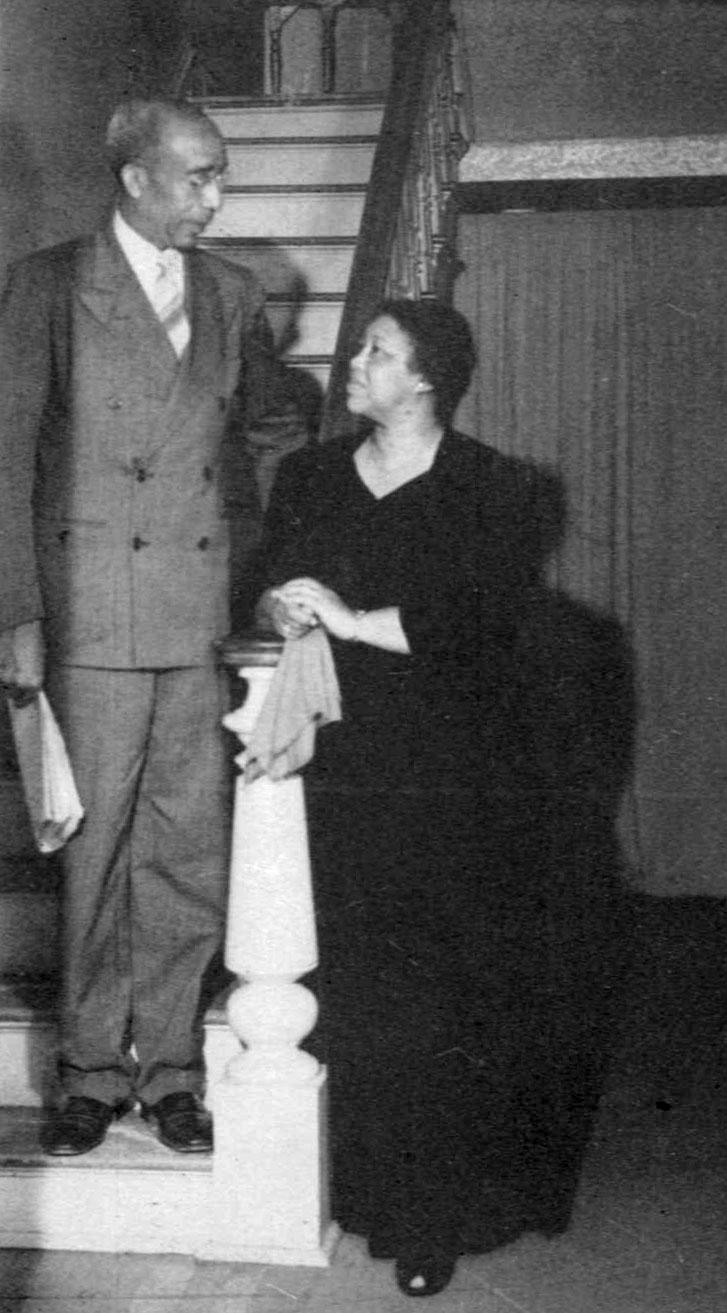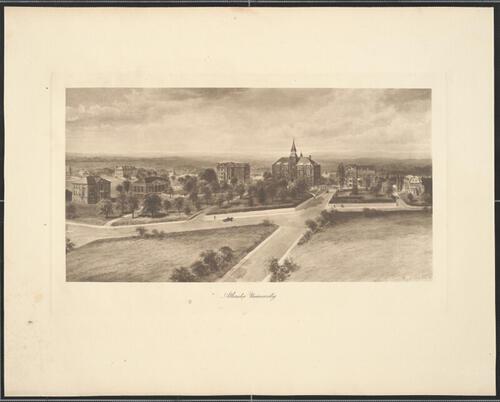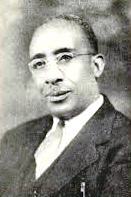
The story of Willette Rutherford Banks, commonly known as W. R. Banks, began in the town of Hartwell, Georgia. W. R. Banks was born into the union of J.M. and Laura Banks on August 8, 1881. Banks received his early education at Colored Zion Elementary, an institution founded by Banks' father. While at Colored Zion Elementary, Banks symbolized "the striving of Negros in the post-Reconstruction South." Banks would go on to Atlanta University and excel in his studies. While at Atlanta University, Banks engaged in activities such as being an editor of the university newspaper, becoming a varsity debater and being a member of the YMCA. However, one of his biggest achievements was his relationships with fundamental civil rights leaders of the era, such as W.E. B. DuBois and Horace Bumstead. DuBois, in particular, had a significant influence on Banks. During these years, Banks met and fell in love with Glovinia Virginia Perry.
Banks went on to graduate from Atlanta University in 1909. At the referral of Atlanta University President E.T. Ware, Banks secured a position at Fort Valley Normal and Industry Institute. While at Fort Valley, he worked in various capacities, such as a teacher, prayer leader, athletic coach, and supervisor over a farm. By 1912 Banks had left Georgia and gained employment at Kowiliga Community School in Elmore County, Alabama, where he served as a principal. During Banks' term as principal, Banks achieved notable success. He expanded his network when he made "contact with northern philanthropic financing.” Also, he helped heal community divisions.
A friend of Banks named Bishop R.A. Carter recommended him for the presidency of Texas College in Tyler, Texas, and by May of 1915, he was elected to the position. Banks remained president until 1926. During his term, he faced many challenges, such as underpaying or unpaid teachers. However, during these years, he learned the art of financing. By the end of his term, Texas College had the second-largest black student enrollment numbers in Texas.
After leaving Texas College, Banks became the principal of Prairie View A&M. The position of principal came with much scrutiny. The position was seen as corruptible and divisive. Prairie View was a part of the larger Texas A&M system. This system was a white ran and dominated land grant system. The system was heavily tied with state politics, and it was well known that if any person holding the principal position at Prairie View went against the political agenda at the time, they would likely be out of a job. With that said, the person taking the position needed to know how to maneuver strategically, which made the job perfect for W. R. Banks.
During the candidacy process, Banks faced fierce competition; however, he used strategy to win the position. The black Texas political stage was changing. Black leaders, especially those who were Methodist, were moving away from traditionalism and following philosophies such as Marcus Garvey's "New Negro" ideals. Banks supported the new liberal ideas; however, he understood that the whites in charge questioned his position on racial issues. Banks’ cunningly downplayed his connections to Dubois and emphasized his connections and beliefs in the values of Booker T. Washington. Additionally, A&M President T. O. Walton believed that the issues at Prairie View were too big for a negro to handle. However, Banks assured Walton that he would try to be the best leader he could be. With the support of President Walton and the A&M board, Banks was elected seventh principal of Prairie View on June 1, 1926.
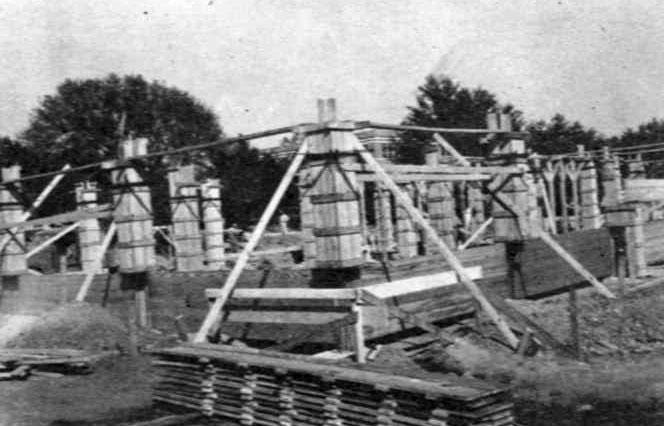
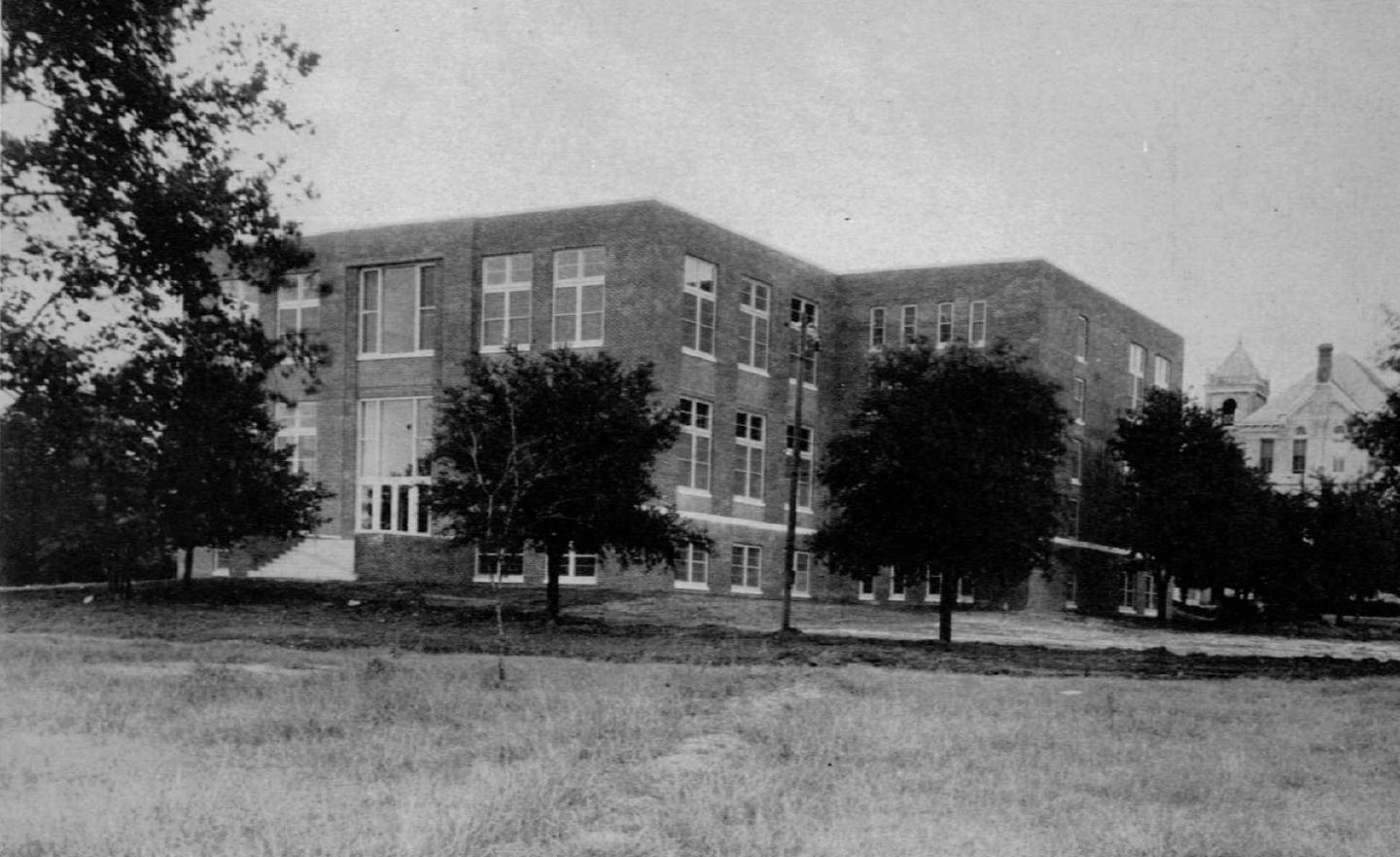
Banks arrived at Prairie View in November of 1926. Upon arrival, he noted several critical issues, such as staff anarchy, teachers being underpaid, and facilities needing repair. Moreover, when the A&M board and the General board of education issued the school money, Banks built and remodeled a number of things, such as two boy halls, a hospital and nursing quarter, a community center, and furniture for the boys and girls dormitory. Banks also encouraged honor societies, debating, scholarships, and athletics.
Banks continued working for the advancement of the college when he helped establish the National Association of Teachers for colored schools. The association was similar to those that Banks had experienced during his time at Atlanta University. The association hosted annual meetings, collected monthly reports, and analyzed the present state of education for blacks and how it could be improved.
Another advancement was securing accreditation for Prairie View. Initially, when state agents reviewed the conditions of Prairie View, they found that the library was too small, the employee’s credentials were questionable, and the structures were badly planned. Banks decided it was time to take action. However, he needed the support of white men, considered more believable than a black man. Banks enlisted the help of Henry C. Schuhmacher, F. M. Law, and Charles E. Friley. The bank applied to the A&M board for monetary aid but rejected it. But Banks’ appeal to the Southern Association of College was heard, and the association awarded the college with an "A" rating.
Banks came under fire from black leaders and white liberals when he supported creating graduate school at Prairie View. Banks believed in several principles regarding the issue 1. Blacks are too poor to go North and could be trained better to deal with southern conditions. 2. Northern schools are going to block the black tide. 3. “Prairie View should set its schedules to serve as a shock absorber for the state after the Gaines ruling.” Banks decided was backed by the board, and Prairie View became the center for black graduate studies in Texas and the surrounding states.
During the 1940s Banks was heavily influenced by the wartime race riots, the writings of Gunnar Myrdal, and Dubois’s plea to “emancipate Blacks through cooperative research.” Banks ultimately was forced to retire after he went over the heads of the A&M board, which failed to support the legislation and Banks’ decision. In his final years then became the vice chairman of the board of regents of Texas Southern University and served on the boards of Atlanta University, Morehouse College, and Paine College. Banks died on October 16, 1969, and is buried in Prairie View, Texas.
Images