Carolina: Ghost Town of Silver Mines and Sulfur Springs
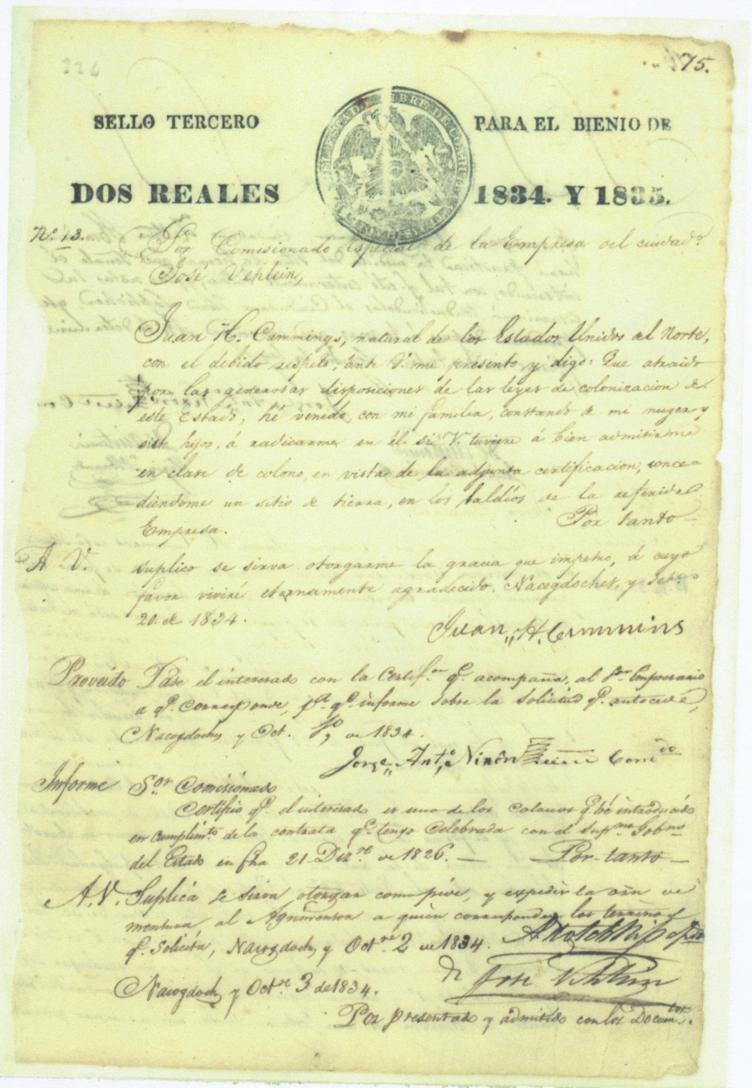
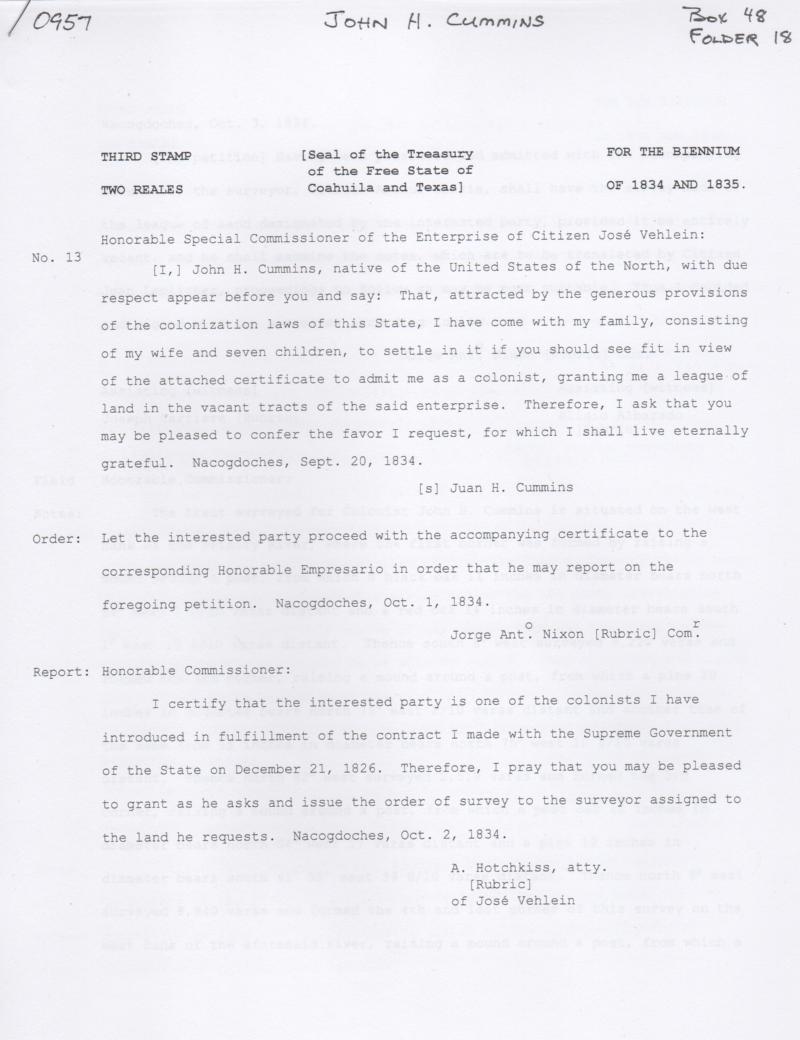
The town of Carolina emerged on the land grant of John H. Cummins who ventured to Texas in 1820 and joined Vehlein's Colony in 1826. He made application for his grant of a league of land in what was then the Mexican State of Coahuila y Tejas in October of 1834.
On August 17, 1829 Cummins made an agreement with Stephen F. Austin for a Silver Ore Mine five to six miles from the site of his home at the time. This placed the mine in an area of bluffs six miles below Harman's Creek, twelve miles above the little Alabama Village, fifteen miles below Bedias Bayou, and twenty-two miles below the Old Spanish post of Salcedo. The agreement was similar to an earlier contract of Stephen F. Austin with Rufus Stone regarding a Silver Mine in 1828 on Bedias Bayou. Indeed, Stephen F. Austin had several Silver Mine ventures during his time in Texas. The two-thirds portion allotted to Austin and his heirs for his aid with the mine perhaps explains the mystery of why Cummins' wife was allotted only one third of his land on her husband's death.
In 1836, the town of Bath was established on a portion of the Cummins' property on the west bank of the Trinity River. The spot contained medicinal springs of iron and sulfur. Plans for the town designated it as 40 miles below the San Antonio road, with 215 lots, 47 blocks, and a block for the public square. Street names included Main, Cummings, Putnam, Commercial, Jackson, and Mechanics.
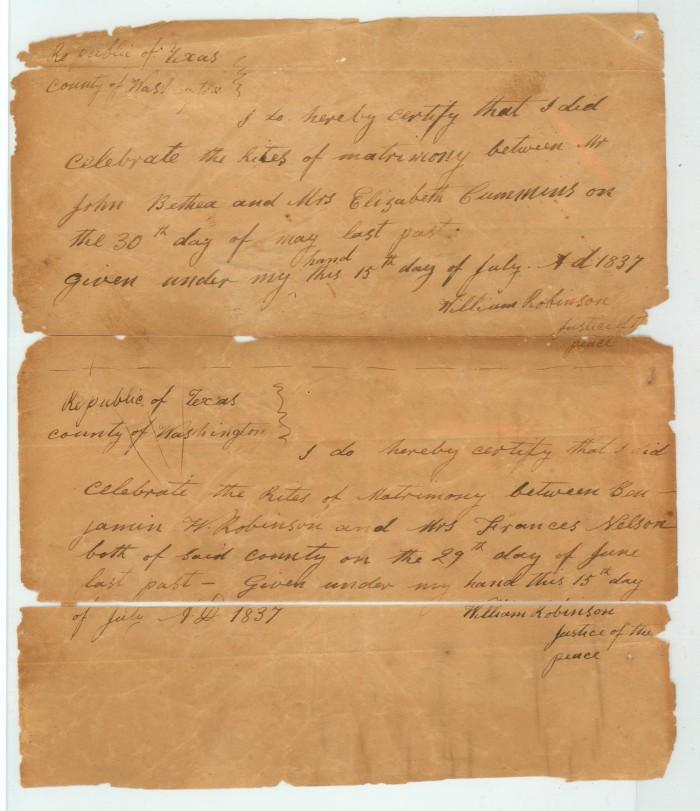
Soon after the establishment of Bath, in December 1836, Austin died. About that time, late 1836 or early 1837, Cummins followed him in death. On the demise of Cummins, the lands changed hands quickly. John Cummins' widow, Elizabeth Cummins, married John Bethea on May 30, 1837. In 1838, two thirds of Cummins' estate was sold to Edward Bailey and Thomas Gray. The remaining one-third portion, that retained the community of Bath, remained in the hands of Elizabeth Cummins Bethea and her new husband John Bethea. They eventually moved down the Trinity to Newport, another short-lived steamboat town.
By 1839, Bath was renamed Carolina: Carolina Shores was listed as one of its inhabitants. By 1840, the newly named town had received a post office. In 1843, Carolina was described as having two log houses, two families, and a population of less than twelve people. Visitors frequented the town to drink of the mineral springs. Yet in 1853, the population count stood at only 20.
The decline of Carolina may be attributed to the changing economy in Texas. The cost to build up the Trinity for smooth steamboat travel became prohibitive. When railroads began to take hold as a solution, Carolina's access to the outside world dwindled. Furthermore, Carolina was not near a major land route and traffic from that quarter was rare.
Echoes of Carolina, however, have not completely faded from history. A Carolina or Carolina Switch community was built up from the descendants of Carolina as the Railroads came. According to their source in 1986 Walker County History, Carolina is situated near Waterwood and there is a Carolina Cove nearby Waterwood today. A place entitled Sulphur Bluffs on Google Maps is just on the other side of the cove that looks like it might match the description of old Carolina. What became of the Silver Mine? The answer perhaps died with Austin, Cummins, and the crew, lost to the sands of time and the Trinity River.