Martha Ann Otey of Andrew Female College
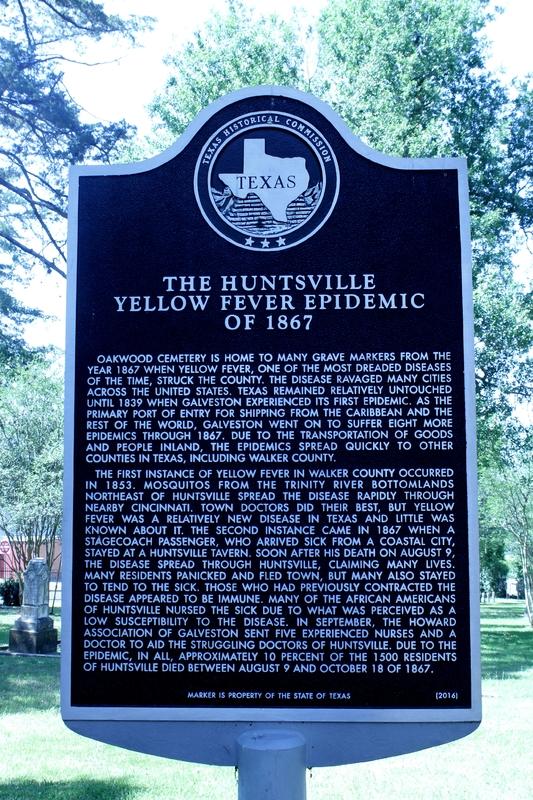
Amid a yellow fever epidemic that threatened the health and stability of Huntsville, Texas, Martha Ann Otey traveled west from Mississippi with a purpose in mind. She arrived at Andrew Female College ready to take on her new role. She immersed herself in an unfamiliar town where education and resilience would shape her daily life. Her role as an educator would extend far beyond the classroom, touching the lives of students and members of the community.
Born August 31, 1833, to Colonel Edward Dromgoole Nolley and Mary Frances Nicholas, Martha Ann was raised in North Carolina and schooled in Mississippi. She married Colonel Armisted George Otey in 1858 and began her teaching career shortly afterwards. Long before arriving in Huntsville, Martha Ann Otey had already proven a strong commitment to women’s education. In Castillian Springs, Mississippi, she and her husband founded and operated a private school for girls at a time when educational opportunities for young women were limited. Schools like Otey’s played a crucial role in providing academic instruction while also emphasizing moral and social development. This early work laid the foundation for her later work at Andrew Female College in Huntsville. Otey was a trailblazer, part of a broader movement of women educators who helped make formal education accessible for girls in the South. [1]
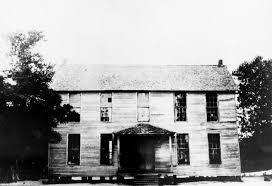
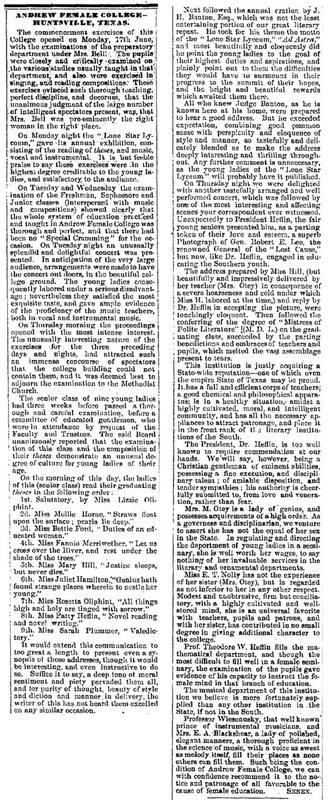
After her husband's death, Martha Ann moved her parents and children to Carthage, Mississippi, and set off for Texas to begin a new life. Upon arrival in Huntsville, Texas, she was charmed by the city and its people. She accepted the position of assistant principal at Andrew Female College for a salary of $500 gold. In amazement at the city, she began writing letters back home, insisting that her sister, Eliza Thomas, take a teaching position at the college. She saw a promising future in Huntsville. The sisters were strangers to Texas but took on duties and responsibilities as if they had been there their whole lives. Andrew Female College holds a significant place in Huntsville history and in the effort to expand women’s education in East Texas. The college reflected a growing belief in education and a unifying force in a changing society. As a teacher at the college, Otey was an influential figure in pushing for change for women’s education. [2]
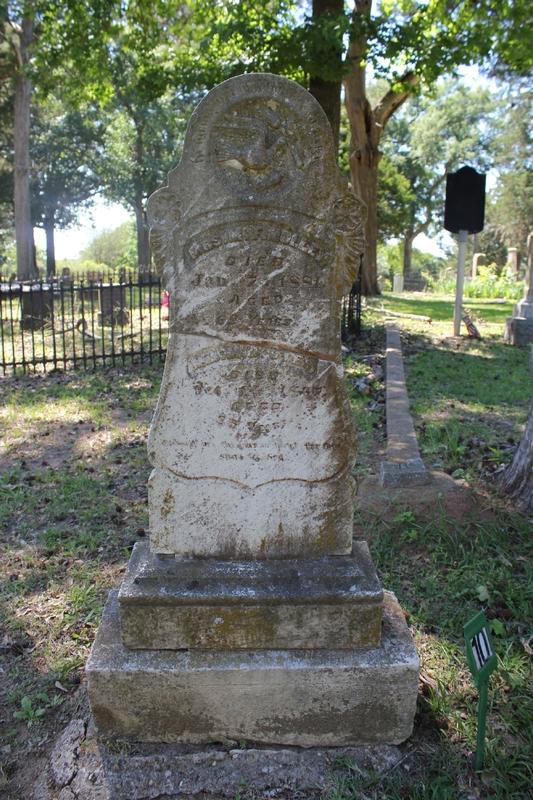
However, not long after Otey arrived in Huntsville, the town was turned upside down by the outbreak of yellow fever. This epidemic disrupted daily life in Huntsville, as the disease spread quickly, affecting almost every household and family. Otey’s letters home during this time describe widespread illness and the importance of stepping up to care for neighbors. Her role in Huntsville quickly progressed beyond being a teacher, as she began assisting as needed and tending to those in the community, regardless of the risk. As conditions worsened, she ultimately contracted the disease and died of yellow fever. Her last letters home offer a firsthand account of the crisis and her sense of responsibility to the town she had come to serve. [3]
Martha Ann Otey left behind a legacy in East Texas through her work as an educator and her service to the community during the epidemic. Her personal account, as reflected in the letters she wrote, provides insight into the role women played in maintaining education and unity during a time of fear and uncertainty. Although her life was cut short, her commitment to educating young women and her service helped shape Huntsville well beyond the classroom.
Images