Austin College and the Growth of Huntsville
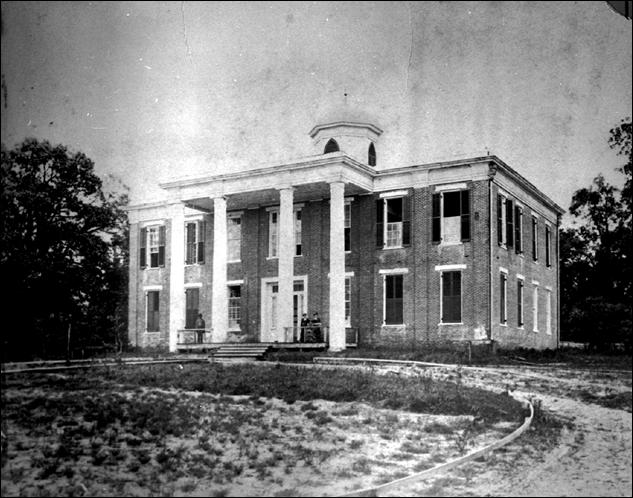
In the mid-1800s, the small frontier town of Huntsville, Texas, became the starting point for the creation of Austin College. Chartered in 1849 by the Brazos Presbytery of the Old School Presbyterian Church, Austin College represented part of a larger movement to build up educational institutions in the early Republic of Texas. To bring the college to their town, Huntsville’s citizens offered $10,000 and 5 acres of land, demonstrating strong local support for higher education. [1]
Governor George Wood signed the college’s charter in 1849. Leading institutions like Harvard, Yale, and Princeton inspired early promoters of the college. In time, Austin College would be the oldest higher education institution in Texas still operating under its original charter, even though it later moved to a new location. The college was named after Stephen F. Austin, the “Father of Texas.” [2]
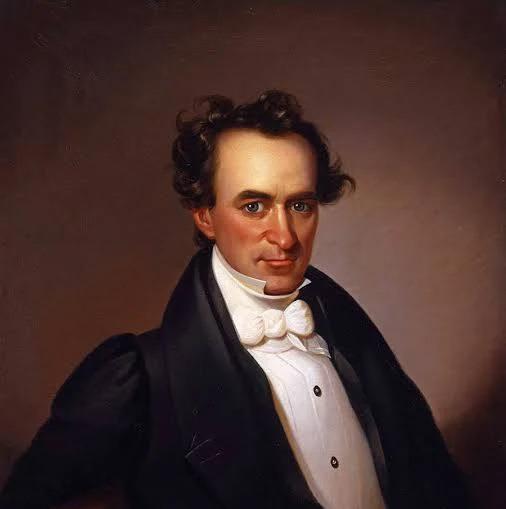
From the beginning, Austin College held a close connection to important figures in Texas history. Two former presidents of the Republic of Texas, Sam Houston and Anson Jones, both served on the original board of trustees, giving the new college both scholarly stature and institutional power. Houston’s involvement went beyond just lending his name. He took part in the dedication of the original building, later called Austin Hall, in 1851, and his support helped raise the college’s profile in a young state still shaping its institutions. [3]
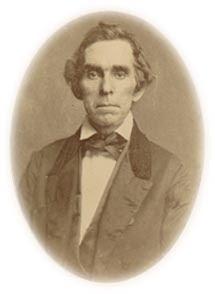
Dr. Samuel McKinney, an Irish-born Presbyterian minister with educational experience, became the first president of Austin College. He led the college from its opening in 1850 until 1853 and returned for a second term two years later during the Civil War. McKinney’s first term ended after a personal disagreement with Sam Houston, which caused him to resign and return to Mississippi. Although the details of their conflict are rarely detailed in general histories, the loss of the founding president at such an early stage highlighted the difficulties of running a school on the frontier, where strong personalities, politics, and the school’s mission often clashed. [4]
Despite changes in leadership and the challenges of the Civil War and Reconstruction, Austin College did well in its early years and played a major role in shaping Huntsville’s identity and growth. The college offered more than just liberal arts. In 1855, it became home to the first law school in Texas, which showed the school’s ambition and influence in the region. [5]
The original Austin College campus, centered on what is now called “Austin Hall,” became one of Huntsville’s most distinctive landmarks. This building, constructed in the Greek Classical style between 1851 and 1852, stood as a symbol of intellectual aspiration on the Texas frontier. However, by the 1870s, a combination of economic strain from yellow fever epidemics, low postwar enrollment, and denominational clashes pushed the college to relocate to Sherman, Texas, in 1876. [5]
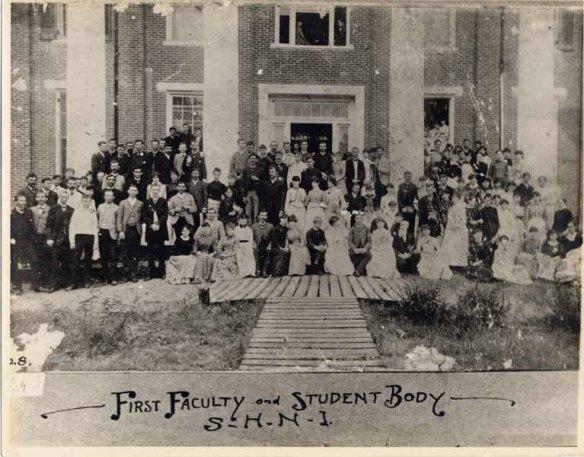
But Austin College’s story in Huntsville did not end when it moved. In 1879, Texas established the Sam Houston Normal Institute, the state’s first tax-supported teacher-training school, on the old Austin College campus. Named after the same Texas hero who had supported Austin College, Sam Houston Normal Institute, later evolved into Sam Houston State University, continued Huntsville’s tradition of education. The school opened with 110 students and four teachers, marking a new chapter in the city’s growth as a polished educational center. [6]
As it changed from a Presbyterian liberal arts college to a state-supported teacher-training school, Austin College helped shape Huntsville’s culture, economy, and population. By building connections with Texas leaders and creating both physical and institutional foundations, Austin College played a key part in establishing higher education in Huntsville’s early years. This legacy can still be seen in the city’s schools and colleges today.
Images